As the counting of votes for the Jammu and Kashmir and Haryana assembly polls continues, the political landscape in Haryana has taken a surprising turn. Initially buoyed by strong early trends, the Congress party's hopes of forming a government have been dashed as the BJP has surged ahead, reflecting a notable shift in voter sentiment.
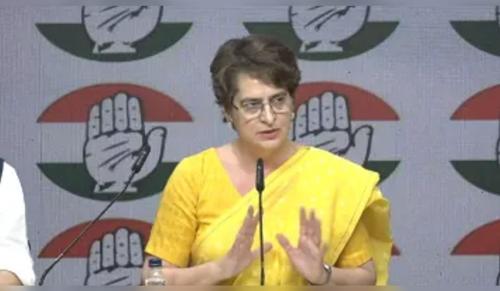
Shiv Sena (UBT) leader Priyanka Chaturvedi offered a candid assessment of the situation, stating, ?Congress should rework its election strategies as it falls weak in a direct fight with the BJP.? Speaking to ANI, Chaturvedi emphasized that despite an anticipated anti-incumbency wave, the BJP is managing to secure a solid lead in Haryana.
As per the latest updates from the Election Commission of India (ECI), at around 1:55 PM, the BJP was leading in 48 out of 90 constituencies in Haryana, while Congress was ahead in 37. Chaturvedi acknowledged the BJP's performance, congratulating them on their electoral success despite the prevailing political climate. She noted, ?The BJP has demonstrated resilience, and this should serve as a wake-up call for Congress.?
Chaturvedi also underscored the differences between the electoral dynamics in Haryana and Maharashtra, indicating that the issues at stake in the latter state differ significantly. "The BJP broke parties and families just for the sake of power. They misused the Election Commission and Constitution. The industries from Maharashtra are being taken away to other states. The people of Maharashtra will vote based on emotions,? she criticized.
The counting process for both Haryana and Jammu and Kashmir began at 8 AM today. In Haryana, the BJP secured its first victory with Dr. Krishan Lal Middha winning the Jind seat by a margin of 15,860 votes against Congress leader Mahavir Gupta. Conversely, Congress marked its presence by winning the Nuh seat, where party leader Aftab Ahmed triumphed over INLD's Tahir Hussain by 46,963 votes.
As the BJP celebrates its performance in Haryana, the party is now gearing up for the forthcoming state elections in Maharashtra, expressing confidence in replicating this success. The ongoing developments in Haryana will likely influence strategies and narratives as the political parties prepare for their next electoral battles.
This situation highlights the shifting dynamics in Indian politics, where regional factors and party strategies can significantly impact outcomes in elections. With the results still unfolding, all eyes are on the implications for both the Congress and the BJP as they navigate the path ahead.