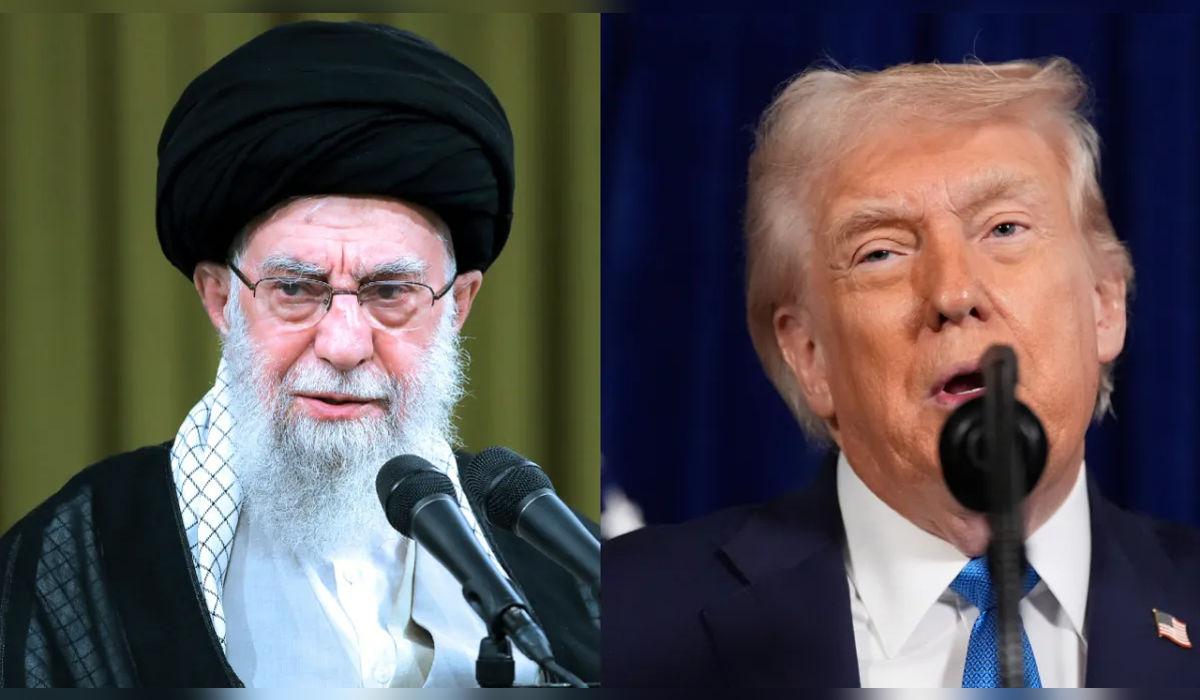
Tensions between Iran and the United States escalated sharply after Iran’s Supreme Leader Ayatollah Ali Khamenei launched a direct verbal attack on former US President Donald Trump, accusing him of arrogance and warning that leaders driven by pride ultimately face collapse. Khamenei’s remarks came in response to Trump’s recent warning that the US would take “strong action” if Iranian authorities continued to crack down violently on protesters.
In a series of statements shared on social media, Khamenei said history repeatedly shows that powerful rulers who act with excessive pride eventually lose their grip on power. Without naming Trump directly at first, he referred to past figures portrayed in religious and historical traditions as symbols of tyranny, drawing parallels to modern leaders who, in his words, believe they can dominate the world.
Khamenei later made his message explicit, stating that even leaders who appear strongest at the peak of their authority can fall suddenly. His comments were made as Iran faces widespread unrest, with protests spreading across several cities despite tight security measures and communication restrictions.
At the same time, Iran’s exiled Crown Prince Reza Pahlavi stepped into the spotlight, urging the United States to act quickly. In an appeal directed at Trump, Pahlavi said Iranians were facing extreme danger, claiming that protesters were being met with live ammunition while authorities had cut off internet and phone services to isolate the country from the outside world.
Iranian officials, meanwhile, have blamed the violence on what they describe as foreign-backed groups, accusing the US and Israel of encouraging unrest. State media reported clashes and casualties but did not provide detailed figures.
Human rights groups outside Iran have reported that at least 62 people have been killed in the protests so far, with more than 2,300 detained. The demonstrations began as protests against economic hardship but have since grown into a broader challenge to Iran’s political system. A sharp fall in the value of the Iranian currency and rising living costs have added fuel to public anger.
Despite the growing unrest, authorities have not launched a full-scale crackdown, leading to speculation about divisions within the leadership or concerns over further backlash. Trump has previously warned that the US would intervene if peaceful protesters were killed, a statement that has further heightened tensions.
The unrest has also revived debate over Iran’s future leadership. Reza Pahlavi, son of Iran’s last monarch who was overthrown in 1979, has called on people to continue protests and has positioned himself as a potential alternative voice for Iranians dissatisfied with the current system.