
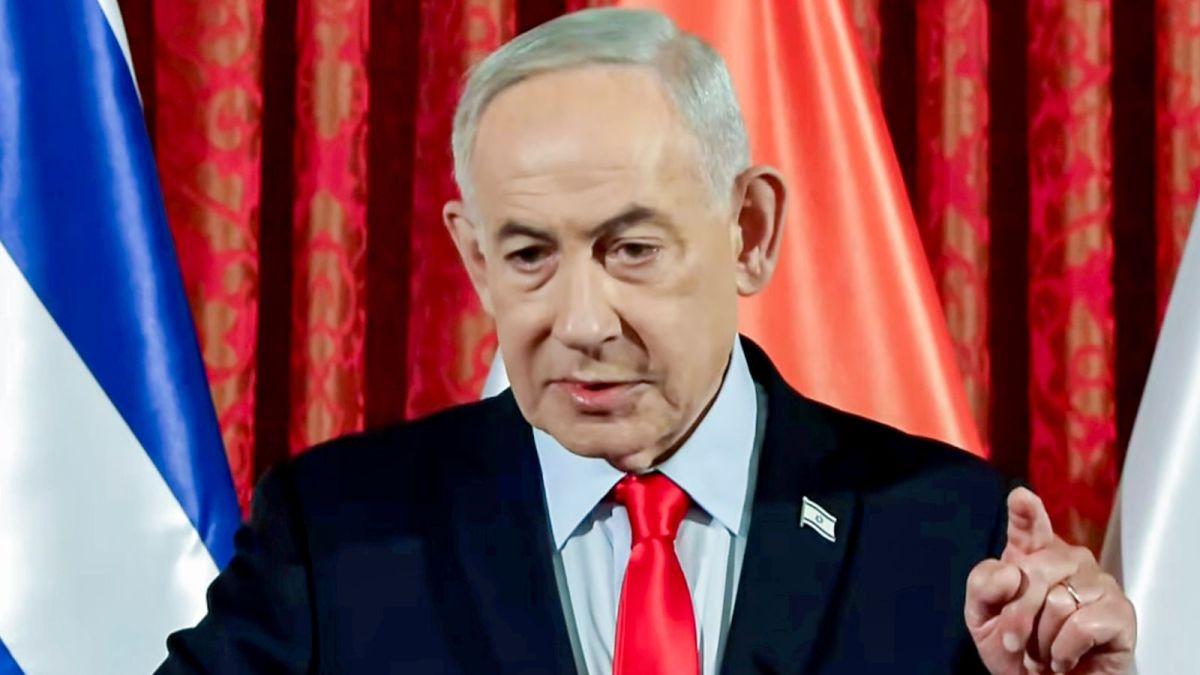
The Islamic Revolutionary Guard Corps (IRGC) of Iran on Monday claimed responsibility for a missile strike targeting the office of Israeli Prime Minister Benjamin Netanyahu in Tel Aviv, along with the location of the Israeli Air Force commander. The IRGC said the attacks, carried out using Kheybar Shekan ballistic missiles, occurred during what it described as the “tenth wave” of operations.
It remains unclear whether Prime Minister Netanyahu, 76, was present at the office at the time of the alleged strike. Israel promptly rejected the claims, stating that no attack occurred on Netanyahu’s office or the Air Force command location.
Escalation Following Khamenei’s Death
The alleged strike comes amid heightened Middle East tensions following the death of Iran’s Supreme Leader Ayatollah Ali Khamenei in what was reported as a coordinated US-Israeli operation. Since then, Iran has launched retaliatory strikes targeting Israeli and US-linked positions across the region. On Sunday, at least ten people were killed and dozens more were injured in an Iranian attack on the city of Beit Shemesh, near Jerusalem.
Israel Responds with Force
Israeli Prime Minister Netanyahu warned that his forces are responding aggressively and that operations against Tehran will intensify in the coming days. “Our forces are now striking at the heart of Tehran with intensifying force, and this will only grow stronger,” he said in a televised address on Sunday.
Targeted Iranian Officials Neutralised
Israel also reported that two senior Iranian intelligence officials were eliminated during initial strikes. Identified as Sayed Yahya Hamidi and Jalal Pour Hussein, the officials held critical roles in Iran’s global espionage operations and intelligence activities targeting Israeli interests.
Natanz Nuclear Facility in the Crosshairs
The Natanz nuclear enrichment site in Iran was reportedly struck in the latest operations. Iran’s ambassador to the United Nations, Reza Najafi, dismissed claims that the facility was being used for weapons development. However, the International Atomic Energy Agency (IAEA) has indicated that Iran’s nuclear activities remain under scrutiny, highlighting ongoing international concerns about the program.
Middle East on High Alert
The region remains on edge, with both Iran and Israel exchanging threats and military actions. Analysts warn that continued escalation could destabilize broader Middle East security and have global economic repercussions.
“Both nations are demonstrating high-risk military strategies, and international observers are closely monitoring the situation for further developments,” said a regional security analyst.



.jpeg)


