A powerful 8.8-magnitude earthquake struck off the coast of Russia's Kamchatka Peninsula early Wednesday morning, triggering tsunami waves that hit the coastal areas of Russia’s Kuril Islands and Japan’s northern island of Hokkaido. The earthquake, which was initially measured at magnitude 8.0 by Japanese and U.S. seismologists before being revised upward by the U.S. Geological Survey, is one of the strongest recorded globally since the devastating 9.0-magnitude quake that struck northeast Japan in 2011. The impact of this seismic event has been felt across the Pacific, with tsunami warnings issued for Alaska, Hawaii, and stretching as far as New Zealand.
In Japan, the Meteorological Agency confirmed that tsunami waves up to 50 centimeters (1.6 feet) were observed at Ishinomaki, the highest recorded so far, with waves as high as 40 centimeters (1.3 feet) detected at 16 different coastal locations. These waves have been steadily moving south along the Pacific coast, from Hokkaido down to the areas just northeast of Tokyo. Authorities have warned that stronger waves may yet arrive, and residents are urged to remain cautious.
In response to the tsunami threat, evacuation advisories have been issued to over 900,000 people in 133 municipalities along Japan’s Pacific coastline, extending from Hokkaido in the north to Okinawa in the south. While it is unclear how many residents have evacuated, widespread emergency precautions are in effect. Ferry services connecting Hokkaido and Aomori, as well as routes from Tokyo to nearby islands, have been suspended. Local train services in some areas have also been halted or delayed. Sendai Airport reported that its runway has been temporarily closed.
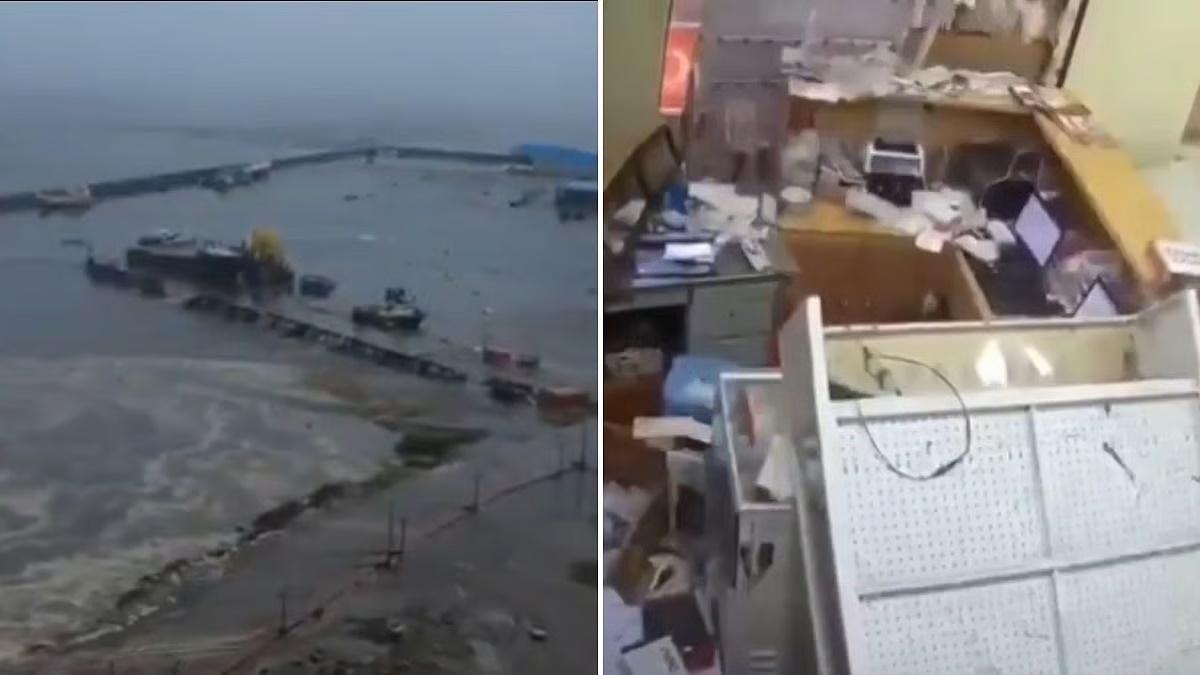
In Russia, the port town of Severo-Kurilsk on the Kuril Islands was flooded following the arrival of tsunami waves. In Kamchatka, where the quake's epicenter was located, some structural damage was reported. Videos circulating on social media showed the collapsed façade of a kindergarten in Petropavlovsk-Kamchatsky. Fortunately, there have been no reports of fatalities, though several people sought medical treatment for minor injuries. Communication lines, including internet and phone services, have been restored across Kamchatka, and the local branch of the Russian Academy of Sciences described the event as “unique,” warning that aftershocks could continue for up to a month. They also urged people to avoid certain coastal areas due to ongoing risks.
Japanese nuclear facilities located along the Pacific coast have temporarily suspended operations. Tokyo Electric Power Company Holdings, which operates the Fukushima Daiichi nuclear power plant, reported that about 4,000 workers are sheltering at higher ground within the plant complex. While there have been no signs of abnormalities, the scheduled release of treated radioactive wastewater into the ocean has been paused as a safety measure.
The tsunami threat has not been limited to Asia. In New Zealand, authorities issued alerts warning of strong and unusual currents and unpredictable sea surges along the country’s coastlines. Residents were advised to leave beaches, marinas, and coastal waters until further notice. In the United States, the Oregon Department of Emergency Management stated that small tsunami waves of about 1 to 2 feet (30 to 60 centimeters) were expected to reach the coastline by 11:40 p.m. local time. Advisories were issued across much of the U.S. West Coast, including British Columbia, Washington, and California. While not considered a major tsunami, officials cautioned that dangerous currents and strong waves could still pose significant hazards to people near the water.
This earthquake has become the most powerful seismic event to strike Kamchatka since 1952, reaffirming the volatile nature of the Pacific Ring of Fire. As global monitoring continues and aftershocks are anticipated, authorities across the Pacific Rim are on high alert.