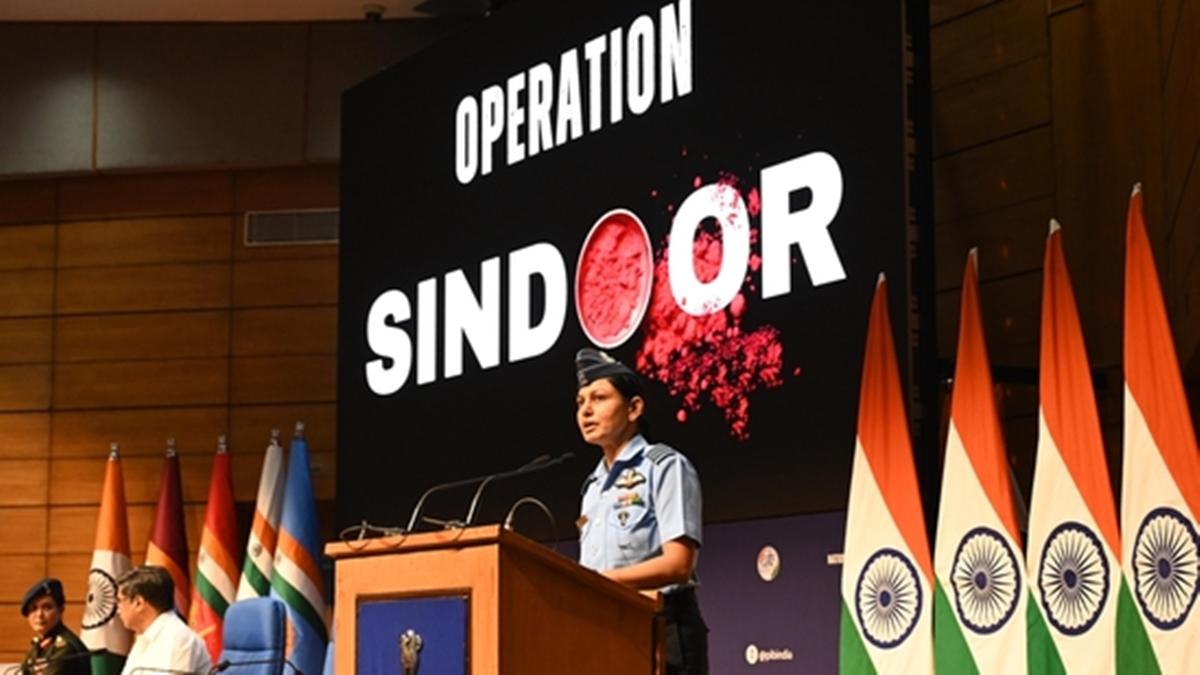
In a powerful and precisely coordinated retaliation to the April 22 terror attack in Pahalgam that killed 26 civilians, India launched a high-intensity military operation in the early hours of May 7, targeting and destroying nine terror camps located deep within Pakistan and Pakistan-occupied Kashmir. The operation, named Operation Sindoor, was executed between 1:05 am and 1:30 am and involved the joint coordination of the Indian Army, Air Force, and Navy.
The strike, described by defence officials as “short, sharp, and strategic,” was aimed at dismantling terror infrastructure that had been instrumental in planning and executing deadly attacks on Indian soil. The operation marks a clear signal of India’s zero-tolerance approach to cross-border terrorism and its capacity to carry out precision strikes well beyond the Line of Control and international borders.
Among the key targets was the Sawai Nala Camp in Muzaffarabad, a known Lashkar-e-Taiba (LeT) training hub, which had ties to both the recent Pahalgam attack and the October 2024 attacks in Sonmarg and Gulmarg. Indian intelligence reports had traced the origin of these assaults to this facility, which was reduced to rubble during the strikes.
The Syedna Belal Camp, used by Jaish-e-Mohammad as a launch pad for trained terrorists, was also decimated. This facility specialized in explosives training and survival tactics for infiltration missions across the LoC.
Further south, the Gulpur Camp in Kotli—frequented by 26/11 mastermind Zaki-ur-Rehman Lakhvi—was eliminated. This base was linked to previous attacks in Poonch and the June 2024 bus attack on pilgrims.
Other LeT and JeM facilities destroyed included the Abbas Camp—a suicide bomber training ground, Barnala Camp near Rajauri-Poonch, and Sarjal Camp in Sialkot, from where terrorists behind the March 2025 police killings in J&K had been launched.
In Pakistan’s heartland, the Indian forces struck two of the most prominent terror headquarters: Markaz Taiba in Muridke, the Lashkar-e-Taiba base where 26/11 attacker Ajmal Kasab was trained, and Markaz Subhan in Bahawalpur, the ideological and operational nerve centre of Jaish-e-Mohammad led by UN-designated terrorist Masood Azhar. Azhar has claimed that ten of his family members were killed in the attack.
The Indian government and military have maintained that these precision strikes were not aimed at civilians but solely at dismantling terror infrastructure that posed a persistent threat to India’s national security. Officials also emphasized that the operation was conducted after credible intelligence confirmed the direct involvement of these camps in recent terror plots and attacks, including the Pahalgam massacre.