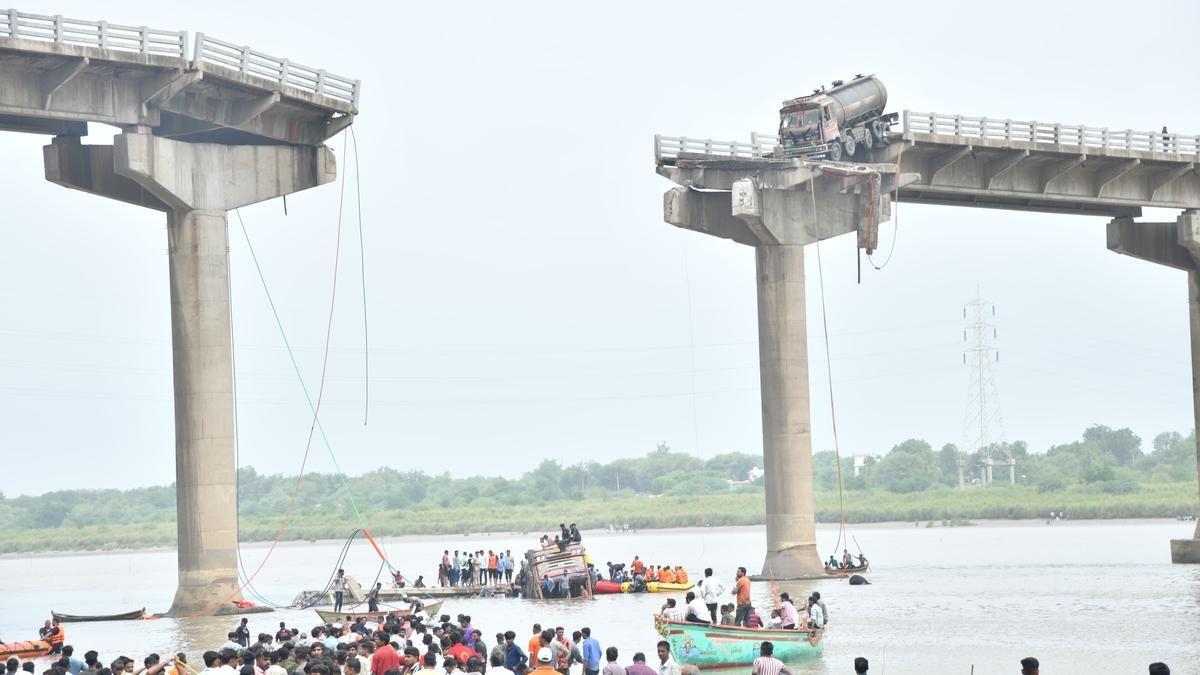
Thirteen lives were lost in a horrifying tragedy that unfolded on Wednesday as a 40-year-old bridge connecting Mujpur village in Padra (Vadodara) to Gambhira village in Anand collapsed into the Mahi River. The victims never saw it coming. Vehicles plunged into the water below when a section of the bridge gave way with a loud crash — a sound that echoed not just through the valley, but across Gujarat's fragile infrastructure network.
The bridge was more than just a rural connector — it was a key link between Central Gujarat and Saurashtra. And yet, for years, locals had flagged its dangerous condition. Cracks, rust, and loose joints were a common sight. No barricades, no warning signs — just silence from the authorities, until it was too late.
This wasn’t an act of nature. It was an act of neglect.
Following the incident, officials rushed to the site and rescue efforts began immediately. However, the damage had already been done — not just in terms of human lives, but in exposing a much larger, systemic problem.
According to the Union Ministry of Road Transport and Highways, 28 bridges across Gujarat are currently listed as under repair or reconstruction. But what about those that remain in service? Shockingly, no public data exists on how many of Gujarat’s bridges are classified as "unsafe" or "critical" — a gap in transparency that puts lakhs of commuters at risk every single day.
The issue is not limited to old bridges. In Kutch, the Rudramata Bridge, built just seven months ago, has already developed multiple cracks. The bridge was touted as a modern marvel. Today, it’s a symbol of poor quality control and contractor impunity. If newly built bridges are failing, what can be said for those built 40 or 50 years ago?
In Surat, the NH-48 bridge over the Tapi River has been visibly damaged for over two years. Instead of structural repair, authorities have covered gaping cracks with metal sheets — a cosmetic fix that does nothing to ensure safety. Still, thousands of vehicles pass over it daily.
Further south in Valsad, the Karanjveri bridge on the Vapi-Shamlaji National Highway has been closed to heavy vehicles. Built over 50 years ago, it’s been crumbling steadily. Local residents say they’ve raised the issue repeatedly for six years, but their warnings were ignored until it became too dangerous to ignore.
This string of dangerous bridges reveals a pattern: maintenance delayed, inspections skipped, and lives undervalued. There’s a glaring absence of proactive governance, and a growing sense that tragedies like the Mahi River collapse are not isolated — they’re waiting to happen elsewhere.