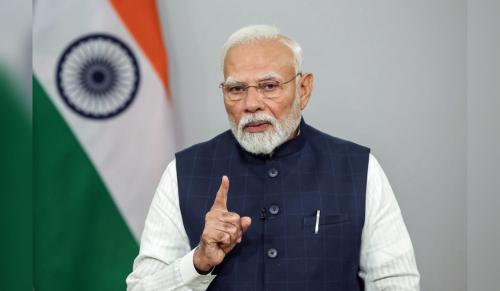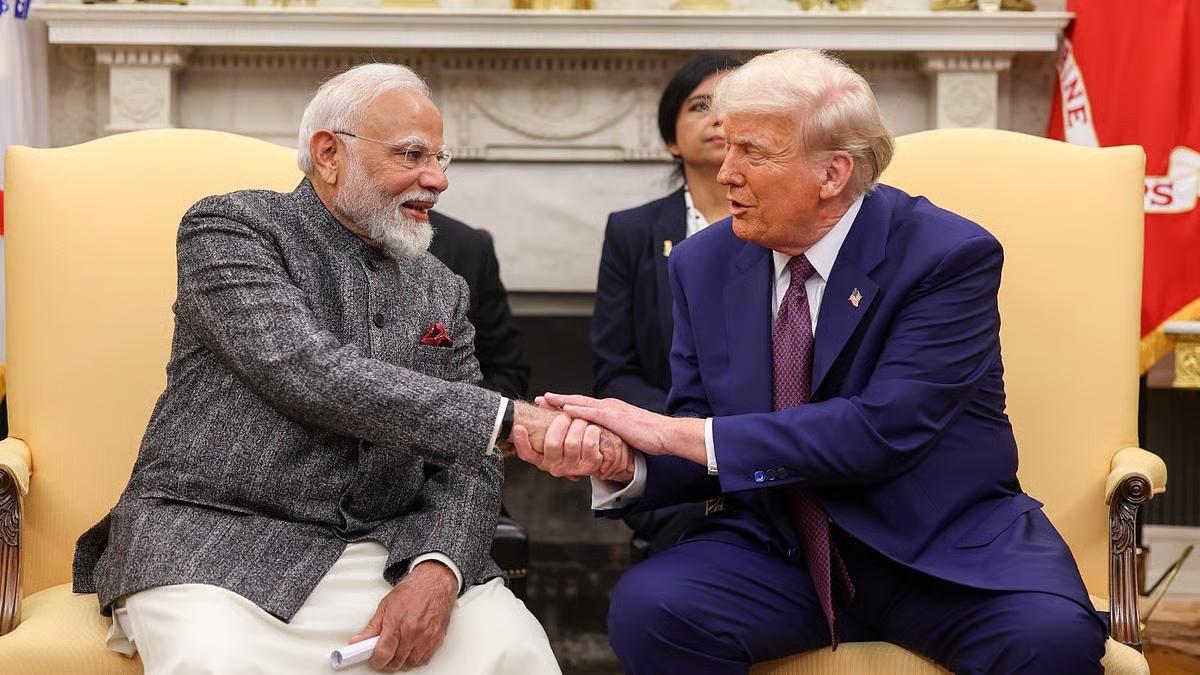
US President Donald Trump announced his plans to visit India next year, highlighting the “strong and positive” partnership between Washington and New Delhi. Speaking to reporters at the Oval Office, Trump commended Prime Minister Narendra Modi as a “great friend” and credited him for curbing India’s oil imports from Russia amid ongoing trade negotiations.
“Our discussions with Prime Minister Modi on trade and energy cooperation are going very well,” Trump said, adding that India’s decision to reduce oil purchases from Moscow reflects a “shared commitment to fair trade and global stability.”
Trump’s remarks come at a time when the United States and India are in the middle of key discussions on tariffs and energy diversification. Recently, the US imposed a 50 percent tariff along with an additional 25 percent duty on certain Indian imports, citing concerns over India’s reliance on Russian crude oil. Despite the trade frictions, both sides have expressed optimism about strengthening bilateral ties.
White House spokesperson Caroline Leavitt echoed this sentiment, saying, “The President is positive and feels very strongly about the India-US relationship. A few weeks ago, he spoke to the Prime Minister directly when he celebrated Diwali in the Oval Office with many high-ranking Indian-American officials here at the White House.”
Emphasizing India’s shift in energy imports, Trump noted, “He (PM Modi) largely stopped buying from Russia. And he is a friend of mine, and we speak... Prime Minister Narendra Modi is a great man and I will be going.” When asked about his travel plans, Trump confirmed, “It could be, yes.”
At present, India imports nearly 34 percent of its crude oil from Russia and around 10 percent from US suppliers. The Trump administration has urged India to diversify its energy sources, positioning the US as a more reliable partner in the sector.
Trump also touched upon his broader economic strategy, claiming that his use of tariffs has helped avert global conflicts. “Of the eight wars I ended, five or six were because of tariffs,” he said.