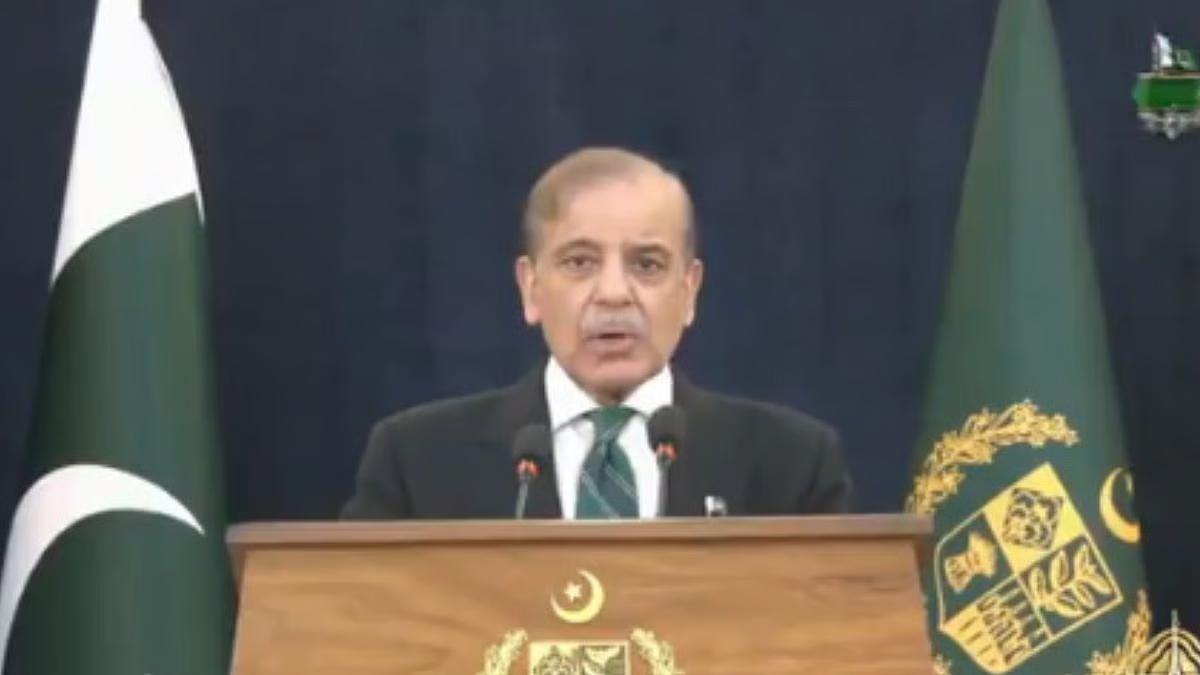
Islamabad: In a stunning admission, Pakistan Prime Minister Shehbaz Sharif confirmed that Indian ballistic missiles struck Nur Khan Air Base in Rawalpindi and other strategic sites during the military escalation on May 10. Sharif’s comments, made publicly for the first time during a speech at the Pakistan Monument on Friday, validate India’s claims of inflicting heavy damage during Operation Sindoor, launched in response to the April 22 Pahalgam terror attack.
“At around 2:30 am on May 10, General Syed Asim Munir called me on a secure line and informed me that India's ballistic missiles have hit Nur Khan air base and other areas,” said Sharif, referring to Pakistan’s Chief of Army Staff. The air base, located near Islamabad, is considered one of Pakistan Air Force’s (PAF) most vital installations and hosts its VIP transport squadron and strategic airlift operations.
In his address, Sharif also highlighted Pakistan’s military preparedness and use of indigenous technology during the confrontation. “Our Air Force used homegrown technology to save our country, and they even used modern gadgets and technology on Chinese jets,” the Prime Minister added, indirectly crediting Beijing for Pakistan’s aerial response capabilities.
The Pakistani premier offered rare personal insights into the unfolding events, recalling how he was informed of India’s strikes and the subsequent ceasefire talks. “I was swimming on the morning of May 10 when General Munir talked to me about a ceasefire,” he said. “General Asim Munir said that we have given India a powerful response, but now they are seeking a ceasefire.”
This sequence of events contrasts with the Indian narrative, which maintains that Pakistan’s Director General of Military Operations (DGMO) reached out to New Delhi first, requesting a cessation of hostilities after sustaining major losses.
Indian Prime Minister Narendra Modi, in his national address on May 12, declared Operation Sindoor a success and reaffirmed India’s firm stance on cross-border terrorism. “India will keep fighting against terrorism and will not tolerate any nuclear blackmail,” Modi said.
Operation Sindoor, launched on the intervening night of May 6 and 7, was a coordinated military retaliation against terror camps in Pakistan and Pakistan-occupied Jammu and Kashmir. The offensive reportedly neutralized over 100 terrorists linked to banned outfits including Jaish-e-Mohammed, Lashkar-e-Taiba, and Hizbul Mujahideen.
Following India’s strikes, Pakistan responded with cross-border shelling and drone incursions, prompting India to conduct a wider second wave targeting 11 military air bases across Pakistan. Critical assets such as radar stations and communication hubs were reportedly destroyed.
On May 10, both sides reportedly agreed to a de-escalation, though the diplomatic messaging continues to differ.