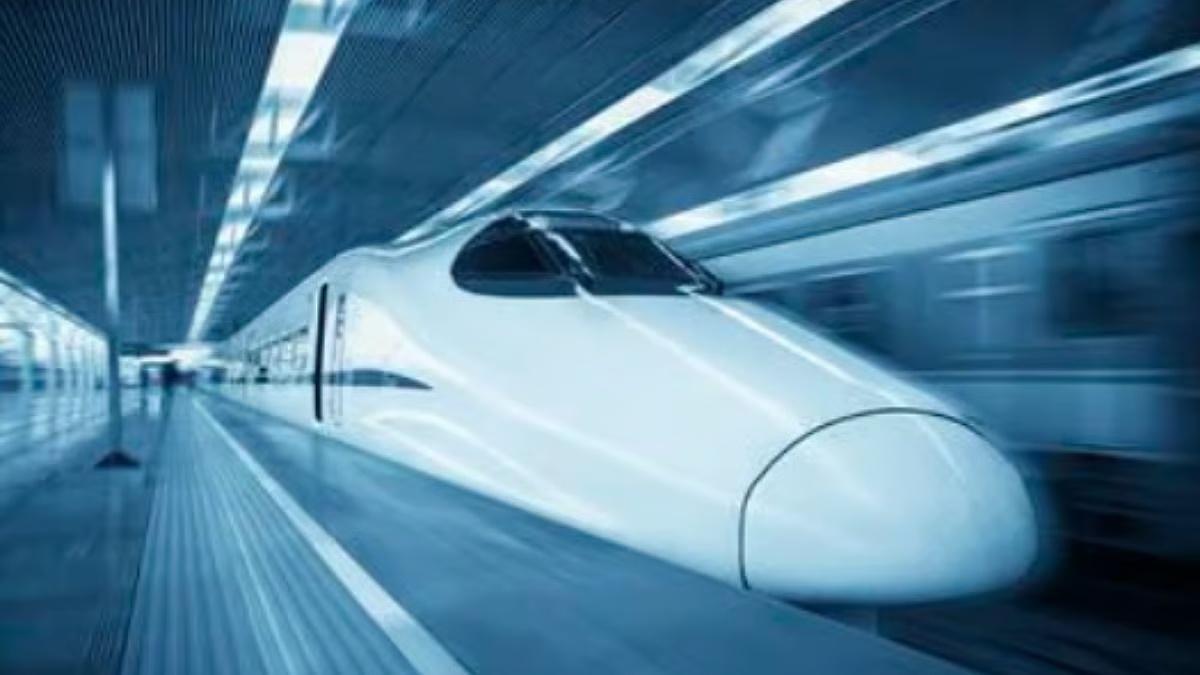
The long-held dream of traveling from Mumbai to Dubai in just two hours may no longer be the stuff of science fiction. A bold new proposal, currently under discussion between India and the United Arab Emirates, envisions an undersea high-speed rail corridor connecting the two major cities beneath the Arabian Sea. If implemented, the project could revolutionize global travel and redefine the way people think about cross-border commuting.
The ambitious plan, led by the UAE's National Advisor Bureau Limited, aims to build the world’s first underwater rail network linking two countries. Stretching nearly 2,000 kilometers, the proposed line would drastically cut travel time compared to existing flights. While the completion timeline hasn’t been finalized, feasibility studies and preliminary discussions are already underway, and international infrastructure experts are watching closely.
The underwater rail would reportedly incorporate cutting-edge technology akin to the Hyperloop system, enabling trains to move at ultra-high speeds through submerged tunnels. If successful, this futuristic model of travel would offer a new alternative to air travel—potentially quicker, greener, and more efficient.
Though exact financial details remain undisclosed, experts anticipate a massive investment running into billions of dollars. Both governments are believed to be exploring financing options through public-private partnerships and sovereign funding. Insiders suggest that the underwater corridor would open up significant opportunities for trade, tourism, and professional exchanges between India and the Gulf, with far-reaching economic impact on both sides.
An official familiar with the project called it “a game-changer that will not only boost connectivity but also reflect the innovation and ambition both nations bring to the table.” Beyond faster travel, the project may also include pre-clearance immigration systems to ensure seamless movement between the two countries, a feature expected to attract high-net-worth travelers, business executives, and even tourists seeking convenience.
Until this vision takes shape, Indian travelers continue to rely on traditional air routes, with several airlines offering frequent and affordable flights between Indian cities and Dubai. Travel platforms such as Akbar Travels are facilitating smooth journeys through comprehensive services like flight bookings, hotel deals, and express visa processing. With a near-perfect 99.8% visa success rate and options like 14, 30, and 60-day stays, the platform ensures that travelers can reach the UAE quickly and without hassle.
Akbar Travels also provides round-the-clock support, express visa delivery within 24 hours, and tailored Dubai travel packages catering to every budget—from budget-friendly stays to luxury resorts. For now, the skies remain the fastest link between Mumbai and Dubai, but the horizon may soon expand beneath the sea.
While a two-hour underwater train journey sounds like a futuristic fantasy, the momentum around the Mumbai–Dubai undersea rail corridor suggests that the future of travel may soon take a giant leap below the ocean surface. If realized, this could become one of the most iconic infrastructure projects of the century, proving once again that no dream is too distant when vision meets technology.

.jpg)