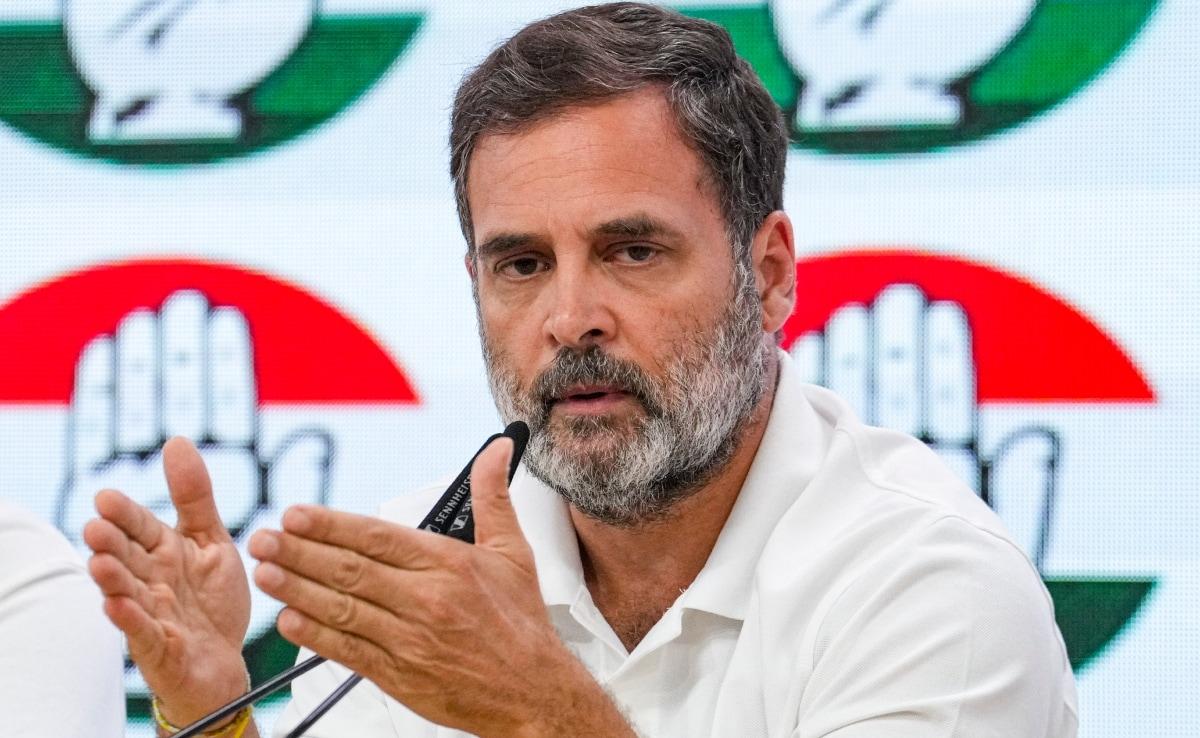
Congress MP and Leader of Opposition in the Lok Sabha, Rahul Gandhi, on Monday mounted a strong political offensive against the Bharatiya Janata Party (BJP) and the Rashtriya Swayamsevak Sangh (RSS), accusing them of believing in the concentration of power and silencing public voices, while projecting the Congress as a force that believes in sharing power with the people.
Addressing a large public gathering in Kochi’s Ernakulam district, Gandhi said the ideological divide between the Congress and the BJP-RSS combine is fundamental. According to him, the ruling party’s vision is built around centralised control, whereas the Congress model focuses on empowering local institutions and ordinary citizens.
Gandhi asserted that Kerala’s people have a long tradition of questioning authority and standing up for democratic values. “The people of this state cannot be intimidated or muted,” he said, adding that Kerala has consistently resisted attempts to suppress dissent and diversity of opinion.
Without naming any specific business groups, the Congress leader alleged that the BJP’s policies are designed to benefit a small section of powerful corporate interests. He claimed these interests are increasingly influencing national decision-making and seeking control over key public resources. Gandhi argued that such an approach weakens democracy and sidelines the needs of common citizens.
Taking aim at the National Democratic Alliance (NDA) government, Gandhi accused it of deliberately weakening grassroots governance. He alleged that financial authority is being systematically denied to panchayats and local bodies, as the ruling dispensation wants decision-making power to remain concentrated in the national capital. In contrast, he said, decentralisation is essential to address local problems effectively.
Referring to the upcoming Kerala Assembly elections, Gandhi urged the Congress-led United Democratic Front (UDF) to stay connected with the public and prioritise real issues such as unemployment and economic insecurity. He stressed that political alliances must remain accessible and responsive rather than distant and bureaucratic.
Gandhi also delivered a broader message on democratic participation, warning against what he described as a growing “culture of silence.” He said strong nations are not built when people remain quiet out of fear or personal comfort. Instead, he argued, progress comes when citizens speak up, express their beliefs, and challenge injustice—even when it is inconvenient.