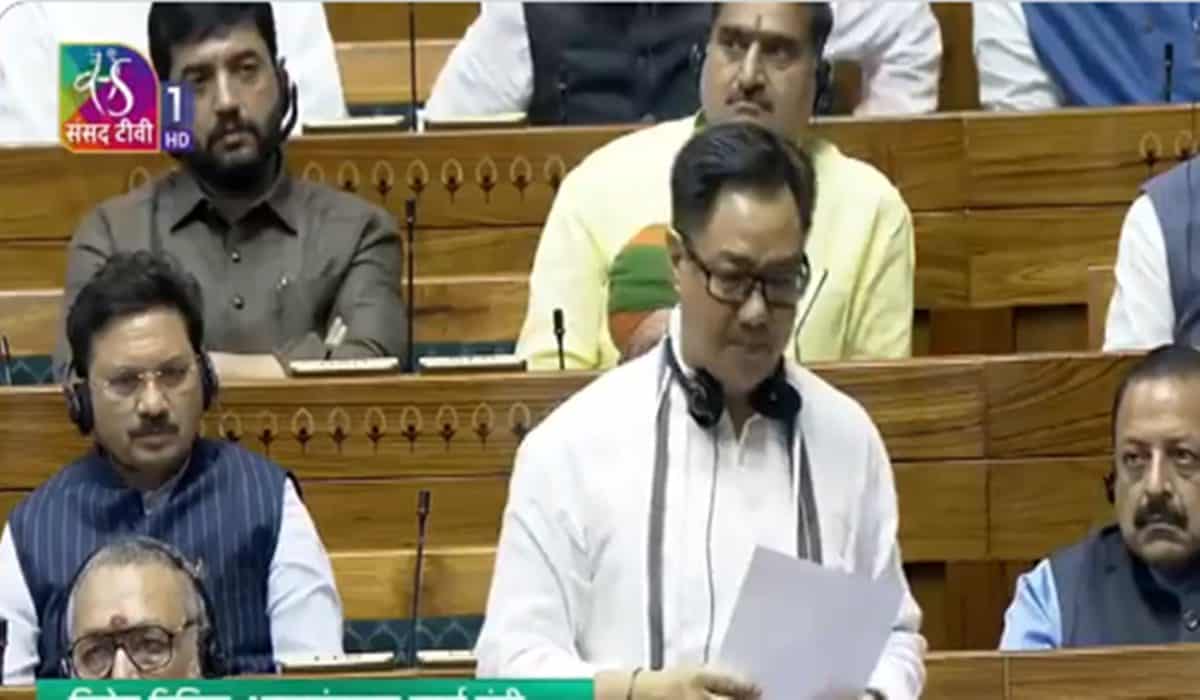
In a heated session of Parliament on Thursday, Union Minority Affairs Minister Kiren Rijiju introduced the Waqf (Amendment) Bill, 2024, igniting sharp criticism from opposition leaders who decried the bill as a "fundamental attack on the Constitution."
The bill aims to amend the Waqf Act of 1995, proposing several changes, including renaming the act to the Unified Waqf Management, Empowerment, Efficiency and Development Act, 1995. Key provisions of the amendment include redefining "waqf," modifying powers related to the registration and survey of waqf properties, and altering the governance structure of Waqf Boards.
Congress leader KC Venugopal was quick to condemn the bill, accusing the government of attempting to sow religious discord. "This bill is a fundamental attack on the Constitution. Through this bill, the government is trying to put in a provision that non-Muslims will also be members of the Waqf governing council," Venugopal charged in Parliament.
Venugopal further criticized the timing of the bill, linking it to upcoming Assembly elections in Maharashtra and Haryana. "We are Hindus, but we respect every religion. This bill, which has been introduced today, is specialised for the Maharashtra and Haryana Assembly elections?this is an attack on the federal system," he said.
The proposed amendments also aim to ensure that the creation of Waqf-alal-aulad does not undermine inheritance rights for women and provide a broader representation in the Central Waqf Council and State Waqf Boards, including Muslim women and non-Muslims.
In response, Union Minister Pralhad Joshi defended the bill, dismissing opposition claims as baseless. "We are not targeting anyone. They (Opposition) want to only create an atmosphere. Our minister will explain in detail when he introduces the bill. They want to misguide some people in the community. They are trying to tarnish the image of India. We are one of the best democracies in the world," Joshi stated.
The bill is seen as an effort to address issues related to Waqf management and property encroachments, aiming to streamline and improve the efficiency of the Waqf Boards. The debate over the bill underscores the ongoing tensions between the government and opposition over religious and constitutional matters in India.