A political storm has erupted in India after the United States announced a temporary 30-day waiver allowing Indian refiners to purchase Russian oil, triggering sharp criticism from opposition leaders who claim the move undermines India’s sovereignty.
The controversy comes at a tense time in global politics, just days after the sinking of the Iranian naval frigate IRIS Dena near Sri Lanka during the ongoing US–Iran conflict.
US Announces Temporary Oil Waiver for India
The announcement was made by US Treasury Secretary Scott Bessent, who said Washington would allow Indian refiners to continue limited purchases of Russian oil.
In a statement on social media, Bessent said the waiver was part of Donald Trump administration’s broader energy strategy.
He said the measure would allow transactions involving oil already stranded at sea and would ensure stability in global energy markets.
Bessent added that India remains an important partner for the United States but also expressed hope that New Delhi would increase imports of American oil in the future.
The statement, however, triggered strong reactions in India because of what many leaders described as a “condescending tone”.
Congress Questions India’s Energy Independence
Leaders from the Indian National Congress accused the government of allowing the United States to dictate India’s energy decisions.
Congress MP Randeep Singh Surjewala strongly criticised the government and asked whether India now needs Washington’s approval to secure its energy supplies.
“Why does India need US permission to buy oil from Russia, especially when global oil prices are rising and the Strait of Hormuz situation is worsening?” he asked.
Congress general secretary Jairam Ramesh also questioned how long India would tolerate what he described as American pressure on its energy policies.
Opposition Leaders Slam Government
Several opposition leaders reacted strongly to the development.
Former Union minister Manish Tewari criticised the language used by US officials and asked whether India had become dependent on foreign approval for its energy security.
Congress leader Sachin Pilot said India has historically followed an independent foreign policy and should continue to take decisions based on national interests.
Another Congress leader Udit Raj went even further, claiming that Washington now appears to be dictating India’s foreign policy choices.
Shiv Sena (UBT) Joins Criticism
The issue has also triggered reactions from leaders of Shiv Sena (UBT).
Party MP Priyanka Chaturvedi said the tone of the US announcement suggested that India required permission from Washington to pursue its energy needs.
She argued that such messaging contradicts the government’s claims of maintaining “strategic autonomy” in global affairs.
Meanwhile, Shiv Sena (UBT) leader Sanjay Raut escalated the attack by demanding accountability from the government and calling the situation an insult to India’s dignity.
Debate Over India’s Global Role
The controversy has also revived debate over India’s position as a major power in the Indian Ocean region.
Some analysts believe that the combination of the Iranian warship sinking and the US oil waiver announcement has raised uncomfortable questions about how much influence India actually has in regional geopolitics.
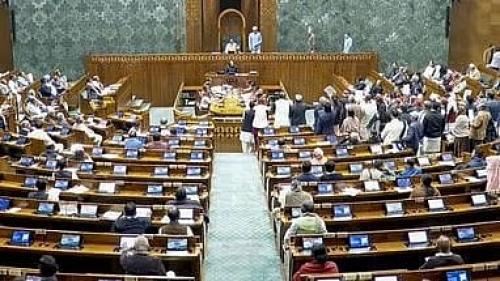
While the Indian government has not yet issued a detailed response to the political criticism, the issue is expected to intensify in Parliament as opposition parties demand clarification on whether India’s energy policies are being influenced by external pressure.