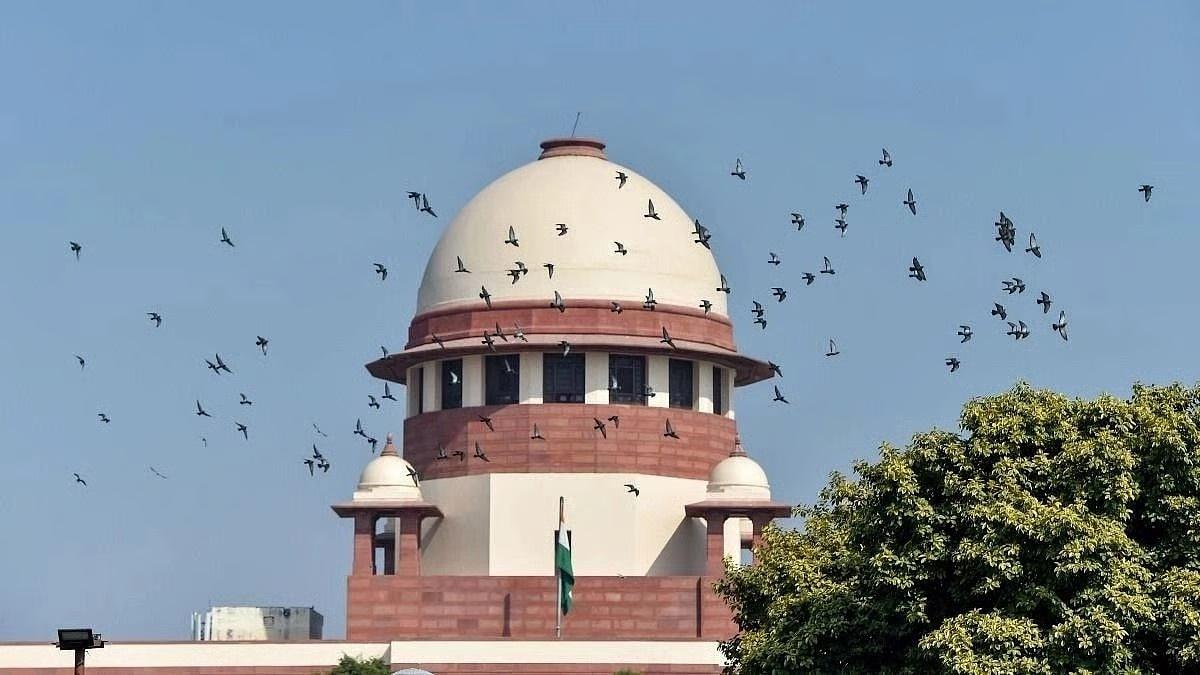
In a firm stance reinforcing the rule of law, the Supreme Court on Tuesday denied relief to a Black Cat Commando, convicted in a dowry death case, despite his participation in the high-profile Operation Sindoor. The court clarified that serving the nation cannot be used as a shield for committing domestic atrocities.
A bench comprising Justice Ujjal Bhuyan and Justice Vinod Chandran was hearing a special leave petition filed by the commando, Baljinder Singh, who had sought exemption from surrendering while his appeal was under consideration. Singh had been convicted under Section 304B of the IPC for his wife’s death, a judgment handed down by an Amritsar court in 2004.
During the hearing, Singh’s counsel highlighted his service record, saying: “I can only leave with one line—I am a participant of Operation Sindoor. For the past twenty years, I have been a Black Cat Commando posted in the Rashtriya Rifles, my lord.”
However, the court did not entertain this argument. Justice Bhuyan replied, “That does not give you immunity from committing atrocities at home. This only demonstrates how physically fit you are—and the manner in which you alone could have killed your wife.”
He further described the act as “gruesome” and refused exemption, noting that such relief is generally granted for minor sentences of six months to one year, not for a 10-year rigorous imprisonment.
Justice Chandran also observed, “The High Court has already dismissed your appeal. You are here on special leave.”
The court has now granted Singh two weeks to surrender.
According to case details, Singh and his family members were accused of strangulating his wife with a chunni (traditional scarf). The victim’s brother testified that Singh’s father helped in the act, while his mother and sisters restrained the victim. The Punjab and Haryana High Court had earlier upheld the lower court’s conviction.