The Election Commission of India has published the draft electoral rolls for West Bengal following the completion of a month-long Special Intensive Revision (SIR), an exercise that has drawn political attention and debate across the state. The updated draft reflects large-scale changes aimed at cleaning and correcting the voter database ahead of the West Bengal Assembly elections scheduled early next year.
As part of the revision, the Commission has also made public a detailed list of voters whose names have been proposed for deletion. In addition, a separate list of names that have already been cancelled after the 2025 Special Intensive Revision has been released through official channels. The final draft electoral roll prepared after the exercise is scheduled to be formally issued by noon.
Sources within the Election Commission indicated that close to 58.8 lakh voters are expected to be removed from the electoral rolls. Enumeration data shows that over 58 lakh entries have been identified for deletion after verification and cross-checking during the revision process.
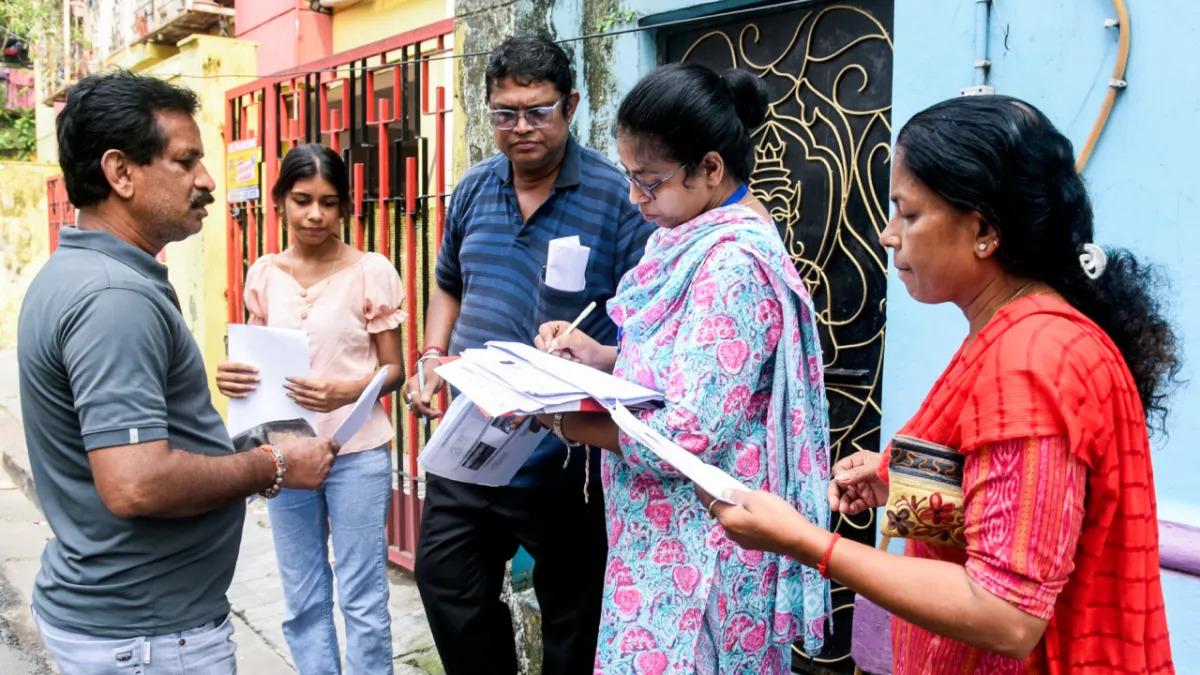
Officials revealed that one of the major concerns flagged during the exercise was the presence of deceased voters. According to Commission data, more than 24 lakh names of voters who are no longer alive were still found on the rolls. Another major category included over 12 lakh voters who could not be traced despite repeated visits by Booth Level Officers. If a voter remains untraceable after three or more verification attempts, their name is marked under the “missing” category.
The revision also uncovered nearly 20 lakh voters who had changed their place of residence but were found registered at multiple locations. In such cases, the Commission has decided that the voter’s name will be retained only at the verified address, while entries at incorrect locations will be deleted.
Apart from this, more than 1.37 lakh voters have been identified as fraudulent entries and will not be included in the revised rolls. An additional 57,000-plus names have been placed under a separate “other” category and are also set to be excluded.