As the dust settles on the Visavadar and Kadi bypoll defeats, the Gujarat Congress finds itself staring once again into the mirror, confronted by a painful question: does the party still matter in the state’s politics?
On Monday, the Congress lost both seats, a defeat widely anticipated but no less demoralising. Its state president Shaktisinh Gohil announced his resignation within hours, citing moral responsibility. His move, though, has left many in the party perplexed — especially because Congress had never realistically expected to win these seats. Yet Gohil stepping down at precisely the moment when the organisation was about to rebuild has raised questions about strategy, leadership, and unity.
For months, Congress had pitched its Sangathan Srijan Abhiyaan as a bold exercise to resurrect the state unit ahead of the 2027 Assembly elections. Teams appointed by the All India Congress Committee had only just finished selecting 40 new District Congress Committee presidents. This pilot experiment was meant to become a national template. But even before its roots could grow, Gohil’s departure threatens to derail the momentum, leaving newly appointed local leaders without a state head to guide them.
As per Indian Express Party insiders, this is not the first time the Congress has shown an alarming inability to stand firm during defeats. As one veteran put it, Congress has made a habit of leaders resigning after each loss, only to be persuaded back months later, stalling any long-term planning. Gohil, however, has insisted there is no question of returning.
The sense of drift is made worse by the rise of the Aam Aadmi Party. Gopal Italia, contesting Visavadar for AAP, not only won the seat but did so with a larger vote share than AAP’s own previous winner. Meanwhile in Kadi, a traditional BJP stronghold, Congress could not gain traction either, despite earlier hopes of denting the BJP’s grip.
That pattern echoes a wider sense of voter frustration. In villages during recent gram panchayat elections, including one in Sabarkantha where a CPI(M) candidate became sarpanch, or another in Aravalli where a BJP minister’s son lost, there were glimpses of anti-incumbency. Yet Congress could not harness that discontent.
Instead, leaders blamed “polarisation” of Patidar votes and even alleged AAP’s success was secretly engineered by BJP. This refusal to introspect is what some younger Congress activists find most suffocating. They argue that if the party wants to reconnect with voters, it must abandon the belief that every loss is someone else’s conspiracy.
Adding to the confusion, the list of new district chiefs initially lacked a single Muslim name, forcing the party to hurriedly correct its course in Bharuch. This mishap highlighted a deep disconnect between the party’s top strategists and the ground realities in Gujarat, where minorities have historically backed the Congress.
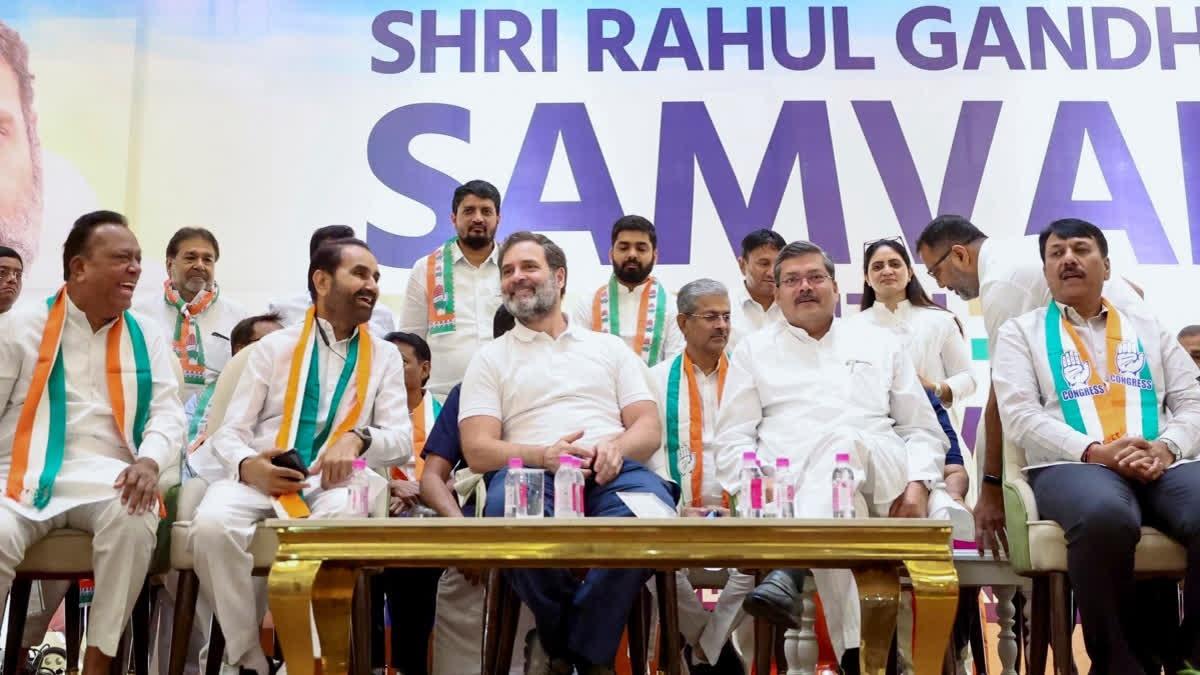
Compounding the damage, Rahul Gandhi’s repeated remarks comparing party workers to “wedding horses” and “race horses” have alienated even loyalists. A senior functionary described it as humiliating, saying that committed grassroots workers have kept the party afloat for decades and do not deserve to be belittled.
Many local voices now feel the party’s gentle, soft opposition approach is unsuited to countering the BJP. They argue that if Congress is serious about challenging a powerful, entrenched opponent, it must revive its spirit of sacrifice and aggression — a politics of sweat, struggle and even jail if needed.
One youth leader, active in the Patidar protests of 2017, put it bluntly: “With this team, forget forming a government — even winning 50 seats is a dream.”
Gohil, for his part, insists he had greater freedom than most predecessors, noting that he had pushed for the new DCC selection process and the AICC convention in Gujarat. He believes he left the party in a stronger position than when he took over, pointing to Congress winning Banaskantha Lok Sabha seat during his tenure — though the party later lost the Banaskantha Assembly bypoll.
Still, the bypoll numbers are hard to ignore: Congress’s vote share in Visavadar dropped 8 percent, while in Kadi it fell 4 percent. It underscores a shrinking appeal at a time when Gujarat’s political landscape is more fluid than ever.
As Congress struggles to find a way forward, the broader message is clear: rebuilding cannot happen through token pilots or patchwork appointments alone. It demands deep trust in local leadership, honest introspection, and a willingness to fight hard battles without constantly changing generals at the first sign of defeat.
For now, the Gujarat Congress’s dream of revival looks fragile. Whether it can rise from these ashes will depend on its ability to stand united, listen to its own workers, and rediscover the fighting spirit that once made it a serious contender in the state.