In a major political boost for the Bharatiya Janata Party (BJP), seven Rajya Sabha MPs from the Aam Aadmi Party (AAP) have officially merged with the BJP, significantly strengthening the ruling party’s position in the Upper House and dealing a major blow to the opposition camp.
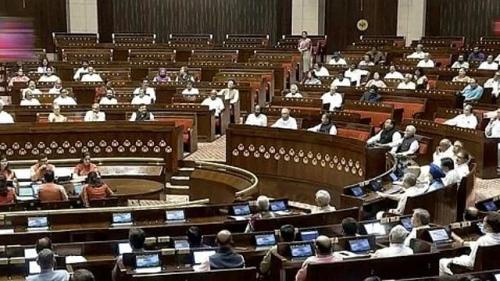
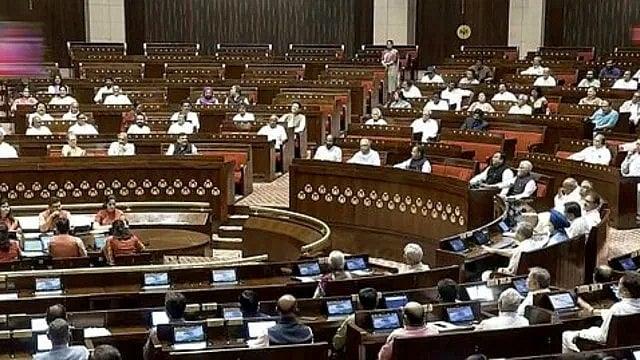
With the latest merger, the BJP’s strength in the Rajya Sabha has increased from 107 to 113, giving the party greater parliamentary momentum at a crucial political time. The development was officially confirmed on Monday after the Rajya Sabha Secretariat released an updated list of party positions reflecting the new numbers.
The seven MPs who joined the BJP are Raghav Chadha, Swati Maliwal, Harbhajan Singh, Sandeep Pathak, Ashok Mittal, Rajinder Gupta and Vikram Sahni, all of whom were earlier part of the AAP’s Rajya Sabha team.
Their entry into the BJP marks one of the most significant political gains for the ruling party in recent months, especially because it comes through a legally valid merger under the anti-defection law.
Since the seven MPs together represented more than two-thirds of AAP’s Rajya Sabha members, the merger was protected under constitutional provisions, allowing them to join the BJP without disqualification.
This strategic addition not only increases BJP’s numbers in Parliament but also sends a strong political message that the party continues to expand its influence even in the Upper House, where numbers are crucial for passing legislation smoothly.
The development also reflects the BJP’s growing appeal among leaders from opposition parties, especially at a time when several regional and national parties are facing internal instability.
The merger has reduced the AAP’s Rajya Sabha strength to just three members, leaving the party weakened in Parliament while boosting the BJP-led alliance’s political confidence.
Political observers see the move as a major parliamentary victory for the BJP, as it strengthens the party’s legislative position while also damaging the morale of one of its vocal rivals.
The political impact became even stronger after Raghav Chadha, one of the most recognisable faces among the defecting MPs, publicly defended the decision and said the group had chosen to join the BJP to continue “positive politics.”
By bringing in seven opposition MPs at once, the BJP has gained not only numerically but also symbolically, showing its ability to attract leaders from rival camps.
This strengthens the BJP’s image as the dominant political force at the national level and adds momentum to the NDA’s strategy ahead of future electoral battles.
The Rajya Sabha numbers are politically significant because every additional member increases the ruling alliance’s ability to push key legislation and manage parliamentary business more effectively.
With this latest expansion, the BJP has moved one step closer to strengthening its control in the Upper House, where coalition arithmetic often decides the fate of important bills.
For the BJP, the merger is both a numerical victory and a political message — that the party’s influence continues to grow, even inside opposition ranks.