
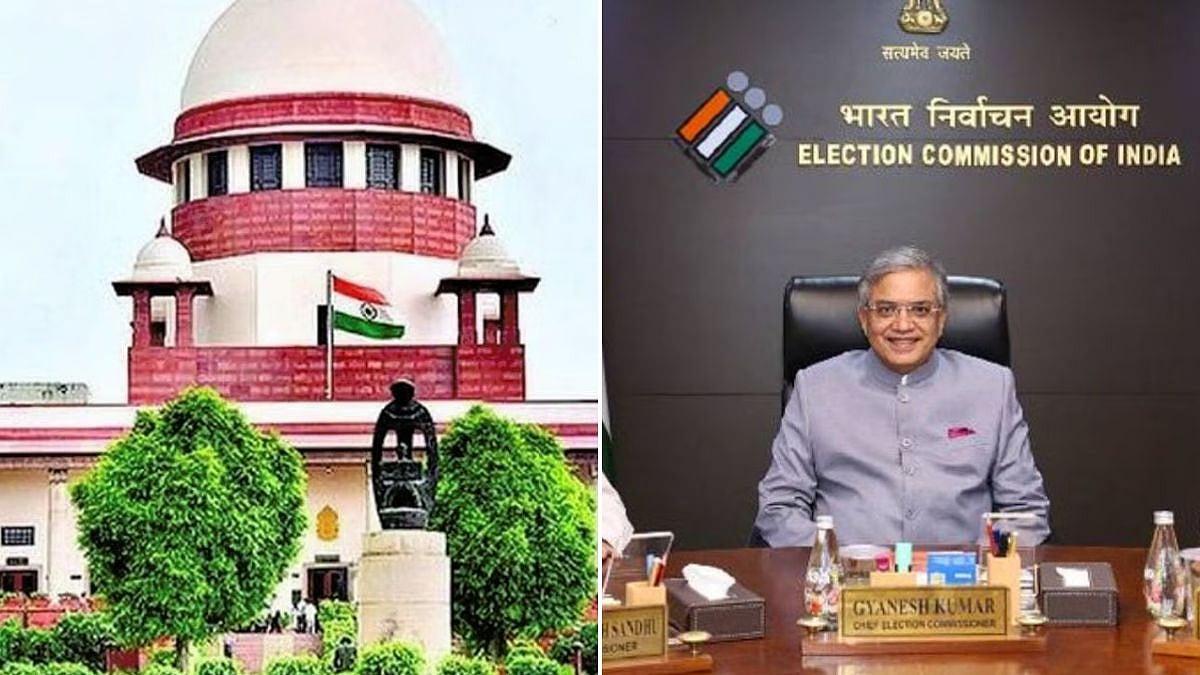
Leaders of the Bharatiya Janata Party in West Bengal on Saturday backed the position taken by the Supreme Court of India, which declined to interfere with the Election Commission of India’s decision to deploy Central government and PSU personnel for vote counting duties. The court, while disposing of the matter, indicated that the poll body must adhere strictly to its own guidelines that also provide for the presence of state government nominees during the process.
The development came during proceedings on a petition filed by the All India Trinamool Congress challenging an earlier order of the Calcutta High Court. The ruling has intensified political exchanges between the two major parties in the state ahead of counting day.
State BJP president Samik Bhattacharya criticised the ruling party, alleging misuse of public funds in pursuing legal battles and claiming that voters have already made up their minds. Union Minister of State Sukanta Majumdar also targeted the Trinamool Congress, arguing that the party opposed the involvement of Central personnel in counting and approached the court after failing to block the move through administrative channels. He further took a swipe at Kalyan Banerjee over repeated legal challenges.
Senior BJP leader Dilip Ghosh echoed similar sentiments, suggesting that electoral outcomes would ultimately reflect public opinion rather than legal contests.
On the other hand, Trinamool Congress leaders maintained that they would respect the court’s decision while continuing to monitor developments. State minister Shashi Panja pointed out that the procedures adopted in West Bengal differed from those in other states, raising concerns about uniformity in the election process. Party MP Saugata Roy downplayed the significance of the verdict, indicating that the party’s primary demand had been for a mix of state and central staff in counting teams.
During the hearing, counsel representing the Election Commission informed the court that counting scheduled for May 4 would take place in accordance with existing guidelines, including the presence of state government representatives as outlined in the commission’s circular. The court recorded the assurance and closed the case without issuing additional directions.
.jpg)


