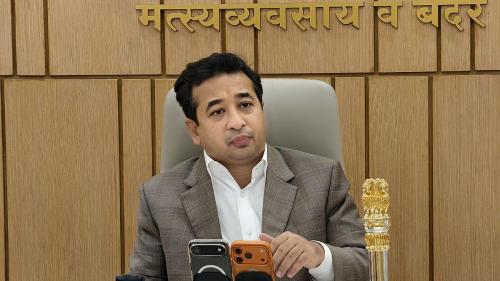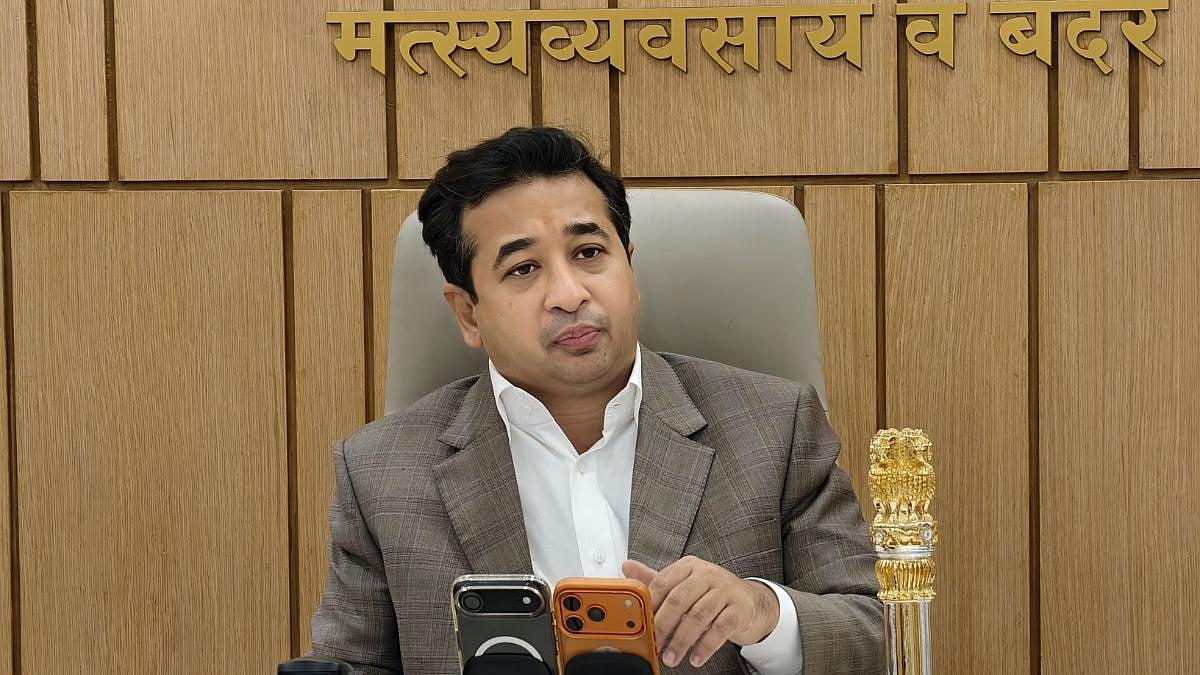
Maharashtra minister Nitesh Rane has triggered a major political controversy after claiming that “corporate jihad” is emerging in the state and calling for preference to be given to Hindu candidates in hiring to prevent what he described as “jihadist activities.”
The controversial remarks came in the wake of allegations of sexual harassment and attempted religious conversion at a Tata Consultancy Services (TCS) unit in Nashik, where police have arrested eight employees.
Rane’s statement has now ignited sharp reactions, with critics accusing him of communalising a criminal investigation and escalating tensions through divisive rhetoric.
Nitesh Rane Links Nashik TCS Case to ‘Corporate Jihad’
Reacting to the allegations at the Nashik TCS office, Rane alleged that employment opportunities were being misused as a means to target Hindus and facilitate religious conversion.
He argued that if corporate spaces were being used to promote such activities, stronger responses would be required from society.
According to him, the issue was no longer limited to isolated incidents but reflected what he described as a wider “corporate jihad” targeting Hindu employees.
His remarks quickly drew attention because of the direct link he attempted to make between a workplace harassment case and broader communal narratives.
Call for Hindu-Only Hiring Draws Criticism
Rane further claimed that a growing sentiment within the Hindu community favours doing business and employment only within the community as a form of protection.
He suggested that companies may soon be compelled to prioritise Hindu candidates in hiring to prevent what he called “misuse of employment for religious conversion.”
The statement has sparked intense criticism, with opposition leaders and activists warning that such remarks undermine workplace equality and deepen communal divisions.
Many observers have argued that linking hiring practices to religion could have serious legal and social consequences.
TCS Nashik Case Under Investigation
The controversy stems from allegations at a TCS BPO unit in Nashik, where police have arrested eight employees, including seven men and one female operations manager, in connection with accusations of sexual harassment and attempted religious conversion.
Another female employee is reportedly absconding.
The seriousness of the allegations prompted the National Commission for Women to form a fact-finding committee to investigate the matter.
Authorities are continuing their inquiry as the case attracts national attention.
Political Heat Rises Over Communal Angle
Rane’s remarks have now shifted the focus of the TCS case from workplace misconduct to a broader political controversy.
Opposition voices say the minister’s comments risk communalising a sensitive criminal investigation and inflaming social tensions.
Supporters, however, argue that he is voicing concerns over alleged patterns of coercion and exploitation.
The statement has added another layer of political tension in Maharashtra, where debates over identity and communal politics remain highly charged.
Debate Over Employment and Communal Politics Intensifies
The incident has reopened debate over the use of communal language in discussions around crime and employment.
Critics argue that employment opportunities should never be framed through a religious lens, regardless of the allegations in a specific case.
At the same time, Rane’s comments are being viewed as part of a wider political strategy to appeal to identity-based sentiments.
As investigations continue in the Nashik case, the political fallout from the “corporate jihad” remark is expected to intensify.