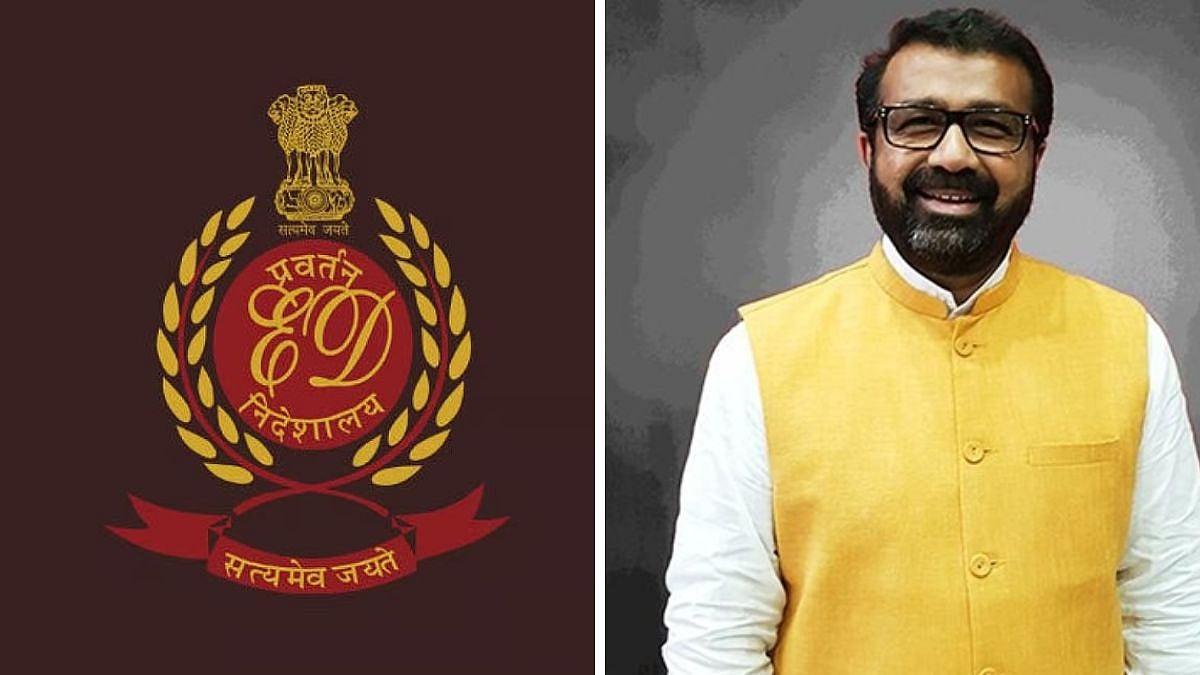
The Directorate of Enforcement (ED) on Monday carried out searches at 12 locations across Karnataka, including premises linked to Congress MLA Nalapad Ahmed Haris and his sons Mohammed Nalapad and Omar Farooq Nalapad, in connection with an alleged cryptocurrency-linked money laundering case. The raids are part of an ongoing investigation into illegal digital asset transactions and the laundering of proceeds generated through cybercrime.
Nalapad Ahmed Haris, who represents the Shanthinagar Assembly constituency and currently serves as the Chairman of the Bengaluru Development Authority, is considered a close associate of Karnataka Deputy Chief Minister D K Shivakumar. According to the ED, the raids were linked to a money laundering case involving Srikrishna Ramesh, also known as Sriki, and several others accused of hacking and illegal cryptocurrency dealings.
In an official statement, the ED said that searches were conducted under the provisions of the Prevention of Money Laundering Act (PMLA), 2002, after investigations suggested that Mohammed Nalapad and Omar Farooq Nalapad were closely associated with Sriki and were among the main beneficiaries of the proceeds generated through criminal activities.
The agency stated that its investigation has uncovered a detailed modus operandi used by the accused, which involved hacking websites and cryptocurrency wallets to steal virtual digital assets (VDAs) and sensitive financial data. These stolen assets were then sold using crypto trading platforms, while the proceeds were layered through multiple bank accounts to conceal the origin of the funds. According to the ED, the money obtained through these transactions was later used by Sriki and his associates for personal benefits.
Officials said Sriki had been known in cybercrime circles since 2016, but came under the spotlight during the COVID-19 pandemic, when Karnataka’s government procurement portal was allegedly hacked and funds were diverted into multiple accounts before being converted into cryptocurrency. That case was initially investigated by the Criminal Investigation Department (CID).
During the CID investigation, officials reportedly discovered evidence suggesting that the cryptocurrency operation was much larger than initially believed, involving multiple hacking incidents and a significant flow of illicit funds through digital channels. As the probe expanded, names of influential individuals allegedly surfaced, but the CID eventually filed a chargesheet only in the procurement portal hacking case involving Sriki.
Based on the CID’s findings, the ED launched its own parallel money laundering investigation. Monday’s raids are said to be the first major enforcement action by the central agency in connection with the larger cryptocurrency laundering network linked to Sriki.
The ED believes that the accused used sophisticated methods to hide the proceeds of cybercrime, including routing the money through multiple accounts and digital wallets to make the funds difficult to trace. Investigators are now examining financial records, cryptocurrency transactions, and digital evidence collected during the raids to identify the extent of the alleged network.
Karnataka has witnessed multiple controversies related to illegal cryptocurrency transactions in recent years. Apart from the Sriki case, another alleged racket reportedly involved government officials converting bribe money into cryptocurrency through intermediaries. While both cases raised serious concerns about corruption and cyber-enabled money laundering, investigations into these matters had not reached a decisive conclusion.
The latest ED action has once again brought the Karnataka cryptocurrency scandal into focus, especially due to the alleged links between the accused and politically influential figures. With the agency now intensifying its probe, the investigation could potentially widen further depending on the evidence gathered during the raids.