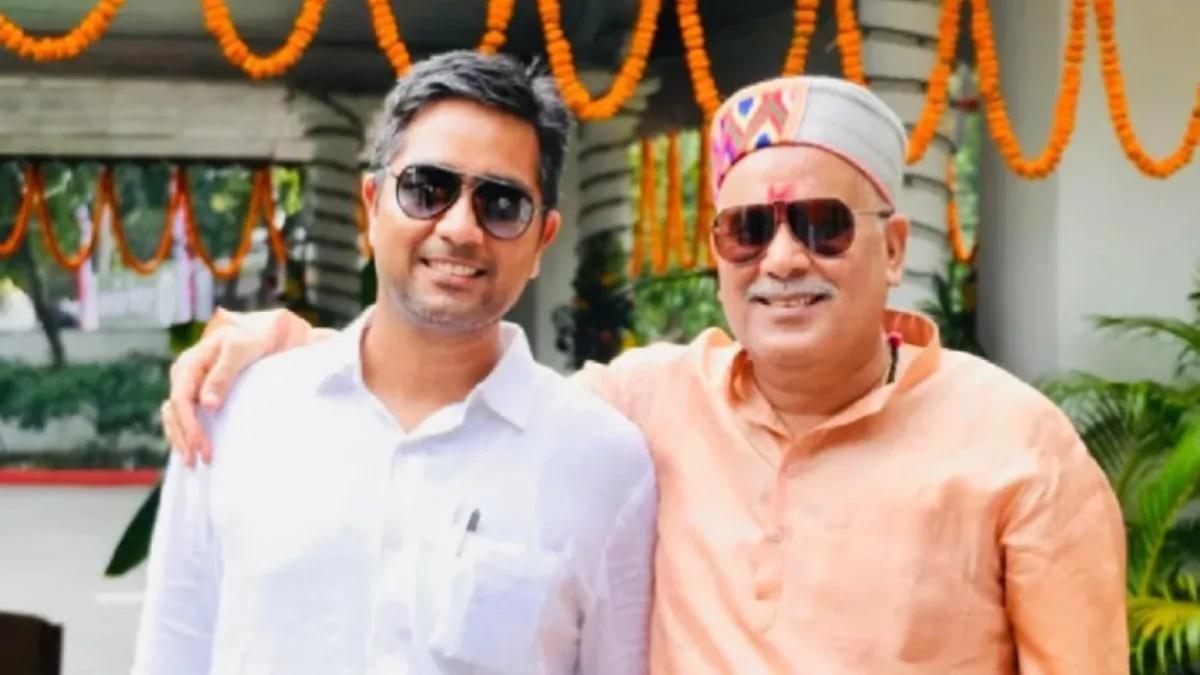
The Enforcement Directorate (ED) carried out a major raid on Thursday morning at the residence of Chaitanya Baghel, son of former Chhattisgarh Chief Minister and senior Congress leader Bhupesh Baghel, as part of its ongoing investigation into the state’s multi-crore liquor scam. The ED team, supported by CRPF personnel, reached Baghel’s house in Bhilai-3 around 6:00 am and immediately began search operations related to suspected money laundering and corruption in the liquor distribution system.
This isn't the first time enforcement action has touched the Baghel family. Earlier, in March 2025, the ED raided 14 premises in Durg district, including properties belonging to Chaitanya Baghel and known businessman Laxmi Narayan Bansal (popularly known as Pappu Bansal). That operation involved cash seizures and note-counting machines.
Responding to the latest development, Bhupesh Baghel took to social media platform X (formerly Twitter) and said, “ED has arrived. Today is the last day of the assembly session. The issue of trees being cut in Tamnar for Adani was supposed to be raised today. Sahib has sent ED to my Bhilai residence.” His comment suggests political timing behind the raid, coming just as the opposition was preparing to target the government over alleged environmental concerns.
According to the ED, the liquor scam reportedly caused a staggering ₹2,161 crore loss to the Chhattisgarh exchequer between 2019 and 2022, when the Congress government was in power. The ED’s findings claim that the money trail runs through a deep nexus of politicians, bureaucrats, businessmen, and contractors.
The investigation has named several high-profile individuals, including Anwar Dhebar and Anil Tuteja, as alleged key figures in the scam. The ED further alleges that former Excise Minister Kawasi Lakhma was receiving regular cash kickbacks from the proceeds of the liquor trade.
Some of the core mechanisms of the scam as per ED findings include:
Bribes from distillers on each liquor case sold via Chhattisgarh State Marketing Corporation Limited (CSMCL).
Unrecorded sales of country liquor from government shops, diverting state revenue.
Market cartelization, where distillers who paid bribes were rewarded with fixed market shares.
Foreign liquor entry manipulations, in which holders of FL-10A licenses were forced to pay hefty bribes to be allowed into the business.
As the probe deepens, the ED is expected to continue its crackdown on what it describes as a systematic, politically shielded liquor syndicate.