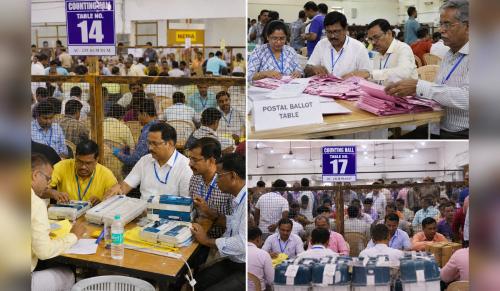
The Assembly election results of 2026 are showing a major political shift across India. After several hours of counting, clear trends have emerged in key states like West Bengal, Tamil Nadu, Assam, Kerala and Puducherry. These results are not just routine wins or losses—they indicate big changes in voter behaviour and political direction.
Bengal Sees Historic Shift
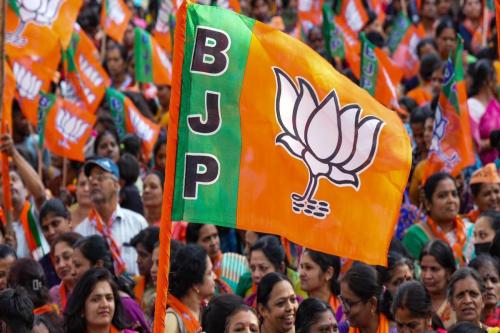
In West Bengal, the Bharatiya Janata Party is heading towards a historic victory. The party is close to winning around 200 seats in the 294-member Assembly, comfortably crossing the majority mark of 148. This is significant because the All India Trinamool Congress, led by Mamata Banerjee, has ruled the state for 15 years.
The TMC is now trailing far behind, leading in less than 100 seats. This sharp drop shows strong anti-incumbency and a shift in voter support. Issues like law and order, unemployment, and political violence were heavily raised by the BJP during the campaign.
At the constituency level, Bhabanipur and Nandigram remained key battlegrounds. Mamata Banerjee is leading in Bhabanipur, while Suvendu Adhikari is ahead in Nandigram. Another notable development is BJP candidate Ratna Debnath leading in Panihati, which has drawn attention due to her background linked to a high-profile case.
Tamil Nadu Gets a New Political Player
Tamil Nadu has delivered one of the biggest surprises. Actor-turned-politician Vijay and his party Tamilaga Vettri Kazhagam are leading in around 110 seats out of 234. This puts them very close to the majority mark of 118.
Traditionally, Tamil Nadu politics has been dominated by the Dravida Munnetra Kazhagam and All India Anna Dravida Munnetra Kazhagam. However, this time the TVK has broken that pattern. The AIADMK is performing better than expected with around 60+ seats, while the DMK is also around the same number but has clearly lost ground.
Even Chief Minister M. K. Stalin is facing a tough contest in his own seat, showing how strong the wave is.
Assam Strengthens NDA Hold
In Assam, the National Democratic Alliance, led by the BJP, is heading for another strong victory. The alliance has already crossed the majority mark of 64 and is leading in nearly 100 seats out of 126.
Chief Minister Himanta Biswa Sarma is comfortably leading in his constituency. The BJP’s campaign focused on identity issues, development, and illegal immigration, which seems to have worked in its favour.
The Congress-led alliance is far behind, struggling to cross even 30 seats. This shows that Assam continues to remain a stronghold for the BJP.
Kerala Moves Towards Change
Kerala is also witnessing a major shift. The Congress-led United Democratic Front has crossed the majority mark of 71 and is now moving towards nearly 100 seats in the 140-member Assembly.
This means the ruling Left Democratic Front may lose power after two consecutive terms. Early trends show the LDF falling behind significantly, although leaders like Pinarayi Vijayan are still in close contests.
Puducherry and Bypolls Add to the Picture
In Puducherry, the All India N.R. Congress is leading the race, winning multiple seats and staying ahead of its rivals. The BJP has also secured a few seats, strengthening its presence in the Union Territory.
At the same time, bypoll results across states like Maharashtra, Karnataka, Gujarat, Nagaland, and Tripura are showing mixed outcomes. Leaders like Sunetra Pawar in Maharashtra and BJP candidates in Gujarat and the Northeast are registering strong performances.
Big Picture: What This Means
These results together point towards a broader national trend. The BJP is expanding its footprint in eastern India, while regional politics is evolving in the south with the rise of new players like TVK. Kerala shows that anti-incumbency is still strong, while Assam confirms BJP’s continued dominance.