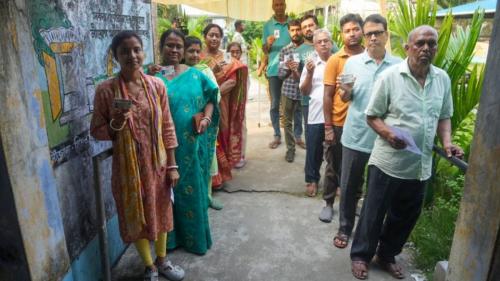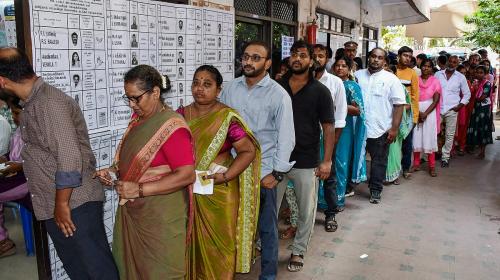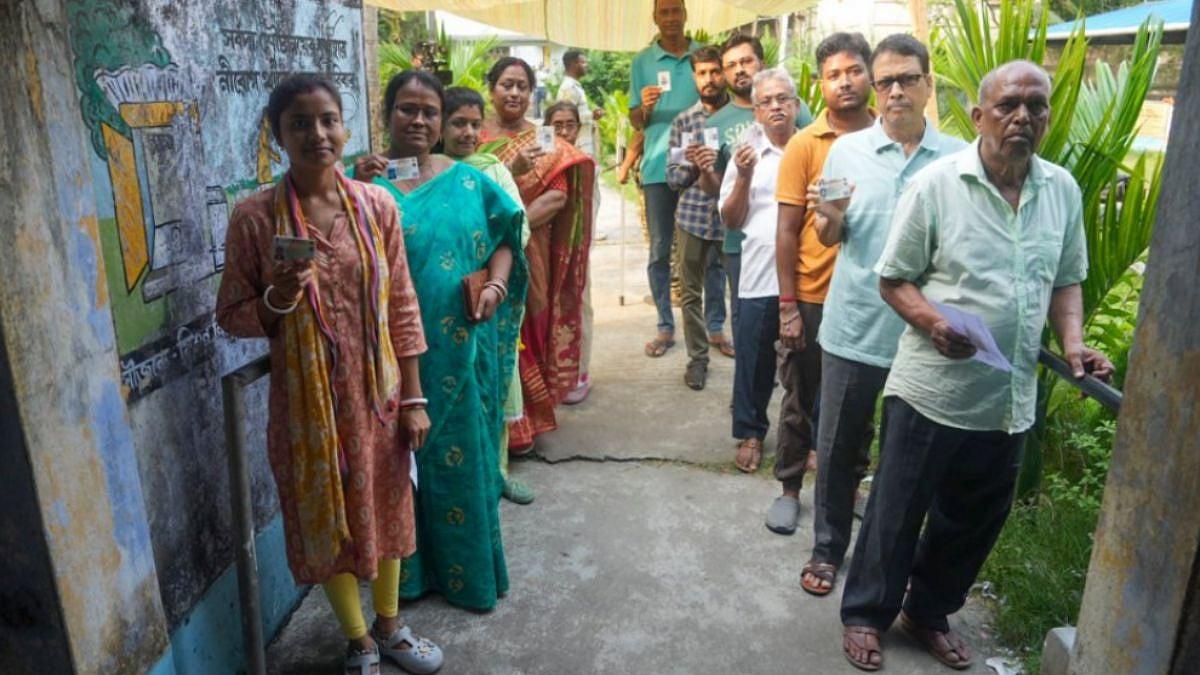
West Bengal’s first phase of the 2026 Assembly elections has delivered a historic voter turnout, but behind the record numbers lies a controversy that could reshape the political narrative of the state. According to the Election Commission of India, the first phase across 152 constituencies recorded an unprecedented 92.88 per cent turnout, the highest since Independence. In districts such as Cooch Behar and South Dinajpur, turnout crossed 96 per cent, prompting Chief Election Commissioner Gyanesh Kumar to describe the participation as historic. While these numbers appear to reflect a massive democratic exercise, the surge has triggered serious questions over whether the turnout was driven by enthusiasm or fear.
At the centre of the controversy is the Special Intensive Revision (SIR), an aggressive voter roll verification process carried out ahead of the elections. Designed to identify “dead, shifted, or absent” voters and correct database errors, the drive led to the deletion of nearly 40.46 lakh names in the 152 seats that went to polls in the first phase. Across West Bengal, the total voter base reportedly fell by almost 12 per cent. This sharp reduction significantly altered the turnout percentage. With fewer registered voters remaining on the rolls but a high number of ballots cast, the turnout mathematically surged to record levels. Critics argue that this means the impressive 92.88 per cent figure may not entirely reflect increased voter enthusiasm but rather the impact of a reduced voter denominator.
The political atmosphere surrounding the voter roll revision created widespread anxiety, especially in districts with high migrant populations such as Malda, Murshidabad, and North Dinajpur. Reports indicate that thousands of migrant workers returned home from distant states, often spending their own money, out of fear that not voting would result in their names being permanently deleted from the electoral rolls. For many, participation in the election became more than a democratic right — it became a way to prove residency and preserve political identity. This sense of urgency appears to have fuelled the extraordinary turnout, transforming voting day into what many viewed as a struggle against disenfranchisement.
The controversy over voter deletions quickly reached the Supreme Court of India, where petitions were filed over names being removed from the rolls. In one striking case, 65 election officials reportedly discovered that their own names had been deleted despite being assigned election duty. A Bench led by Chief Justice Surya Kant and Justice Joymalya Bagchi acknowledged the seriousness of the issue but declined to halt the electoral revision process. Instead, affected individuals were directed to appellate tribunals, which are already burdened with a backlog of nearly 34 lakh pending appeals. As of the first phase, only 136 voters had managed to get their names restored through the appeal mechanism. This meant that thousands of people who claimed to have been wrongly removed remained unable to vote, adding to concerns that the election process may have excluded legitimate voters.
The historic turnout has now become the centre of a fierce political battle between the ruling All India Trinamool Congress and the opposition Bharatiya Janata Party. The Trinamool Congress claims the high turnout reflects public anger against the SIR process, arguing that voters turned out in large numbers to resist what it describes as arbitrary deletions targeting migrant workers and minorities. According to the ruling party, the turnout was a protest against bureaucratic intimidation and an assertion of democratic rights. The BJP, on the other hand, argues that the voter roll revision removed “ghost voters” and ended proxy voting, making the 92.88 per cent turnout a genuine expression of public sentiment. The party says the large participation reflects a desire for change and shows that real voters were finally able to vote freely in a peaceful election.
Historically, sharp rises in voter turnout in India are often interpreted as a sign of anti-incumbency. Political analysts frequently cite the 84.33 per cent turnout in West Bengal’s 2011 Assembly elections, which led to the end of the 34-year Left Front rule, as evidence that unusually high participation can indicate a political shift. But the 2026 election presents a far more complex picture. Because the turnout increase coincides with large-scale voter deletions and intense fear of disenfranchisement, analysts say it may not follow the usual anti-incumbency pattern. Instead, the high turnout may represent a combination of political mobilisation and administrative pressure, making it difficult to interpret as a straightforward endorsement of any party.
As West Bengal moves toward the next phase of polling, the state’s record turnout remains a powerful but contested symbol. On paper, the 92.88 per cent figure signals extraordinary democratic participation. Yet beneath the headline lies a deeper debate over whether the record was achieved through public enthusiasm or through fear generated by voter roll deletions. The final answer may only become clear when results are announced, revealing whether the turnout reflects support for political change or simply the determination of voters to ensure they are not erased from the democratic process.