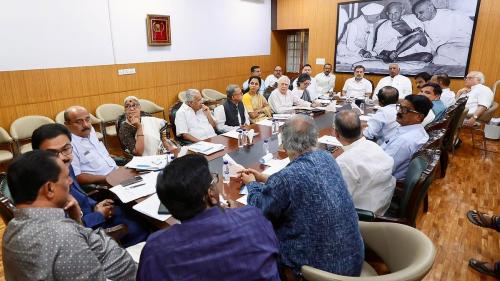
In a significant move ahead of the upcoming Assembly elections, the Maharashtra Cabinet convened on Thursday to announce several proposals aimed at addressing social welfare and infrastructure development in the state. One of the most notable decisions was to request the Union government to raise the income limit for the 'non-creamy layer' category from the current threshold of ?8 lakh to ?15 lakh per year. This change will enable more individuals to qualify for the non-creamy layer certificate, which provides access to reserved quotas in government jobs and educational institutions.
The Cabinet?s decision reflects an attempt to enhance opportunities for economically weaker sections of society, expanding the benefits of reservation policies. The change is expected to be well-received by various community groups as it aligns with the government's push for inclusive growth.
In addition to the income limit proposal, the Cabinet approved a draft ordinance that aims to grant constitutional status to the Maharashtra State Scheduled Caste Commission. This ordinance, which will be presented in the upcoming session of the state legislature, includes provisions for 27 new posts within the commission, as stated by Chief Minister Eknath Shinde's office. The establishment of a constitutional commission is seen as a step toward better representation and support for Scheduled Castes in Maharashtra.
The Cabinet also addressed welfare measures for journalists and newspaper vendors by approving the creation of dedicated welfare corporations. This initiative aims to provide support and resources to individuals in the media sector, recognizing their contributions to society.
Further emphasizing its commitment to agricultural development, the Cabinet sanctioned additional funding of ?709.27 crore for the Balasaheb Thackeray Turmeric Research Centre located in Hingoli district. This investment is intended to advance research and development in turmeric production, which is vital for the region's economy.
In a move aimed at improving public infrastructure, the Cabinet approved a partnership with the non-profit organization Sulabh International to provide toilets and restrooms at all 57 government hospitals across the state. This initiative is expected to enhance sanitation facilities and improve the overall healthcare experience for patients and visitors.
The Cabinet also made strides in urban development by allocating government land in Akse and Malwani, located in the Borivali suburb of Mumbai, for the Dharavi redevelopment project. Additionally, the Cabinet announced plans to provide housing for ineligible slum-dwellers in these areas, which span over 140 acres.
Another decision included the allocation of housing for government employees residing in the Bandra government colony in Mumbai, aiming to enhance living conditions for state workers.
To promote literacy and community engagement, the Cabinet agreed to amend the Public Libraries Act to boost the library culture in Maharashtra. This move is expected to facilitate greater access to educational resources for residents.
Infrastructure development also featured prominently in the Cabinet meeting, with the approval of the construction of the Jalna-Nanded expressway, which will be linked to the Mumbai-Nagpur Samruddhi corridor. This expressway is anticipated to improve connectivity and boost economic activity in the region.
Lastly, the Cabinet sanctioned irrigation projects for various districts, including Saoner, Kankavli, Rajapur, Ambernath, Jihe Kathapur, and Latur. These projects aim to enhance agricultural productivity and support farmers in the state.
As the Assembly elections approach, these decisions by the Maharashtra Cabinet signify a concerted effort to address pressing issues in the state, while also positioning the government as responsive to the needs of its citizens. The outcomes of these initiatives will be closely monitored as they unfold in the coming months.