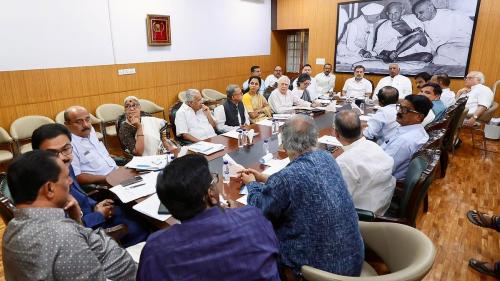
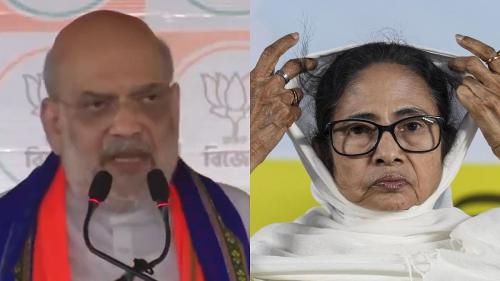
A fresh political flashpoint has emerged as leaders of the INDIA bloc on Wednesday resolved to oppose the Centre’s move to link delimitation with the implementation of the Nari Shakti Vandan Adhiniyam, even as they reiterated full support for 33 per cent reservation for women in legislatures. The decision followed a key meeting held at the residence of Congress president Mallikarjun Kharge in New Delhi, attended by senior opposition figures including Rahul Gandhi, Tejashwi Yadav, Supriya Sule, Sanjay Raut and Kapil Sibal.
After the meeting, Kharge accused the government of introducing the proposal in a manner aimed at weakening the Opposition, stating that while all parties back women’s reservation, the current approach raises serious concerns. He said the bloc would oppose the delimitation aspect in Parliament, arguing that it is being brought without completing the census and could alter political representation unfairly.
Leaders expressed apprehension that the proposed delimitation exercise may reduce the relative representation of southern and north-eastern states in the Lok Sabha, potentially shifting the political balance. They maintained that the reservation law should be implemented independently and without being tied to changes in constituency boundaries.
Echoing these concerns, Congress leader Jairam Ramesh described the delimitation process as “dangerous,” alleging that past exercises in regions like Assam and Jammu and Kashmir indicate how it could be used for political advantage. He argued that linking reservation with delimitation risks undermining federal balance and fair representation.
The INDIA bloc leaders emphasised that they are not opposing women’s reservation itself and want its implementation at the earliest, but warned against what they see as an attempt to merge separate issues—reservation, delimitation, and seat expansion—into a single political move.
With Parliament set to debate the proposal, the Opposition has signalled a united strategy to challenge the government’s plan, setting the stage for a heated confrontation over representation, constitutional processes, and electoral balance.