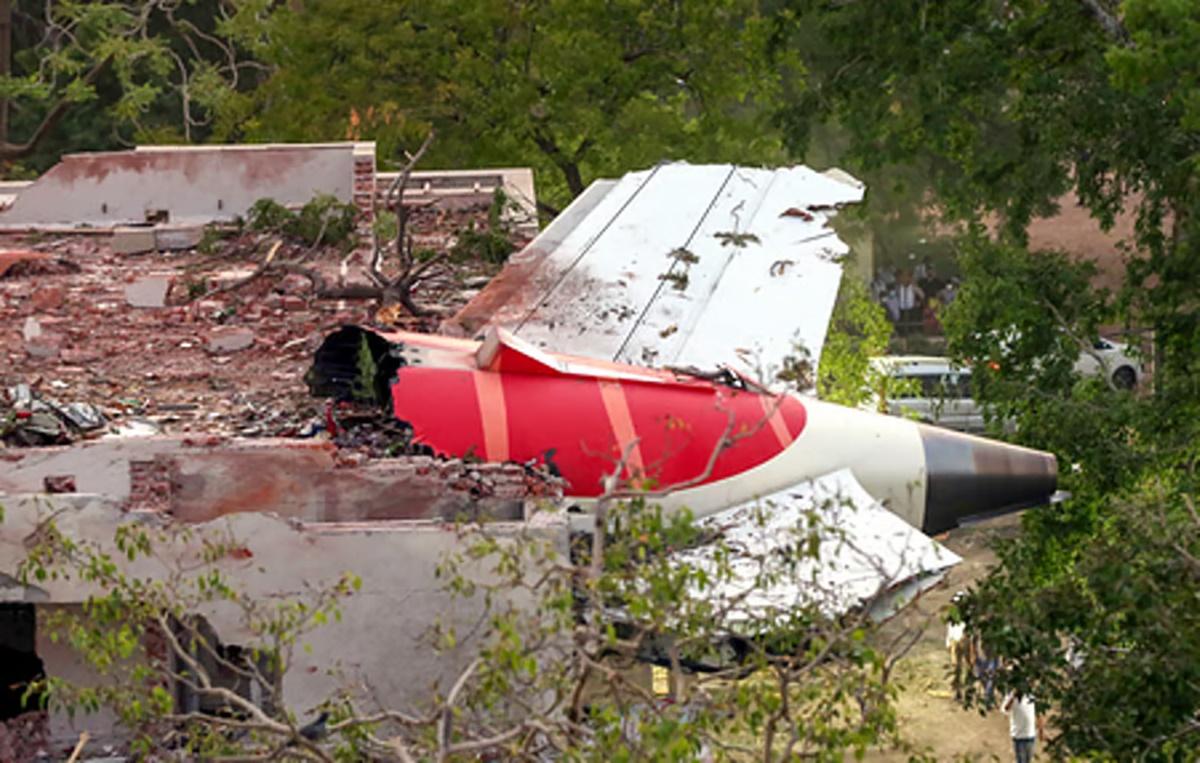
Air India had replaced the Throttle Control Module (TCM) of the Boeing 787-8 aircraft that crashed in Ahmedabad on June 12 not once, but twice in the last six years, as part of scheduled maintenance. The tragic crash, which claimed 260 lives, has now drawn attention to the role of fuel control switches — a component within the TCM — that were found to be in cut-off mode immediately after takeoff.
The TCM was changed in 2019 and again in 2023 as per Boeing’s maintenance guidelines issued in 2019. These guidelines recommend replacing the TCM every 24,000 flight hours. While investigators have confirmed these replacements were carried out, they have clarified that neither instance was linked to fuel control switch problems.
The Aircraft Accident Investigation Bureau (AAIB), which released a preliminary report on Saturday, is continuing to examine how and why the aircraft failed to gain enough altitude after takeoff. According to the report, the engines' fuel control switches were later turned back on — but by then, it was too late to regain safe thrust or altitude.
The crash occurred when the London-bound Dreamliner, registered as VT-ANB, went down shortly after takeoff and collided with a building in Ahmedabad. The aircraft was powered by GEnx-1B engines, and no defects related to the fuel control system had been reported since the last TCM replacement in 2023.
Although the U.S. Federal Aviation Administration (FAA) had issued a special advisory in 2018 about the locking feature of fuel control switches, it was not considered serious enough to make inspections mandatory. Air India, therefore, did not carry out the suggested checks, as the advisory was not binding.