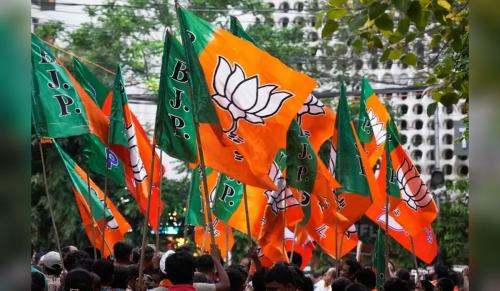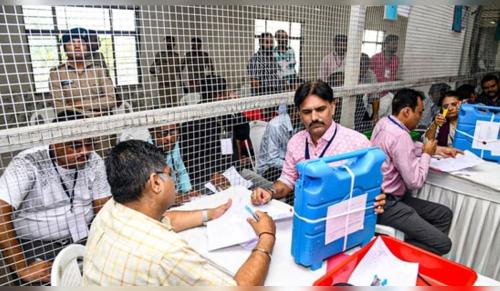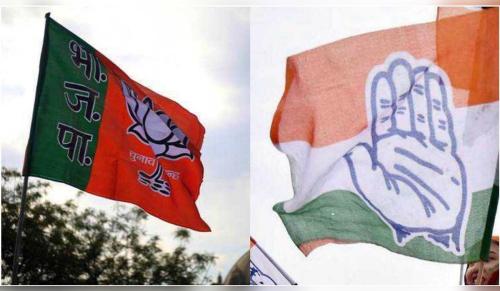
The Bharatiya Janata Party delivered a commanding performance in Gujarat’s local body elections, sweeping all 15 municipal corporations and establishing overwhelming dominance across municipalities, district panchayats and taluka panchayats. The emphatic victory has reinforced the BJP’s political hold over the state and is being viewed as a crucial momentum boost ahead of the 2027 Gujarat Assembly elections.
The local body elections were held across 15 municipal corporations, 84 municipalities, 34 district panchayats and 260 taluka panchayats, covering more than 10,000 seats statewide. Even before counting began, the BJP had secured hundreds of seats uncontested, setting the tone for what would become a sweeping electoral triumph.
One of the most striking outcomes came from Surat Municipal Corporation, where the BJP registered an overwhelming win and dismantled the gains made by the Aam Aadmi Party in the previous election. AAP, which had emerged as a surprise challenger in Surat in 2021, saw its presence shrink drastically this time, while the Congress remained almost absent from the contest. The result marked a major setback for AAP’s ambitions in Gujarat and underlined the BJP’s continued urban dominance.
The BJP’s success was not limited to urban centres. In municipalities across the state, the party emerged as the clear frontrunner, winning the vast majority of local bodies. Congress, once a strong force in many civic institutions, was reduced to a marginal presence, highlighting the erosion of its support base in Gujarat.
Rural Gujarat also delivered a decisive mandate in favour of the BJP. In district panchayat elections, the ruling party secured an overwhelming lead, taking control of nearly all major district bodies. Congress, which had traditionally relied on rural pockets for political relevance, suffered major losses as voters shifted decisively towards the BJP.
A similar pattern was visible in taluka panchayats, where the BJP established dominance in nearly every region. The scale of the victory demonstrated the party’s deep organisational reach and booth-level strength across both urban and rural Gujarat.
The Congress, on the other hand, faced one of its weakest performances in recent local body elections. The party struggled to retain its traditional vote base and failed to make any meaningful gains against the BJP’s aggressive campaign machinery. The results exposed the party’s shrinking grassroots presence and raised serious questions about its preparedness for the 2027 state elections.
For the Aam Aadmi Party, the election offered little relief. While it managed to register isolated victories in a few pockets, including a symbolic win in Amreli district, the party failed to build on the momentum it had generated in earlier elections. Its weak performance in key urban areas especially Surat has raised concerns about its long-term strategy in Gujarat.