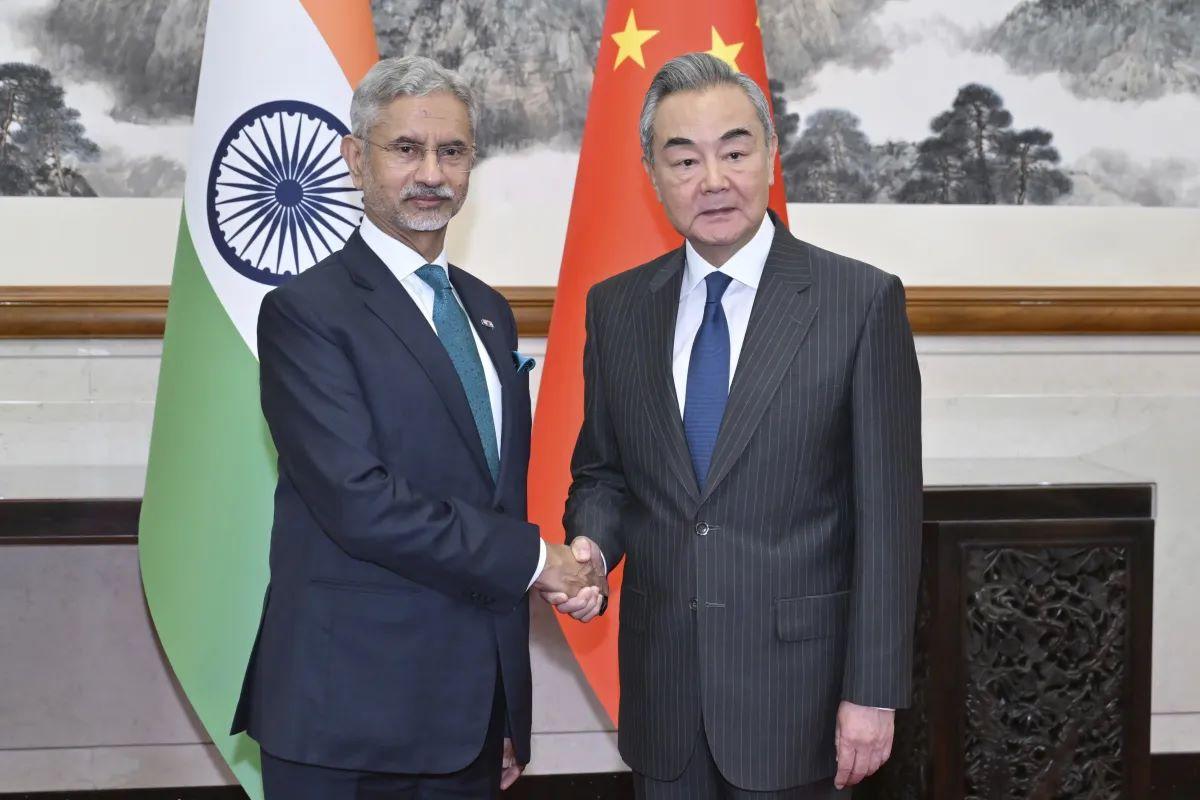
Chinese Foreign Minister Wang Yi is scheduled to arrive in New Delhi on August 18 for a three-day visit to hold the 24th round of Special Representatives’ talks on the decades-old boundary dispute between India and China. The high-level dialogue comes at a sensitive time, as both nations attempt to stabilise ties following the violent standoff in eastern Ladakh in 2020 that plunged bilateral relations to their lowest point in decades.
According to the Ministry of External Affairs (MEA), Wang Yi, who is also a member of the Politburo of the Communist Party of China (CPC) and Beijing’s Special Representative on the boundary issue, will hold discussions with India’s National Security Advisor Ajit Doval. External Affairs Minister S. Jaishankar is also slated to meet Wang for a separate bilateral engagement.
The MEA said in an official note, “At the invitation of NSA Ajit Doval, Member of the Politburo of the Communist Party of China and Chinese Foreign Minister Wang Yi will visit India from 18–20 August 2025 to participate in the 24th round of talks between the Special Representatives of India and China on the boundary question. EAM Dr. S. Jaishankar will also hold a bilateral meeting with Wang Yi during the visit.”
Confirming the visit, Chinese Ambassador to India Xu Feihong posted on X: “From August 18 to 20, Member of the Political Bureau of the CPC Central Committee, Minister of Foreign Affairs and China’s Special Representative on the boundary question Wang Yi will visit India and hold the 24th round of talks at the invitation of the Indian side.”
The upcoming talks are seen as a crucial step ahead of Prime Minister Narendra Modi’s planned visit to Tianjin later this month to attend the Shanghai Cooperation Organisation (SCO) summit. Diplomatic observers note that Wang’s trip could help pave the way for a possible Modi-Xi Jinping meeting on the sidelines of the summit.
Both governments have recently taken measured steps to ease tensions. Last year, India and China reached a limited disengagement agreement in parts of Ladakh. Earlier this year, Beijing reopened the Kailash-Mansarovar Yatra for Indian pilgrims, while New Delhi resumed granting visas to Chinese tourists — gestures interpreted as confidence-building moves.