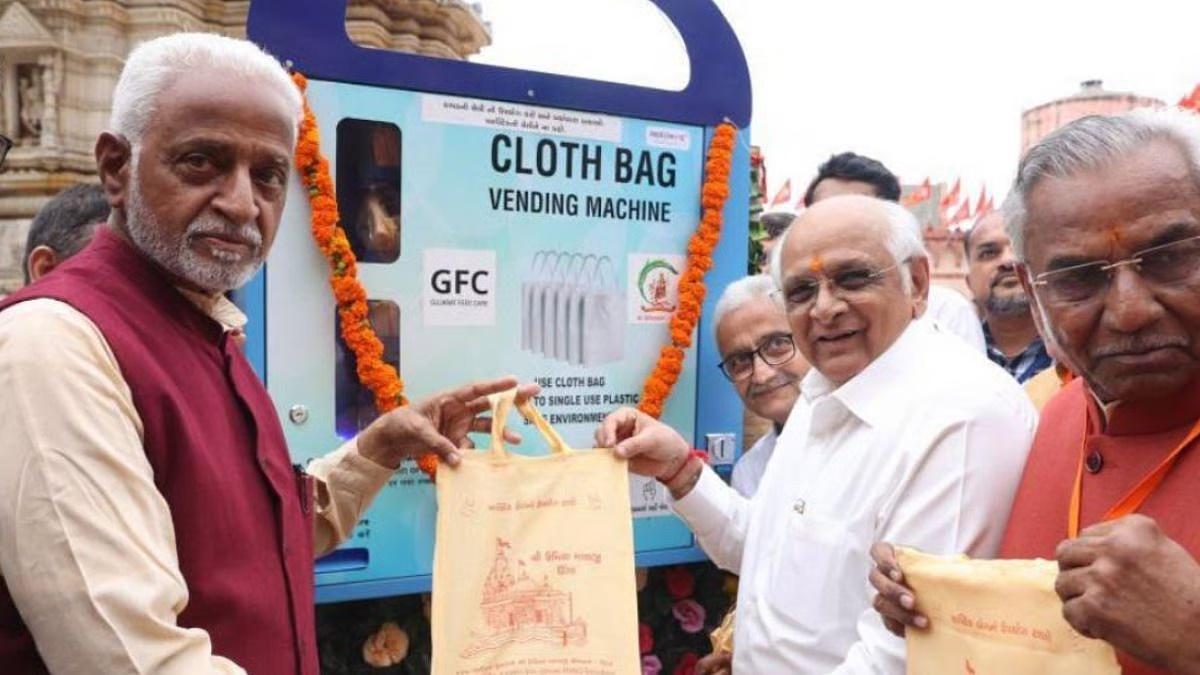
In a major push toward environmental sustainability, Gujarat has crossed a remarkable milestone by distributing over one lakh cloth bags through automated vending machines in just 200 days. The initiative, part of a state-wide campaign to reduce plastic dependency, has quickly gained traction among citizens and is now being hailed as a model for eco-conscious governance.
The program, spearheaded by the Gujarat government, leverages "Bag ATMs" — vending machines that dispense cloth bags for a nominal fee via coin or QR code — strategically installed at markets, public parks, religious sites, and hospitals. These machines have now become a symbol of the state's grassroots effort to eliminate single-use plastic.
Launched earlier on World Environment Day at Mahatma Mandir in Gandhinagar, the second phase of the campaign introduced 260 new machines. These additions expanded the network significantly, reaching rural districts, pilgrimage centers like Ambaji, Dwarka, and Somnath, and critical urban spaces, including 20 hospitals in Ahmedabad alone.
What makes the project especially impactful is its integration with women-led self-help groups, which are responsible for producing the cloth bags. This fusion of environmental action with women's economic empowerment ensures that each bag used contributes both to sustainability and livelihood generation.
To promote accountability and public participation, the Gujarat Pollution Control Board has also introduced the 'Pratigya Live Dashboard', a real-time digital platform that tracks bag usage and machine performance across the state. Citizens and officials alike can monitor progress through the dashboard, fostering transparency in the campaign’s execution.
The initiative has been particularly welcomed at temples, where offerings (prasad) are now distributed in eco-friendly cloth bags — replacing the traditional use of plastic — reinforcing the message of environmental care through cultural practices.
As the world observes Plastic Bag Free Day on July 3, Gujarat’s achievement positions it as a national leader in tackling plastic waste. The campaign not only underscores the importance of sustainable habits but also highlights how policy, technology, and community engagement can work together to drive meaningful change.