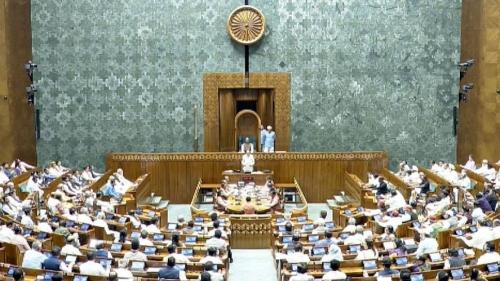
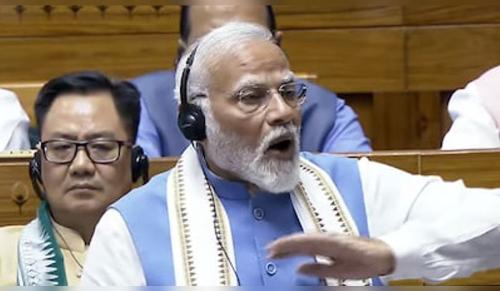
In a major setback for the Modi government, the Constitution (One Hundred and Thirty-First Amendment) Bill, 2026 failed to pass in the Lok Sabha on Friday after it fell short of the required two-thirds majority. The bill received 298 votes in favour and 230 against, resulting in its defeat in the House and halting the government’s plan to push forward with linked electoral reforms.
The failure of the constitutional amendment also forced the government to drop two related proposals — the Delimitation Bill, 2026 and the Union Territories Laws (Amendment) Bill, 2026 — both of which were tied to the passage of the amendment bill.
The defeat triggered protests by NDA MPs inside Parliament premises, reflecting the political significance of the failed vote and the sharp divide over the proposed reforms.
Soon after the bill was defeated, Union Minister Kiren Rijiju described the outcome as “unfortunate,” saying that the two related bills had also been stalled because they were directly connected to the constitutional amendment. Despite the setback, he said the government would continue to pursue the issue in the future.
The Lok Sabha was later adjourned, bringing an end to one of the most heated parliamentary debates of the session.
The opposition, meanwhile, celebrated the bill’s defeat as a major political and constitutional victory.
Rahul Gandhi said the result marked the defeat of what he described as an “attack on the Constitution.” He argued that the proposed amendment was not genuinely about implementing women’s reservation, but was instead aimed at altering India’s political structure through changes in delimitation and parliamentary representation.
Calling the result a “victory for democracy,” Rahul said the opposition had successfully blocked an attempt to reshape the constitutional balance of representation in the country.
Priyanka Gandhi Vadra also welcomed the outcome, saying the issue was not about women’s reservation but about protecting democratic principles. She said the opposition could never support linking women’s reservation to delimitation and insisted that the bill was designed to serve a larger political purpose rather than empower women.
She further said it was impossible for the opposition to support a proposal that tied women’s representation to controversial structural reforms, calling the defeat an important moment for democratic accountability.
The government had introduced the constitutional amendment bill as part of a broader legislative package aimed at implementing women’s reservation in legislatures before the 2029 general elections.
However, constitutional amendment bills require a special majority, meaning they must secure the support of more than half of the total membership of the House, as well as not less than two-thirds of members present and voting.
Although the government secured 298 votes, that number was not enough to meet the two-thirds threshold, leading to the bill’s defeat.
The amendment was considered central to the government’s roadmap because the related delimitation and Union Territories bills were dependent on its passage.
Earlier in the day, Home Minister Amit Shah defended the proposed reforms during a marathon debate in the Lok Sabha, attacking opposition parties for resisting the measures.
He argued that the legislative package was necessary to ensure the implementation of women’s reservation from the 2029 elections, and warned that parties opposing the bill would face political consequences from women voters in future elections.