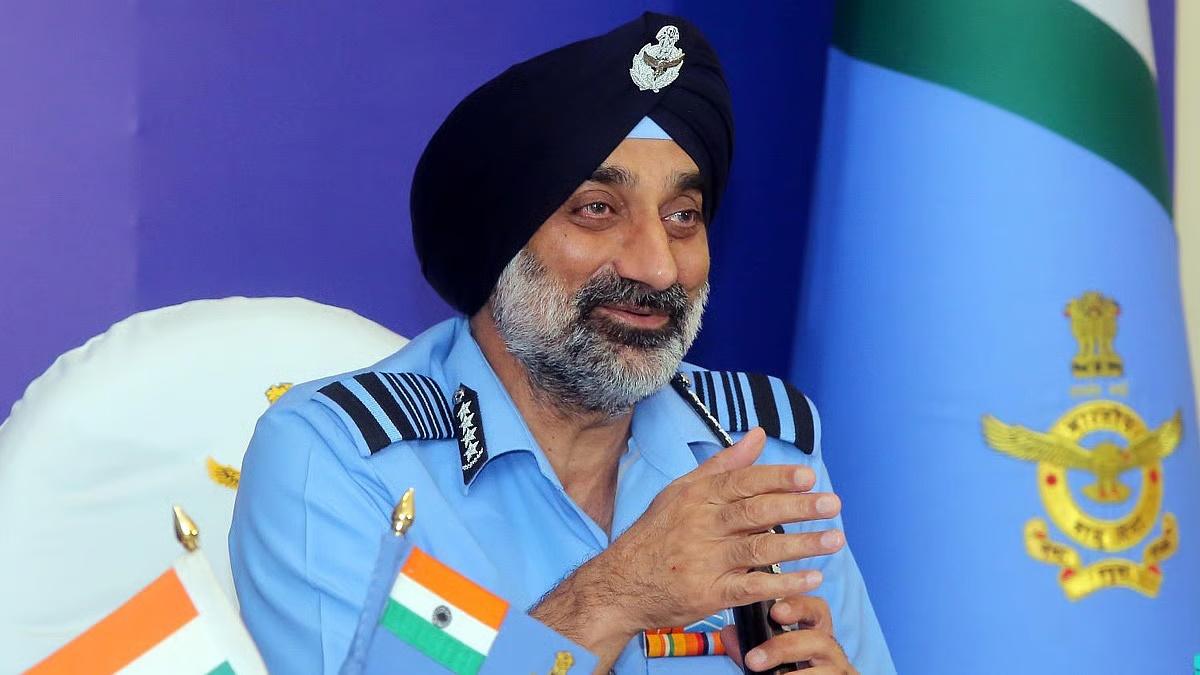
In a significant disclosure, Indian Air Force (IAF) Chief Air Chief Marshal A.P. Singh revealed that the armed forces’ surface-to-air missile systems destroyed five Pakistani fighter jets and another large aircraft designed for airborne surveillance during Operation Sindoor.
Speaking at the Air Chief Marshal L.M. Katre lecture in Bengaluru, Singh said some parked U.S.-made F-16 jets were damaged at Pakistan’s Jacobabad airbase when India targeted military sites on May 10. He also confirmed that two command-and-control centres were hit during the strikes.
The pounding of Pakistani airbases — some still under construction — forced Pakistan to seek a ceasefire agreement with India after three days of hostilities.
“We have at least five fighters confirmed kills and one large aircraft, which could be either an ELINT aircraft or an AEW&C (Airborne Warning and Control System) aircraft, which was taken on at a distance of about 300 kilometres. This is actually the largest ever recorded surface-to-air kill that we can talk about,” Singh said.
This is the first time the armed forces have publicly revealed the extent of damage to Pakistan’s air fleet during the operation, which was launched in response to the Pahalgam terror attack.
The Air Chief Marshal also confirmed severe damage to Pakistani air bases, including Jacobabad airfield, which housed F-16 jets.
“At Jacobabad airfield, there’s an F-16 hangar. One half of the hangar is gone. I am sure there were some aircraft inside which got damaged. We were able to get at least two command and control centres, like Murid and Chaklala. At least six radars… We have an indication of at least one AEW&C and a few F-16s, which were under maintenance, suffered damage,” he said.
Singh credited the Russian-made S-400 Triumf air defence system for enabling deep strikes into enemy airspace.
“The S-400 system, which we recently bought, has been a game-changer. The range of that system has really kept their aircraft away from their weapons, like those long-range glide bombs that they have. They have not been able to use any one of those because they have not been able to penetrate the system,” he said.
Singh also presented “before and after” satellite images of nine terror targets destroyed by the armed forces on May 7, stressing that there was no collateral damage — countering Pakistan’s allegations of civilian casualties.
According to Singh, around 100 terrorists were killed in strikes on terror launchpads. He also rejected the opposition’s claim that the military was operating under political restrictions.
“A key reason for success was the presence of political will. There were very clear directions given to us. No restrictions were put on us. If there were any constraints, they were self-made. We decided how much to escalate. We had full freedom to plan and execute. Our attacks were calibrated because we wanted to be mature about it,” he added.