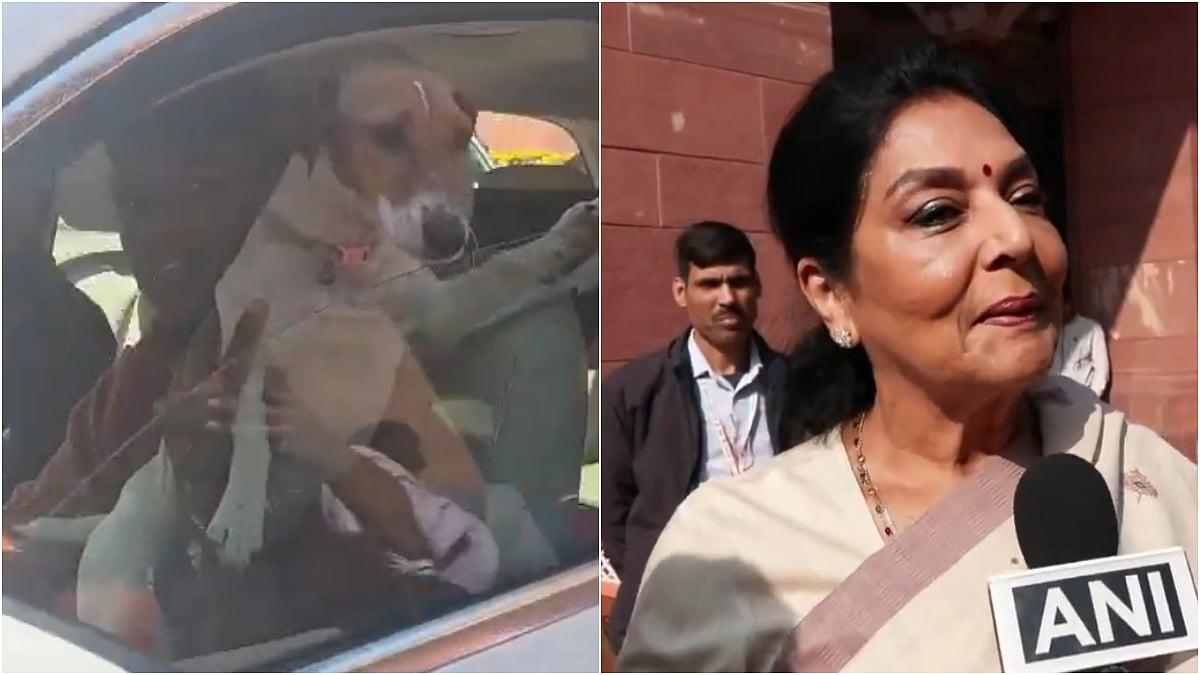
A major political controversy erupted on Monday after Congress MP Renuka Chowdhury arrived at Parliament’s visitors' gallery with her pet dog on the opening day of the Winter Session. A video circulating online showed her security personnel seated inside her vehicle with the dog while the MP interacted with reporters, triggering sharp reactions from the ruling BJP.
The episode drew attention because it came just days after the Supreme Court issued strict directives to all States and Union Territories to remove stray dogs from crowded public spaces and relocate them to shelters following vaccination and sterilisation. Against this backdrop, Chowdhury’s decision to bring her pet into a high-security parliamentary zone drew scrutiny, prompting questions about propriety and privilege.
Chowdhury defended her actions by claiming that the government had developed an “unnecessary aversion” toward animals. Insisting that her pet was harmless, she remarked, “It will not bite anyone. Kaatne wale toh andar baithe hain — the ones who bite are sitting inside.” The comment instantly ignited a political firestorm, with BJP leaders accusing her of lowering the dignity of the House.
Reacting strongly, BJP MP Jagdambika Pal demanded immediate disciplinary action against Chowdhury, alleging that she had “misused parliamentary privileges” and set a dangerous precedent. He argued that bringing pets into Parliament violates established protocols, especially on a day when crucial legislative discussions were scheduled.
The controversy has unfolded amid heightened national focus on dog bite incidents and the treatment of stray animals. In a series of recent directives, the Supreme Court has slammed States for failing to comply with earlier orders and expanded the scope of its monitoring beyond the Delhi–NCR region.
The November directive required States to remove stray dogs from high-footfall public areas such as schools, hospitals, bus stands, and railway stations. It also instructed authorities to relocate dogs to shelters only after proper vaccination and sterilisation, as mandated by the Animal Birth Control Rules.