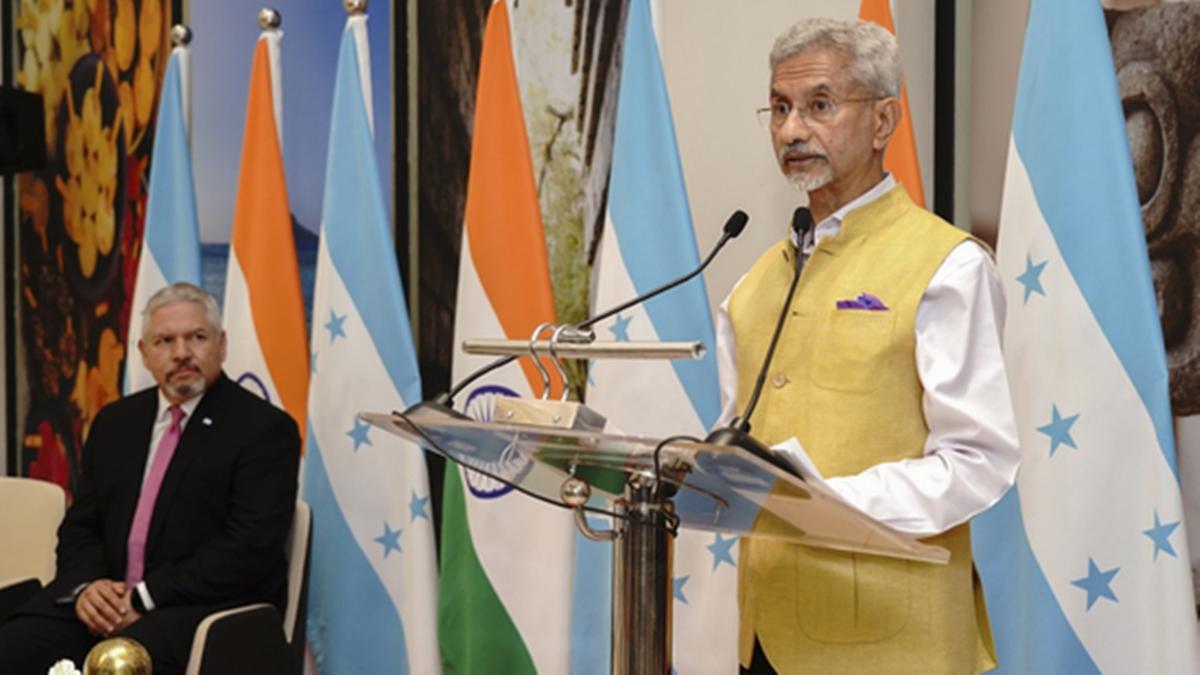
In a firm and unambiguous message to Pakistan, External Affairs Minister S Jaishankar has declared that India will continue Operation Sindoor in response to any future terror attacks, asserting that India will not hesitate to strike terrorist bases across the border if provoked again.
Speaking in an interview with Dutch public broadcaster NOS, Jaishankar emphasized that India's security doctrine has fundamentally changed, and that acts of terrorism like the April 22 attack in Pahalgam—where 26 civilians were killed—will draw decisive retaliation.
“The operation continues because there is a clear message in that operation – that if there are acts of the kind we saw on April 22, there will be a response, that we will hit the terrorists,” Jaishankar stated.
Launched on May 7, Operation Sindoor marked a strategic offensive on nine terror infrastructure sites located in Pakistan-administered territory. The action followed the Pahalgam massacre, carried out by The Resistance Front, a known proxy of Pakistan-based Lashkar-e-Taiba (LeT). The operation escalated into four days of cross-border clashes involving drones, missiles, and precision strikes, culminating in a mutually agreed cessation of hostilities on May 10.
Jaishankar clarified that the agreement to halt military action was reached bilaterally with Pakistan, denying any role of the United States or third-party mediation in the process.
“That I think compelled the Pakistani military to accept that we need to stop firing at each other,” he said. “Right now, there is an agreed cessation of fighting and military action.”
However, Jaishankar was quick to differentiate between the halting of military fire and the suspension of counter-terrorism operations, confirming that Operation Sindoor remains active.
“If the terrorists are in Pakistan, we will hit them where they are. Continuing the operation is not the same as firing on each other,” he said, adding, “Put whatever word you want to, but I can tell you the message is clear—and the message is act.”
He further condemned the barbarity of the Pahalgam attack, describing how victims were murdered in front of their families after their religious identity was confirmed—an act he said was designed to derail Kashmir’s tourism industry and incite communal tensions.
Jaishankar also drew attention to the extremist rhetoric from Pakistan’s military leadership, particularly comments from Pakistan Army chief General Asim Munir, who invoked the two-nation theory just days before the Pahalgam incident. Jaishankar suggested a direct ideological link between Pakistan’s leadership and terrorist activities, stating:
“There is clearly some connect between the views that were expressed and the behavior that was done.”
India’s targeted response on May 10, which involved crippling eight Pakistani airbases, was described as a turning point, forcing Pakistan to agree to a ceasefire. The strikes reportedly rendered runways and command centres inoperable.
“It was imperative that we have a response... Our government is very clear that if there is such an attack, there will be a response,” Jaishankar affirmed.
Operation Sindoor, according to Indian intelligence sources, is not a one-off mission but part of a sustained doctrine to deter future attacks and dismantle terror havens. With tensions still high, the focus remains on intelligence-led precision strikes and preventing a repeat of the Pahalgam-style atrocities.