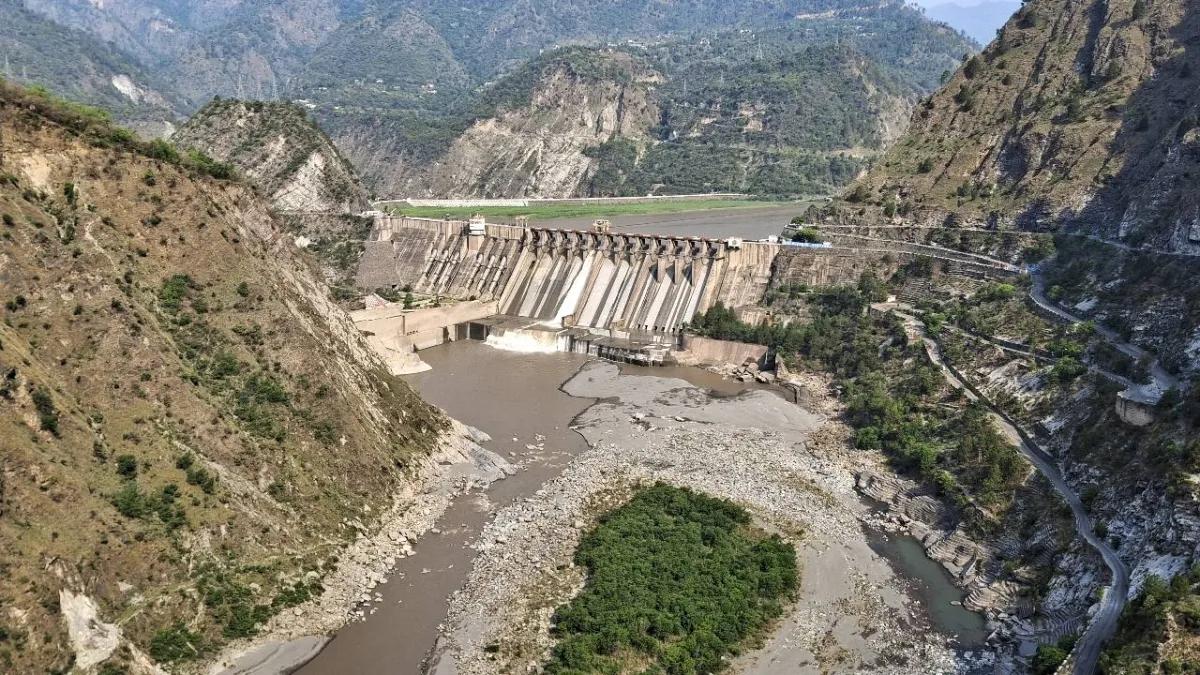
Pakistan is facing a worsening water crisis at the onset of the kharif (summer) sowing season, with drastically reduced water levels in its two key dams—Mangla on the Jhelum and Tarbela on the Indus—and a sharp fall in Chenab river inflows, which Islamabad attributes to India’s regulation of river flow following the recent Pahalgam terror attack.
The shortage has raised alarm within the Pakistani leadership, prompting Prime Minister Shehbaz Sharif to flag the issue at an international glacier preservation conference in Dushanbe, Tajikistan, where he attempted to draw global attention to India's decision to suspend the Indus Waters Treaty (IWT).
According to the Indus River System Authority (IRSA), Pakistan is currently experiencing a 21% overall shortage in water flow and around 50% deficit in live storage in both Mangla and Tarbela dams. These reservoirs are critical for irrigation across the provinces of Punjab and Sindh and for generating hydropower.
In a statement, IRSA "noted with concern" the sudden drop in Chenab river inflows at Marala, citing “short supply by India” as the cause. The authority warned that this would increase shortages during the early phase of the kharif season and advised irrigation departments to use water judiciously.
The available data paints a worrying picture: Mangla dam currently holds only 2.7 million acre-feet (MAF) of water out of a total 5.9 MAF capacity, while Tarbela’s live storage is just over 6 MAF out of a possible 11.6 MAF.
The situation is worsened by India’s suspension of real-time water data sharing with Pakistan, a move taken after placing the Indus Waters Treaty in abeyance following the Pahalgam terror incident. Officials in Pakistan believe this will not only hamper summer irrigation but also complicate flood management once monsoon rains hit the catchment areas in India.
India, which holds full rights over the eastern rivers under the IWT, is also entitled to store up to 3.6 MAF on the western rivers but has traditionally underutilized this capacity.