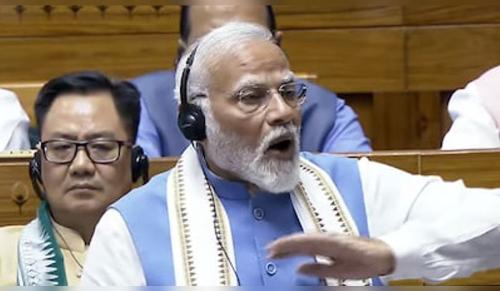
In a powerful address at the Rashtriya Ekta Diwas celebration in Kevadia, Gujarat, Prime Minister Narendra Modi announced the government's renewed focus on ?One Nation, One Election? and a ?One Nation, One Secular Civil Code? as part of an ongoing mission to unify and streamline governance in India. "Today, India is progressing towards a secular civil code that I have discussed from the ramparts of the Red Fort. This initiative aims to promote social harmony and bring uniformity in legal frameworks," PM Modi declared, noting that such measures are critical for achieving ?a developed India.?
PM Modi?s remarks spotlighted the government?s ongoing ?One Nation? initiatives, crediting their success in transforming India?s infrastructure and administration. He cited accomplishments including Aadhaar as ?One Nation, One Identity Card?, GST as a single tax framework, and the nationwide power grid and Ayushman Bharat as a unified health insurance system. ?We are now working towards One Nation, One Election, which will strengthen India's democracy, optimize our resources, and give new momentum to our vision of a developed India,? PM Modi stated, underscoring the anticipated benefits of a uniform election system across central and state governments.
On the topic of a unified civil code, PM Modi emphasized the measure's secular basis and potential for fostering national unity. ?India is now moving towards ?One Nation, One Civil Code,? a step that values social unity and respects our shared cultural heritage,? he remarked, explaining that such a code could bridge divides and establish equal rights across communities.
The Prime Minister also reflected on Sardar Vallabhbhai Patel?s legacy, declaring that his vision of ?one country, one constitution? has been fulfilled through the abrogation of Article 370 in Jammu and Kashmir. He described this milestone as a tribute to India?s founders, particularly Baba Saheb Ambedkar, whose vision for a unified India under one constitution is finally a reality. "For the first time, voting was done without discrimination in this assembly election in Jammu and Kashmir. The Chief Minister of the state has taken an oath on the Constitution of India. This scene must have given immense satisfaction to the makers of the Constitution," he added.
Addressing emerging threats to national stability, PM Modi urged citizens to be vigilant about the influence of ?urban naxals,? whom he accused of attempting to destabilize India?s development. "Some forces in and outside India are trying to spread anarchy and create a negative image of the nation,? he warned, adding that this movement aims to divide citizens along caste lines and undermine India?s growth. ?As traditional Naxalism fades in the jungles, urban Naxals are rising, targeting those who advocate unity. We must identify and unmask these urban Naxals,? he emphasized.
PM Modi?s speech, delivered on National Unity Day in honor of Sardar Patel, resonated with themes of unity, resilience, and modernization. With ?One Nation, One Election? and a secular civil code on the horizon, his vision for a cohesive India seems rooted in both the country's historical aspirations and its modern democratic ideals.