In a strategic move to address the growing unrest among Marathas and Other Backward Classes (OBCs), the Bharatiya Janata Party's (BJP) central leadership is advocating for a collective leadership approach in Maharashtra ahead of the upcoming assembly elections. This shift comes in the wake of the party's disappointing performance in the recent Lok Sabha elections and a request from Devendra Fadnavis to be relieved of his deputy chief ministerial duties.
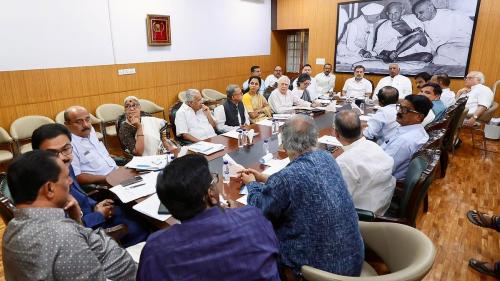
During a crucial meeting of the BJP core committee on Tuesday, Union Home Minister Amit Shah expressed his dissatisfaction with the party's electoral performance in Maharashtra. Despite Fadnavis' plea to step down, the central leadership decided that he should remain as deputy CM, albeit with a redistribution of responsibilities to second-in-command leaders for various regions, according to a report by Hindustan Times.
This strategy aims to placate the OBC and Maratha communities by placing leaders from these groups in influential positions in areas where they have significant sway. A senior BJP leader, speaking to Hindustan Times, noted that the party's losses in Marathwada were primarily due to Maratha dissatisfaction. Additionally, OBCs were displeased with the government's consideration of including Marathas in the OBC quota, which adversely affected the party's standing in Vidarbha.
To tackle these issues, prominent Maratha and OBC leaders such as Vinod Tawde, Ashish Shelar, Pankaja Munde, and Chandrashekhar Bawankule will be mobilized to engage with their respective communities at the grassroots level. This approach is intended to enhance the party's prospects in the forthcoming assembly elections.
Despite Fadnavis' desire to step down, the central leadership insisted that he continue in his role, though his powers will now be shared among other leaders. This decision is aimed at fostering a sense of collective responsibility ahead of the assembly polls, following complaints from some BJP members about feeling marginalized.
Another BJP leader told Hindustan Times that the decision to distribute leadership roles was prompted by reports of poor coordination within the state unit. Long-time loyalists felt overshadowed by newcomers to the party, leading to internal discontent. The leadership hopes that the new appointments will address these concerns and strengthen party unity.
The BJP leadership plans to appoint Pankaja Munde and Raosaheb Danve to oversee Marathwada, while Vidarbha's responsibilities will be handed to state unit chief Chandrashekhar Bawankule and Sudhir Mungantiwar. Ashish Shelar and Vinod Tawde are expected to manage Mumbai and the Mumbai Metropolitan Region (MMR), with former Union Minister Narayan Rane potentially overseeing the Konkan region.
State Minister Girish Mahajan and Eknath Khadse may take charge of North Maharashtra, pending Khadse's induction into the BJP. Western Maharashtra is likely to be managed by former state unit chief Chandrakant Patil and Radhakrishna Vikhe Patil.