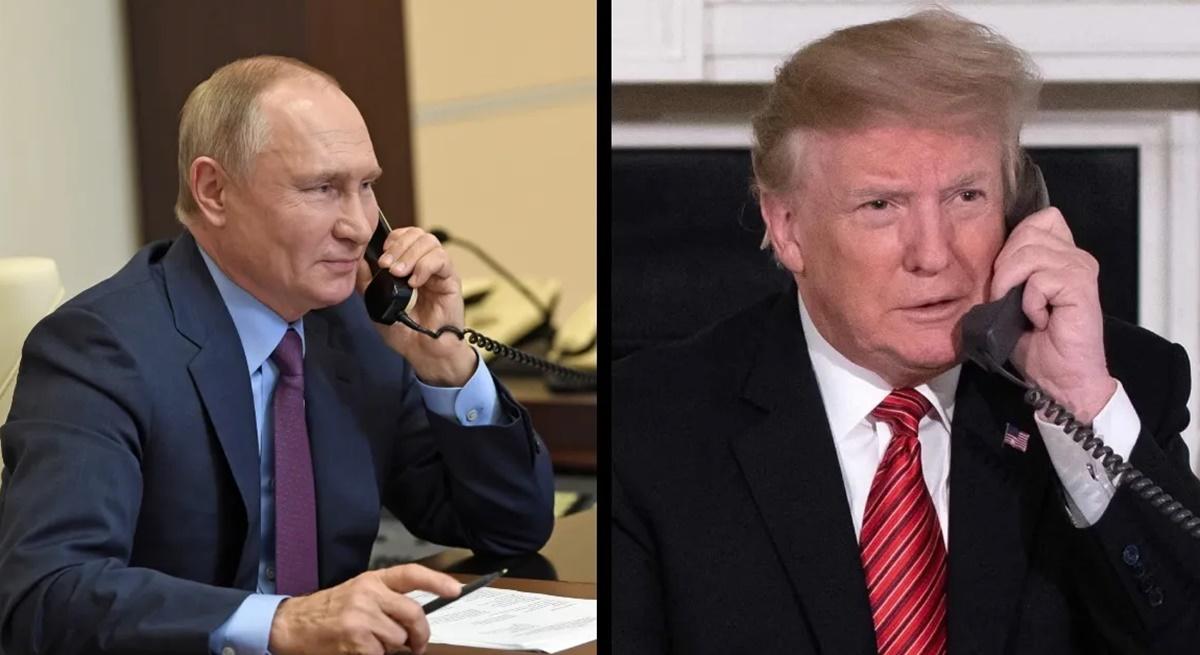
In a high-stakes diplomatic exchange, U.S. President Donald Trump and Russian President Vladimir Putin spoke by phone on Thursday to discuss key global flashpoints, including the war in Ukraine, the Iran-Israel conflict, and the broader geopolitical climate. This marks their sixth publicly known call since Trump’s return to the White House.
The Kremlin confirmed that President Putin reiterated Russia’s firm stance on Ukraine, declaring that Moscow would not "give up" on its strategic objectives in the region. At the same time, Putin expressed willingness to continue negotiations with Kyiv, stressing that a diplomatic path remains open.
"Russia is ready for talks, but we will continue working to eliminate the root causes of the conflict," said Yuri Ushakov, a senior adviser to the Russian president. Putin maintained that the 2022 invasion of Ukraine was driven by concerns over NATO expansion and the protection of Russian-speaking communities—claims consistently rejected by Ukraine and its Western allies.
The conversation occurred just hours after the U.S. Department of Defense confirmed it was temporarily pausing shipments of select weapons systems to Ukraine, including precision-guided artillery and air defense equipment. While the Pentagon cited a review of U.S. stockpiles as the reason, the move has raised questions about America’s long-term military support for Kyiv.
Ushakov clarified that the suspension of U.S. arms to Ukraine was not discussed during the Trump-Putin conversation.
On the topic of Iran, Putin reportedly emphasized the importance of diplomacy, warning against escalating tensions in the region. His remarks came in response to the recent U.S. strikes on Iranian targets, which Washington claims are part of efforts to counter Iran’s alleged support for nuclear development and regional destabilization.
President Trump, according to Russian officials, reiterated his desire for a swift end to the war in Ukraine while also addressing the instability brewing in the Middle East. While the White House has not yet released its version of the call, sources indicate that Trump continues to favor a negotiated settlement in both Ukraine and the Iran-Israel standoff.