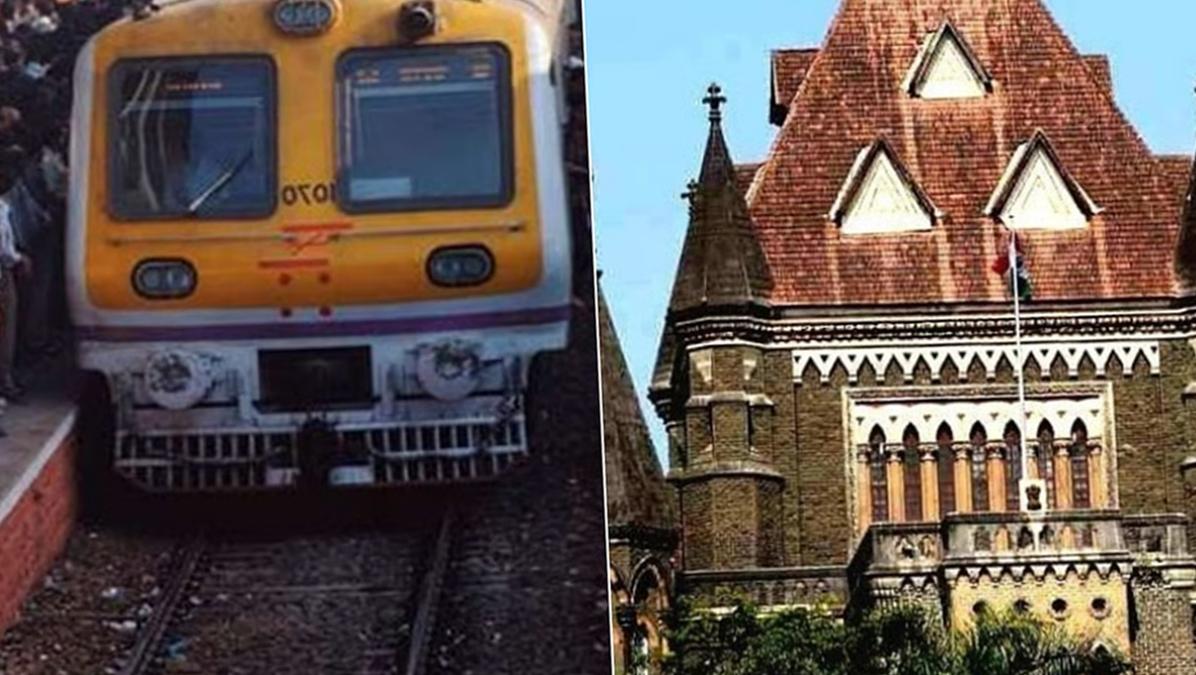
In a strong rebuke to Indian Railways, the Bombay High Court on Friday expressed deep concern over the shocking number of deaths on Mumbai’s suburban railway network, calling the situation “alarming and disturbing.” The court revealed that an average of ten commuters die every day on the city’s local trains and demanded immediate, concrete steps from the Railways to prevent further loss of life.
The court’s remarks came during the hearing of a public-interest litigation filed by commuter rights activist Yatin Jadhav, which focused on growing safety concerns. The trigger was the June 9 Mumbra accident, in which five people died after falling from overcrowded compartments—an incident the court termed “unfortunate” and preventable.
A bench comprising Chief Justice Alok Aradhe and Justice Sandeep Marne reviewed the affidavit submitted by the Railways and noted that 3,588 deaths occurred on the Central and Western suburban lines in 2024 alone, mostly due to overcrowding, falls, collisions with poles, or getting trapped between the platform and the train. While the Railways claimed a 46% reduction in fatalities compared to 2009, the court rejected this as inadequate.
“What disturbs us is that in 2024, 3,588 deaths took place… which averages to ten deaths per day. These deaths occur because commuters fall from trains, are hit by poles, or get trapped in the gap between the footboard and the platform. This is your data,” the bench observed sharply, calling for an urgent safety roadmap.
The Railways, represented by Additional Solicitor-General Anil Singh, stated that a “high-level monitoring committee” and a “multi-disciplinary team” led by the Central Railway’s Senior Divisional Safety Officer were working on a “zero-death mission.” Singh explained that several safety initiatives are underway, including decongesting platforms, relocating stalls, and fencing tracks to prevent trespassing. However, he added that major structural work is difficult to undertake during daytime due to the city's heavy dependence on the rail system.
The court, however, was not satisfied with these explanations and pointed to the lack of effective implementation. The bench specifically suggested the introduction of automatic closing doors on local trains—like those used in metro systems—to prevent passengers from falling off moving trains. “This should not have happened. Obviously, the measures you have taken are not sufficient,” said Chief Justice Aradhe. “This is a layperson’s suggestion, but we believe it is practical and needed.”
When Singh said the Railways were exploring the idea, the Chief Justice responded, “Whatever is required is to be done. Do it. This can’t go on.”
The court has directed the Central and Western Railways to present a detailed and time-bound safety roadmap by July 14. It has also ordered the disclosure of the names and qualifications of the members of both the Mumbra inquiry and high-level monitoring committees. Every recommendation for rail safety must be documented, with clear deadlines for implementation.