The government on Monday reiterated that there is no proposal to impose transaction charges on Unified Payments Interface (UPI) based digital payments, reaffirming its commitment to making digital transactions accessible and free for users.
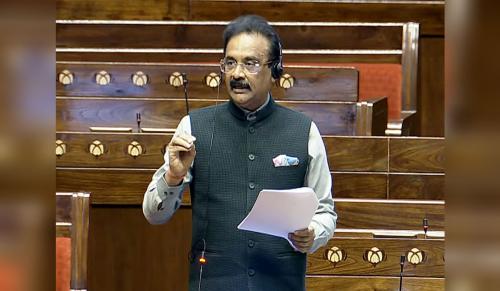
Minister of State for Finance Pankaj Chaudhary, in a written reply in the Lok Sabha, clarified, “Section 10A of the Payment and Settlement Systems Act, 2007, clearly provides that no bank or system provider shall impose any charge on a payer making payment, or a beneficiary receiving payment, through electronic modes prescribed under Section 269SU of the Income-tax Act, 1961.”
He added that UPI and RuPay debit cards had already been notified by the Central Board of Direct Taxes (CBDT) as prescribed modes of payment under the Act.
Although the National Payments Corporation of India (NPCI) had, in a circular dated 30 August 2019, permitted acquiring banks to charge a Merchant Discount Rate (MDR) of 0.30 per cent, the government ensured that users and merchants were kept shielded from such costs.
To sustain the UPI ecosystem, the government has provided an incentive support of ₹8,730 crore between FY 2021–22 and FY 2024–25.
Highlighting the phenomenal rise of UPI, Chaudhary noted that transactions have skyrocketed from 92 crore in FY 2017–18 to 18,587 crore in FY 2024–25, recording a staggering CAGR of 114 per cent. The transaction value too surged from ₹1.10 lakh crore to ₹261 lakh crore during the same period.
In July 2025, UPI achieved another milestone by crossing 1,946.79 crore transactions in a single month, setting a new record.
The broader digital payments ecosystem has also expanded significantly. The total number of digital transactions in India rose from 2,071 crore in FY 2017–18 to 22,831 crore in FY 2024–25, with transaction values climbing from ₹1,962 lakh crore to ₹3,509 lakh crore.