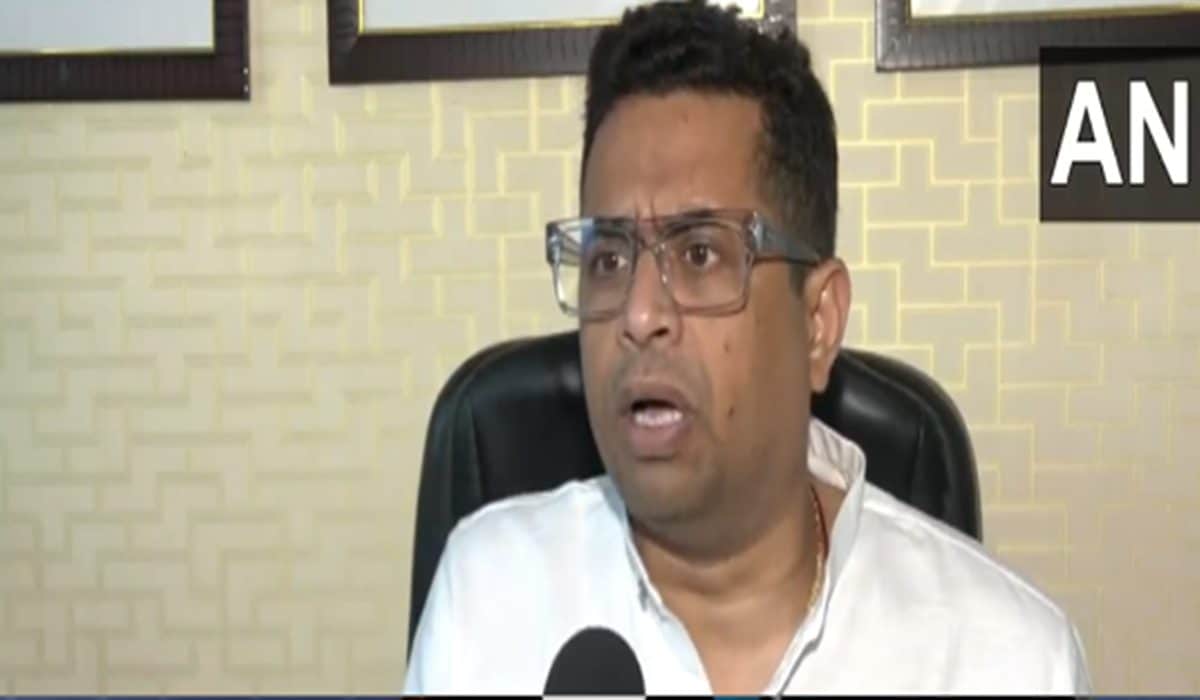
Saumitra Khan, Vice President of the BJP in West Bengal, has sharply criticized West Bengal Chief Minister Mamata Banerjee following her recent letter to Prime Minister Narendra Modi. Khan's remarks have sparked controversy and heightened the political tension surrounding Banerjee's ongoing efforts to address issues in her state.
Khan's criticism of Banerjee was blunt and scathing. He described the West Bengal Chief Minister as ?the most dramatic leader of this world,? condemning her letter to PM Modi as nothing more than ?complete drama.? This letter, according to Khan, is an attempt to manipulate public perception and divert attention from more pressing issues.
The BJP leader further accused Banerjee of making ?dramatic? political moves rather than focusing on substantive governance. He alleged that Banerjee?s letter was a facade, claiming that it was part of a larger strategy to obscure the truth behind serious issues, including the alleged mishandling of rape cases. Khan provocatively stated, ?You are buying the mother of the rape victim for Rs 10 lakhs,? suggesting that Banerjee's actions were aimed at exploiting sensitive cases for political gain.
Adding to the controversy, Khan claimed that the Rohingya community was somehow involved in the issues plaguing West Bengal, although no evidence was provided to substantiate this assertion. He argued that Banerjee's governance has been detrimental to the state, accusing her of ?destroying the whole of West Bengal? and now allegedly targeting women?s issues inappropriately.
The remarks have ignited a heated debate about the integrity of Banerjee's political tactics and her approach to governance. This exchange underscores the ongoing friction between the BJP and the ruling TMC in West Bengal, with both parties engaging in increasingly confrontational rhetoric.
As the political landscape in West Bengal remains charged, the clash between Khan?s critique and Banerjee?s response continues to evolve, drawing national attention and fueling further debate on the effectiveness of the state?s leadership and its impact on governance.