In a significant development, the Supreme Court of India on Wednesday raised substantial concerns over the recently amended Waqf law, signaling the possibility of an interim order to address contentious provisions. The top court highlighted three critical issues: the status of properties recognized as ‘waqf by user’, the composition of Waqf Boards with a majority of non-Muslim members, and the clause that allows government to override waqf status during land ownership disputes.
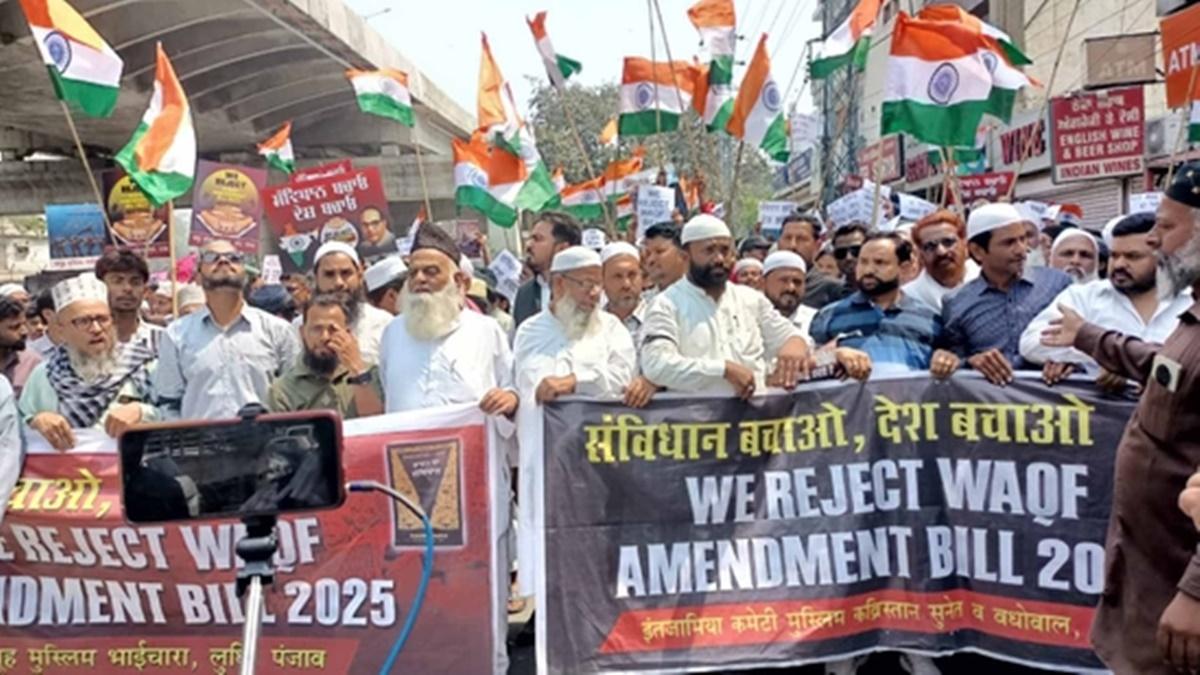
The bench, led by Chief Justice of India Sanjiv Khanna, refrained from issuing an immediate order but noted the gravity of the legal and constitutional questions involved. The case is set to be heard next on Thursday, allowing time for the Centre and states to respond. Over 70 petitions have been filed against the law by a wide range of stakeholders, including MPs, Muslim religious scholars, political leaders, and organizations, alleging that the legislation violates religious freedoms guaranteed under Articles 25 and 26 of the Constitution.
One of the central concerns raised by the Court was the fate of properties earlier declared as waqf by judicial rulings. The bench underscored that a legislative provision that allows these to be de-notified could lead to “grave ramifications.” The court emphasized that it would not allow such waqf properties—whether by user or by declaration—to be stripped of their religious status simply due to new statutory interpretations.
The Court also questioned the fairness of a clause that freezes the waqf status of a property the moment a district collector initiates an inquiry into its ownership. “What purpose will be served by this proviso?” the court asked, suggesting that while collectors may continue with proceedings, such provisions cannot be enforced unless reviewed by the Court itself.
In another striking observation, the bench scrutinized the composition of the Waqf Boards and Council. It took issue with the inclusion of non-Muslims as members in bodies governing Muslim religious endowments, comparing it with the management of Hindu religious institutions. The bench clarified that while ex-officio members may belong to any faith, all other appointed members must be Muslims to preserve the religious autonomy of the waqf structure.
This hearing marks the first substantial judicial review of the amended Waqf law, and the Court's comments suggest a careful balancing act between upholding religious rights and ensuring administrative fairness.