The controversy surrounding Bihar Chief Minister Nitish Kumar’s conduct at a government event continues to escalate, even as senior BJP leader and Union Minister Giriraj Singh stepped forward to firmly defend him. The incident, which has sparked sharp political reactions, has opened a wider debate on personal dignity, public conduct and religious sensitivity in official spaces.
The row erupted after visuals from a state function in Patna began circulating widely on social media. The programme was organised to hand over appointment letters to more than 1,200 AYUSH doctors. In the video, Nitish Kumar is seen interacting with a woman doctor whose face was covered with a veil. During the exchange, the Chief Minister briefly pulled down the veil, an act that immediately drew criticism from opposition parties and sections of civil society.
Many critics described the moment as inappropriate, arguing that no public authority has the right to interfere with an individual’s personal or religious choices. The footage quickly became a flashpoint, with questions being raised about consent, respect and the responsibilities of those holding constitutional positions.
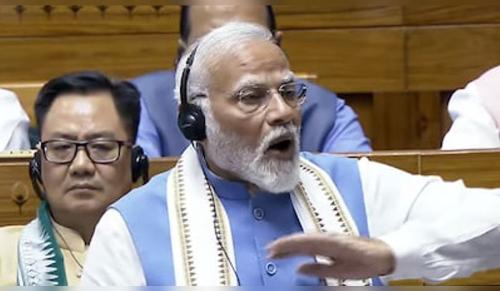
Responding to the backlash, Union Minister Giriraj Singh dismissed the criticism and questioned the outrage. Speaking to the media, he said there was nothing objectionable in the Chief Minister’s action and asked why the issue was being blown out of proportion. Singh argued that revealing one’s face during official processes is common practice and compared the situation to identity verification during elections. His remarks set the tone for the BJP’s defence, portraying the controversy as politically motivated.
Support also came from within the Bihar government. Deputy Chief Minister Vijay Kumar Sinha said the Chief Minister’s actions were being misunderstood. Highlighting Nitish Kumar’s long political career, Sinha said the leader has consistently worked towards women’s empowerment and social reform, and that his intentions should not be doubted based on a single incident.
Within the Janata Dal (United), efforts were made to counter the growing criticism. Minority Welfare Minister Zama Khan described the incident as being misread and said the Chief Minister’s gesture was not meant to offend. He claimed Kumar wanted the achievement of a successful Muslim woman doctor to be visible to society. Khan also accused opposition parties and certain leaders of deliberately creating controversy to damage the Chief Minister’s image.
Despite these clarifications, opposition parties have continued to press the issue, insisting that public leaders must exercise greater sensitivity, especially in matters involving women and religious identity. The debate has since moved beyond the event itself, turning into a broader political argument over values, leadership conduct and accountability.