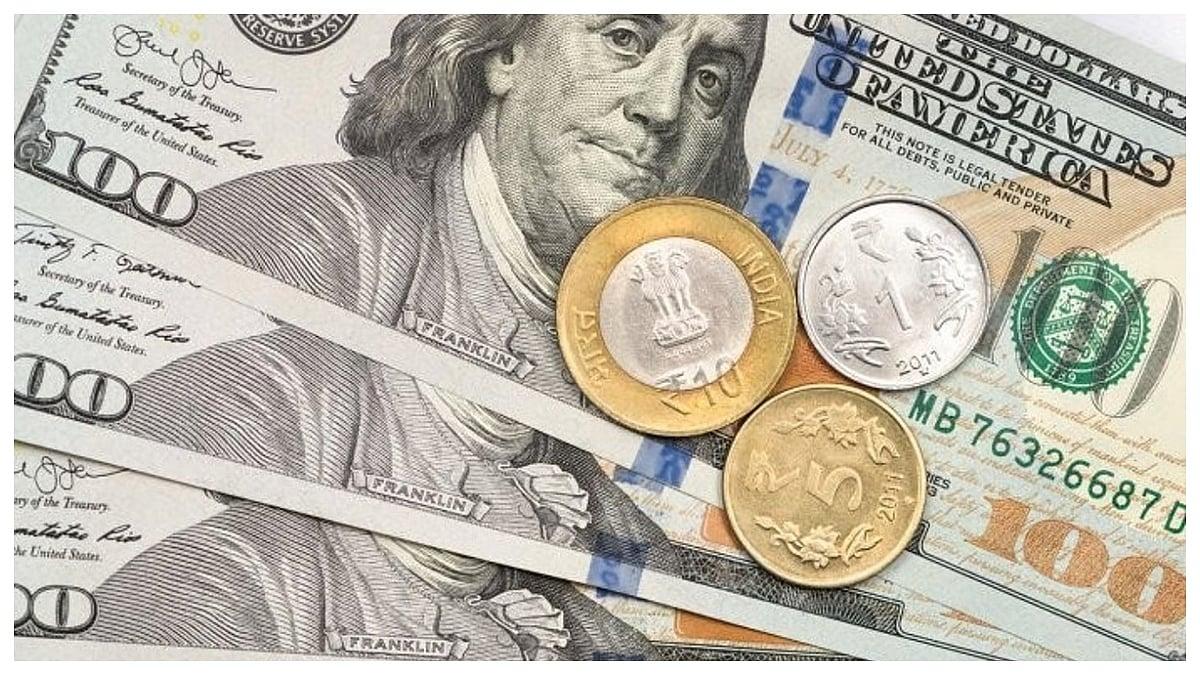
The Indian rupee plunged 69 paise to hit an all-time low of 92.18 against the US dollar in early trade on Wednesday, as soaring crude oil prices and escalating US-Iran tensions rattled financial markets. The sharp fall reflects mounting pressure on the domestic currency amid global uncertainty and rising import costs.
At the interbank foreign exchange market, the rupee opened at 92.05 before sliding further to 92.18, marking its weakest-ever level. The previous close on Monday stood at 91.49. Currency markets remained shut on Tuesday due to the Holi holiday, intensifying volatility upon reopening.
Forex traders said investor sentiment has turned negative after Brent crude crossed the crucial USD 82 per barrel mark in futures trade. The spike in oil prices followed renewed geopolitical tensions between the United States and Iran, triggering a rush toward safe-haven assets like the US dollar.
The dollar index, which measures the strength of the greenback against six major currencies, edged 0.03 per cent higher to 99.08. Meanwhile, Brent crude rose 1.01 per cent to USD 82.22 per barrel. Analysts warned that India, which imports nearly 85 per cent of its fuel needs, faces a significant risk of a ballooning import bill if crude prices remain elevated.
Market experts noted that persistent foreign capital outflows from Indian equities have added to the rupee’s weakness. On Monday alone, foreign institutional investors sold shares worth Rs 3,295.64 crore, according to exchange data. Continuous equity sell-offs typically increase demand for dollars, further weakening the rupee.
The impact was visible across domestic stock markets as well. The BSE Sensex plunged 1,671.39 points or 2.08 per cent to 78,567.46 in early trade, while the NSE Nifty dropped 502.35 points or 2.02 per cent to 24,363.35. The steep decline highlights growing concerns among investors about rising crude prices, inflationary pressures and trade deficit risks.
With geopolitical tensions showing no immediate signs of easing, currency traders expect the USD/INR pair to remain volatile. If crude prices continue to climb and foreign fund outflows persist, the rupee may face further downside pressure in the coming sessions.