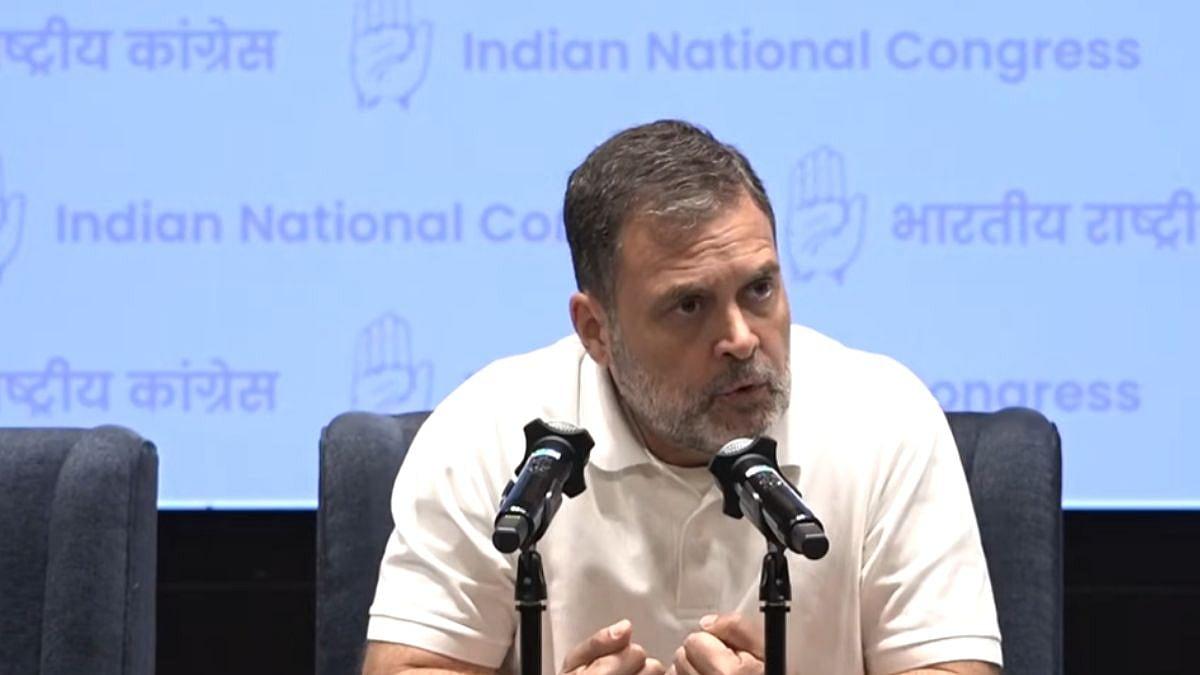
Congress MP and Leader of the Opposition in the Lok Sabha Rahul Gandhi on Saturday mounted a strong political offensive against the Union government, accusing it of weakening federalism and diluting a landmark rural employment programme that, according to him, transformed village economies across India.
Speaking to the media after a Congress Working Committee (CWC) meeting, Gandhi said recent policy decisions by the Centre reflect a deeper pattern of centralisation that sidelines state governments and hurts the most vulnerable sections of society. He argued that financial authority and administrative decision-making are being steadily pulled away from states, eroding the federal structure envisaged in the Constitution.
“This is not governance, this is concentration of power,” Gandhi said, asserting that states are being deprived of resources that rightfully belong to them. He claimed that the rural employment framework built around MGNREGA had played a crucial role in strengthening local infrastructure while offering economic security to millions of families in villages.
Describing MGNREGA as more than a wage-employment scheme, Gandhi said it represented a global model of rights-based development. He pointed out that the programme enabled people to remain in their villages, invest in small-scale farming, and survive periods without regular work. According to him, international leaders had often cited the scheme as an innovative approach to inclusive growth.
The Congress leader’s remarks come in the backdrop of the Centre pushing through new legislation during the Winter Session of Parliament that replaces the MGNREGA Act of 2005 with the Viksit Bharat—Guarantee for Rozgar and Ajeevika Mission (Gramin) Bill, 2025. The move triggered sharp protests from Opposition parties, who accused the government of dismantling a social safety net under the guise of reform.
Opposition MPs had staged dramatic protests inside Parliament, alleging that the new law weakens employment guarantees and shifts control away from states and local bodies. The government, however, has defended the legislation, claiming it aims to modernise rural employment and align it with long-term development goals.