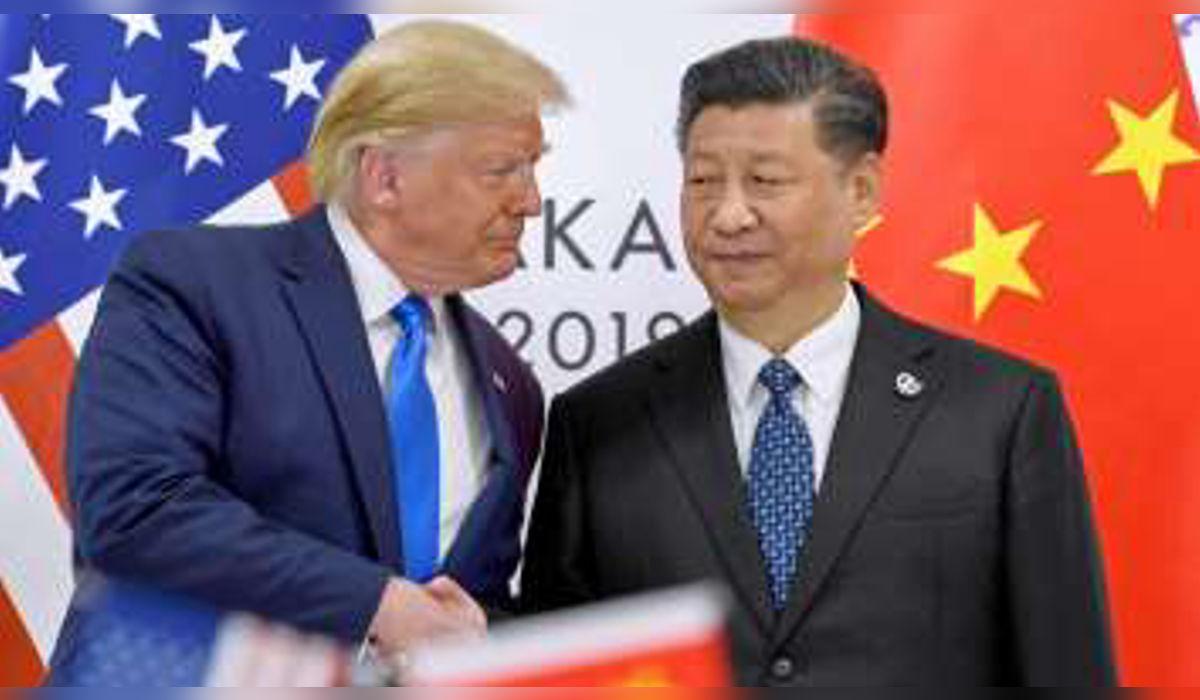
Donald Trump arrived in Beijing on Wednesday for a closely watched summit with Chinese President Xi Jinping, with both nations preparing for critical discussions on trade, technology, Taiwan and global security amid rising geopolitical tensions.
The high-level visit marks Trump’s first official trip to China since 2017 and comes at a sensitive phase in relations between Washington and Beijing, where disagreements over tariffs, artificial intelligence, military influence and economic controls continue to deepen.
Ahead of Trump’s arrival, China publicly issued a strong diplomatic warning to the United States by outlining what it described as “four red lines” that Washington must not cross in bilateral relations.
In a statement shared by the Chinese Embassy in the United States, Beijing identified Taiwan, democracy and human rights issues, China’s political system and the country’s development rights as core interests that it considers non-negotiable.
The statement stressed that both countries should pursue a “strategic, constructive and stable” relationship built on mutual respect and peaceful coexistence despite ongoing disagreements.
The summit is expected to focus heavily on trade negotiations and the growing rivalry between the two powers in advanced technologies such as artificial intelligence and semiconductor production.
Trump entered the Beijing talks while also facing domestic pressure in the United States following recent court developments that weakened portions of his tariff framework linked to China.
Another major issue expected to dominate discussions is China’s control over rare-earth mineral exports, which remain crucial for electronics manufacturing, defence systems and global supply chains.
Chinese authorities have also intensified efforts to shield domestic companies from Western sanctions and trade restrictions, particularly in sectors connected to energy imports and strategic technologies.
The meeting comes shortly after Washington imposed fresh sanctions targeting Iran’s financial and energy sectors, a move that has further complicated US-China relations due to Beijing’s economic ties with Tehran.
US Treasury Secretary Scott Bessent recently stated that the United States would continue acting aggressively against networks helping Iran bypass sanctions.
“We will relentlessly target the regime's ability to generate, move, and repatriate funds,” Bessent said while announcing the latest measures under the initiative titled “Economic Fury.”