In a major legal and religious development, the Central government on Wednesday told the Supreme Court that Waqf is an Islamic concept but not an essential part of Islam, as it defended the controversial Waqf (Amendment) Act, 2025.
Appearing before a two-judge bench comprising Chief Justice of India BR Gavai and Justice Augustine George Masih, Solicitor General Tushar Mehta argued that Waqf was not an inviolable religious tenet but merely a form of charity — a concept common across religions.
“Waqf is an Islamic concept. But it is not an essential part of Islam. Waqf is nothing but just charity in Islam. Judgments show that charity is part of every religion and can happen for Christianity also. Hindus have a system of daan. Sikhs also have it,” Mehta said, as quoted by India Today.
The bench is hearing a series of petitions challenging the Waqf (Amendment) Act, 2025, which removes the contentious ‘Waqf by user’ clause — a provision that allowed properties to be declared Waqf based solely on long-term religious or charitable use, without the need for formal documentation.
“Waqf by user is not a fundamental right and was recognised by a statute. Judgment said if a right is conferred by statute… right can always be taken away by a statute,” Mehta added, according to News18.
He further emphasized that nobody has the right over government land, even if it has been designated Waqf by use. “There is a Supreme Court judgment which says the government can save the property if it belongs to the government and has been declared as waqf,” Mehta submitted.
Background: Tense Legislative Journey
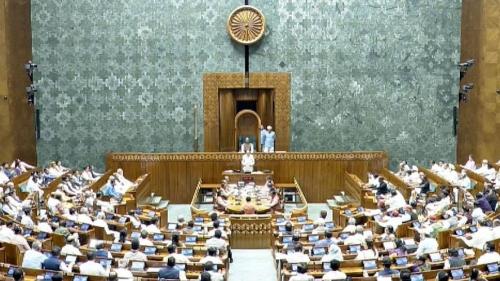
The Waqf (Amendment) Act, 2025 was signed into law by President Droupadi Murmu on April 5 after stormy debates in both Houses of Parliament. It was passed in the Lok Sabha with 288 votes in favour and 232 against, and in the Rajya Sabha with 128 supporting it and 95 opposing it.
The amendment has sparked fierce debate, with critics alleging that it undermines minority rights and religious autonomy, while supporters argue it closes loopholes that led to land misuse and encroachments under the guise of Waqf.
On April 17, the Supreme Court had ruled that no further appointments or changes in the status of Waqf properties would be permitted until the next hearing — a direction still in force.