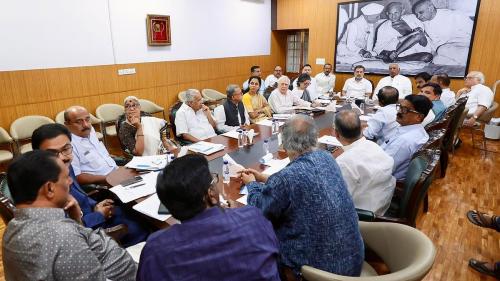
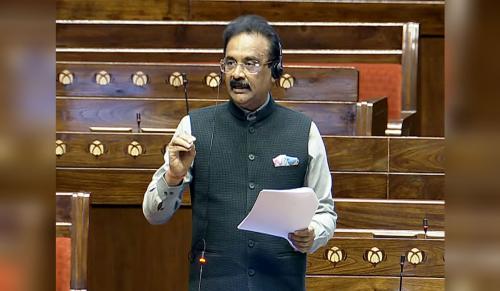
The debate over women’s political representation intensified as Congress President Mallikarjun Kharge signalled a coordinated opposition push on the Women’s Reservation issue, stating that the party will move forward in consultation with like-minded parties to respond to the government’s proposed changes. Speaking after a key meeting of the Congress Working Committee (CWC), Kharge warned that the suggested amendments could significantly alter the electoral framework and require a joint political strategy.
He reiterated that the Congress had earlier demanded immediate implementation of women’s reservation when the law was passed in 2023, but the government chose to link it with delimitation and the Census process. “Proposed amendments can have serious impact on our electoral system; need to formulate collective strategy,” Kharge said, asserting that the party does not require validation from others on issues concerning women and marginalised communities.
The high-level CWC meeting brought together senior leaders including Rahul Gandhi, Priyanka Gandhi, Siddaramaiah, Revanth Reddy, and Sukhvinder Singh Sukhu, along with several other party leaders, reflecting the importance of the issue ahead of Parliament’s upcoming special session.
The meeting comes just days before a three-day special session of Parliament beginning April 16, where the focus is expected to be on amendments linked to the Women’s Reservation framework. The government is reportedly considering changes that would allow implementation based on the 2011 Census data, instead of waiting for a fresh census, which has faced delays.
Under the proposed plan, delimitation could be carried out using existing data, potentially increasing the strength of the Lok Sabha from 543 to over 800 seats. Around one-third of these seats are expected to be reserved for women, significantly reshaping parliamentary representation. However, there remains no provision for reservation for OBCs, while existing quotas for SC/ST communities are likely to continue.
The Centre is also expected to introduce a separate Delimitation Bill alongside amendments to the Nari Shakti Vandan framework, both of which would require constitutional approval. Notably, states are unlikely to have a direct role in the process, as the changes would be implemented through parliamentary legislation.
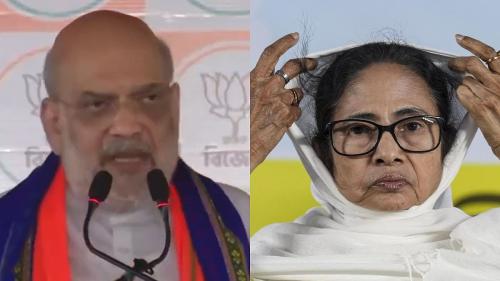
Meanwhile, the Congress has accused the government of shifting its stance for political gains, particularly in states heading for elections. On the other hand, Prime Minister Narendra Modi has called for consensus, urging all parties to rise above politics and support the move to enhance women’s representation. “There should be no politics on this. I urge Congress to support the amendment so that a unanimous decision in favour of women is taken,” Modi said.
With both sides sharpening their positions, the upcoming Parliament session is set to witness a crucial political contest that could shape the future of women’s representation in India’s legislative system.