Delhi Police investigations have revealed that a terror network with links to Bangladesh had quietly set up its operational base in Kolkata before carrying out anti-national activities in the national capital, sources said. According to officials, the group was connected to Lashkar-e-Taiba and was involved in spreading propaganda through posters targeting India.
Police found that the posters, which later appeared in parts of Delhi and Kolkata, were printed in Kolkata using digital files allegedly sent from Bangladesh by a handler identified as Shabbir. Acting on his directions, the operatives rented a house on the outskirts of Kolkata for a modest monthly amount and began coordinating their activities from there. The location was used as a temporary base to plan movements, print material and manage logistics.
Investigators disclosed that Shabbir is suspected to have transferred more than Rs 80,000 to the group to facilitate their operations, including preparations for acquiring weapons. Officials believe further funds were expected. Communication between the handler and the module members was reportedly maintained through encrypted platforms, with one Malda-based contact remaining in regular touch with Shabbir.
The probe has also brought out plans to gather several Bangladeshi nationals, including those later arrested in Tamil Nadu, at a single location in Kolkata. After executing their intended actions, the alleged plan was to move all members back across the border into Bangladesh to evade Indian agencies.
Intelligence inputs shared with Delhi Police suggest that Pakistan’s intelligence establishment, the Inter-Services Intelligence, maintains a significant presence in Bangladesh, where multiple extremist organisations are active. Officials say outfits with links to Al-Qaeda, Lashkar-e-Taiba, Islamic State and other global terror networks continue to operate in the region, creating an ecosystem that supports cross-border radical activities.
The case came to light after anti-India posters were found pasted on metro pillars near the Kashmiri Gate area on February 7. Swift analysis of CCTV footage and travel patterns led police to suspects who had travelled from Kolkata to Delhi, carried out the act, and returned soon after. The matter was subsequently handed over to the Special Cell of Delhi Police for an in-depth probe.
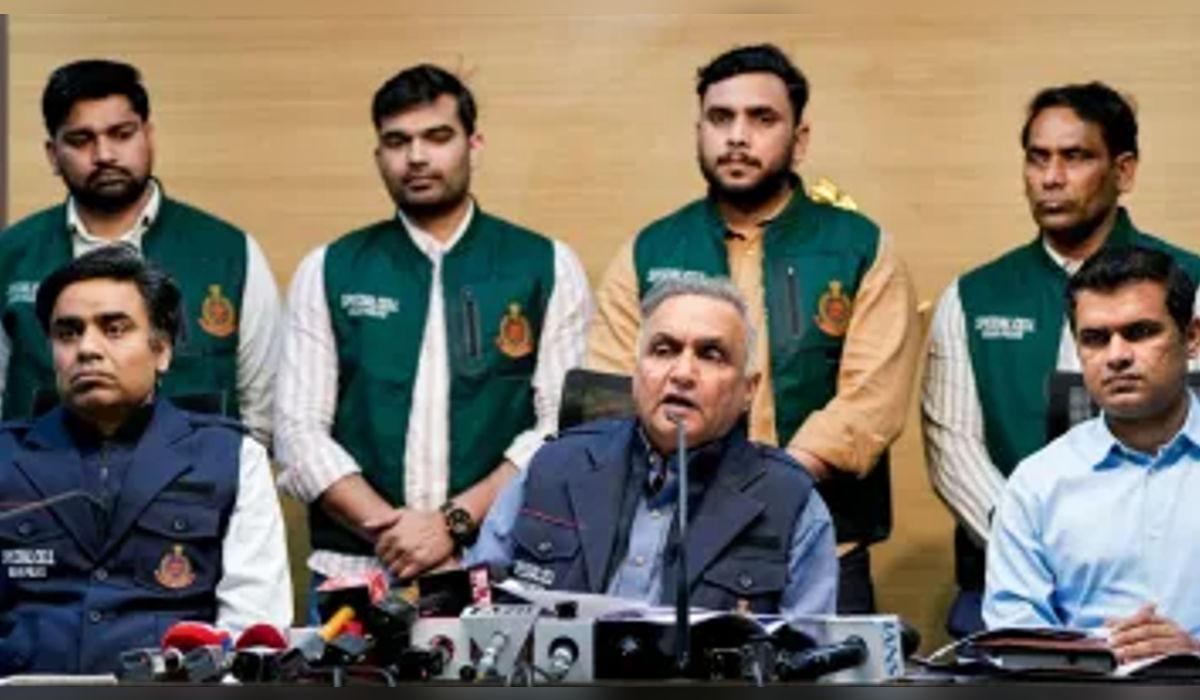
On February 15, Delhi Police arrested eight people in connection with the case, seven of whom are Bangladeshi nationals. Senior officials confirmed that coordinated raids were carried out in Kolkata with the help of local police, leading to the arrest of key suspects believed to be central to the module’s operations. Further investigations are ongoing to identify additional links and funding channels behind the network.