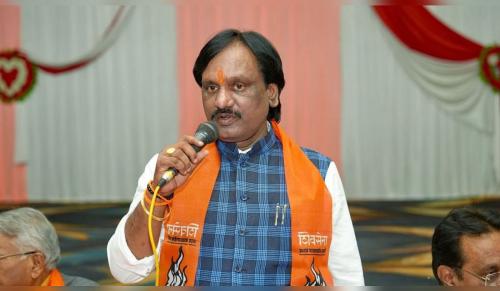
BJP MP Sudhanshu Trivedi has sharply criticized Congress leader Rahul Gandhi for his party?s current stance on the Mandal Commission, drawing a historical comparison with past Congress positions. This criticism follows a recent debate in Parliament between Anurag Thakur and Rahul Gandhi on the issue of caste-based reservations.
In his statement, Trivedi referred to past remarks made by Rajeev Gandhi, who had opposed the Mandal Commission?s recommendations. Trivedi highlighted that Gandhi had described the commission?s recommendations as a ?communal award from the British times? and criticized the Congress party?s current position on caste reservations, which he claimed contradicts its historical stance.
?I want to ask Rahul Gandhi that in the Parliament, Rajeev Gandhi opposed the Mandal Commission and said that the Congress does not believe in caste. He also called it a communal award from the British time. There used to be a slogan, ?Jaat pe, na paat pe, Indira ji ki baat pe, Mohar lagegi hath pe?. What did Rahul Gandhi bring this to? ?Aaj purkhon ki baat ko rakh ke laat pe, party le aaye footpath pe?? (Translation: "Now, by taking the issues of the ancestors and bringing them to a state of disgrace, the party has ended up on the footpath").
Parliamentary Debate: Anurag Thakur vs. Rahul Gandhi
The debate in Parliament intensified when Union Minister Anurag Thakur and Congress leader Rahul Gandhi engaged in a heated exchange over the issue. Thakur criticized Gandhi for allegedly shifting the Congress party?s position on caste-based reservations, accusing him of inconsistency.
Gandhi, in response, defended the Congress party's current stance and argued that the historical context of Rajeev Gandhi?s remarks should not overshadow the party?s present policies and efforts. He emphasized the need for policies that address contemporary social issues while maintaining a focus on inclusive growth.
Background: The Mandal Commission Controversy
The Mandal Commission was established in 1979 under the chairmanship of B.P. Mandal to identify socially and educationally backward classes and recommend measures for their upliftment. The commission?s recommendations included a reservation of 27% in central government jobs and educational institutions for Other Backward Classes (OBCs), which sparked significant debate and controversy when implemented.
In the late 1980s, the implementation of these recommendations led to widespread protests and was a polarizing issue in Indian politics. Rajeev Gandhi, who was then Prime Minister, had voiced strong opposition to the Mandal Commission?s recommendations, arguing that it would further divide society along caste lines.
Current Context
Trivedi?s comments and the parliamentary debate reflect ongoing political discourse about reservation policies and the Congress party?s historical and current positions on caste-based affirmative action. The BJP has used historical references to critique the Congress party?s evolving stance on such issues, aiming to highlight discrepancies and challenge their credibility on social justice matters.