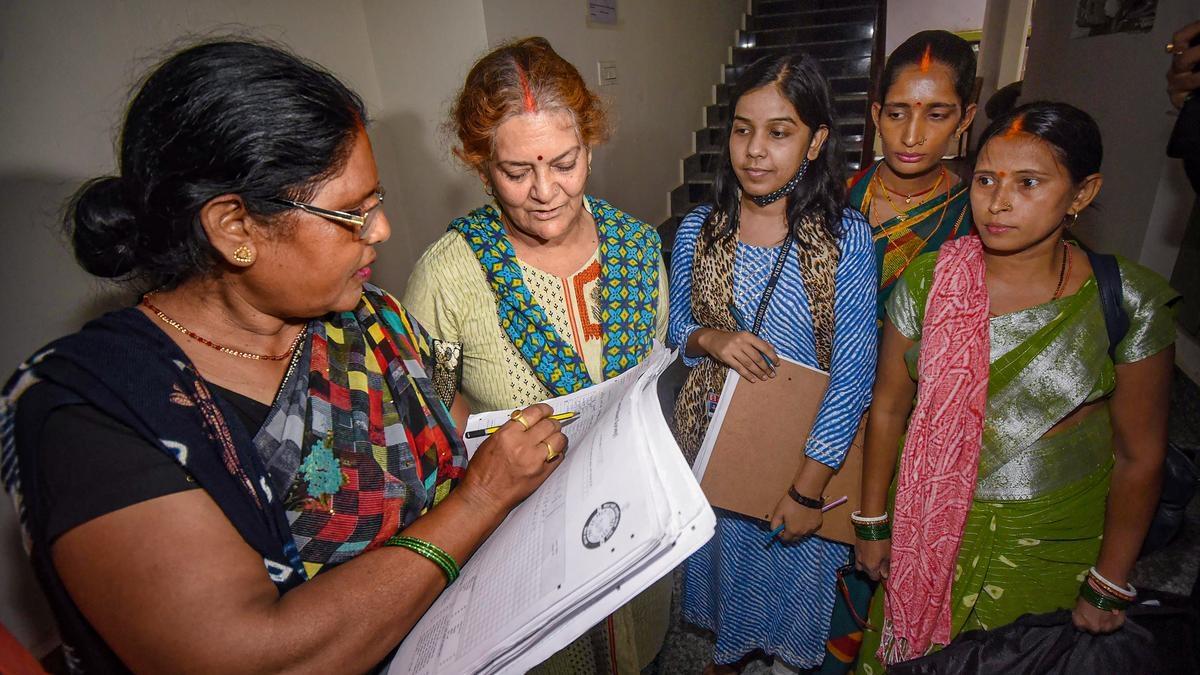
Marking a historic step in India’s demographic data collection, the Union Home Ministry on Monday officially issued a notification to conduct the national population census, the first since 2011. Notably, this upcoming census will, for the first time, include caste enumeration, a move expected to reshape social and policy planning across the country.
According to the notification issued under Section 3 of the Census Act, 1948, the decadal Census will be carried out in two distinct phases, covering the entire population of India.
The first phase will begin on October 1, 2026, and will cover Union Territories of Jammu & Kashmir and Ladakh, as well as the hilly states of Himachal Pradesh and Uttarakhand. These regions, due to being snow-bound in later months, will adopt an earlier reference date for accurate enumeration.
The second phase will commence on March 1, 2027, for the rest of the country. For these areas, the reference date for data will be 00:00 hours of March 1, 2027, as stated in the government’s official notification.
“A census of the population shall be undertaken during the year 2027. The reference date for the said census shall be 00.00 hours of March 1, 2027, except for the Union territory of Ladakh and snow-bound non-synchronous areas of the Union territory of Jammu and Kashmir and the States of Himachal Pradesh and Uttarakhand,” the notification stated.
“In respect of the Union territory of Ladakh and snow-bound non-synchronous areas of the Union territory of Jammu and Kashmir and the States of Himachal Pradesh and Uttarakhand, the reference date shall be 00:00 hours of October 1, 2026,” it further added.
The inclusion of caste data, cleared by the Union Cabinet earlier this year, represents a major policy shift. The Centre believes that such detailed social stratification will help in targeted policymaking, improve the reach of welfare schemes, and address longstanding social disparities with greater accuracy.