Prime Minister Narendra Modi’s brief stop at a roadside jhalmuri stall during election campaigning in West Bengal has triggered an unexpected online debate, with many on social media asking one question — why did PM Modi pay in cash instead of using UPI?
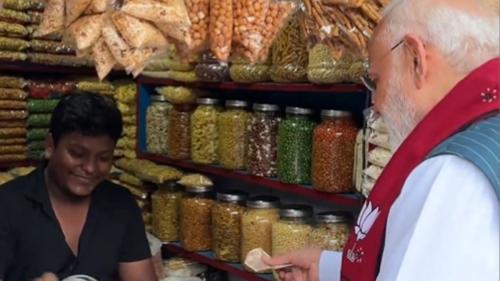
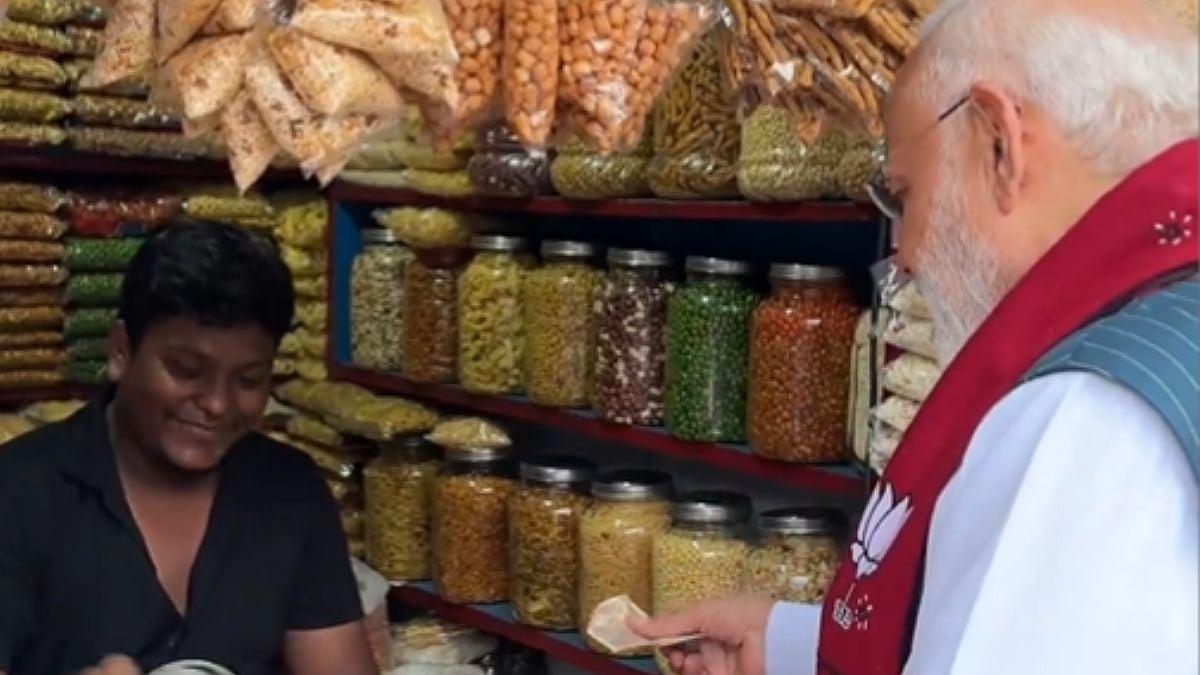
The incident took place on Sunday in Jhargram, West Bengal, where Prime Minister Modi, amid high-energy campaigning for the upcoming state elections, paused his convoy to interact with a roadside vendor selling jhalmuri. A video of the interaction quickly went viral, with many praising the gesture as a warm and human moment during the intense political campaign.
But amid the praise, several social media users noticed that the Prime Minister paid the vendor with a ₹10 note instead of using UPI, India’s flagship digital payment system launched during Modi’s first term in office. This raised questions online, especially considering that UPI has become one of the government’s biggest digital success stories.
Political analyst Tehseen Poonawalla also reacted to the clip on X, writing, “The most Hon'ble PM paid in cash. The shopkeeper did not have UPI or online payment system. But overall a sweet interaction.”
The post quickly drew attention and soon BJP national spokesperson Shehzad Poonawalla stepped in to clarify why the Prime Minister chose cash over digital payment.
Responding to the speculation, Shehzad wrote, “Shopkeeper had UPI — same UPI that Congress FM Chidambaram dismissed with arrogance saying the poor would never be able to use it. The ₹10 note was given so that the shopkeeper could treasure it forever.”
The explanation added a sentimental angle to the incident, suggesting that the cash payment was not due to the absence of digital payment facilities but was instead intended to create a memorable moment for the vendor.
The stall owner, identified as Vikram Sah, is originally from Bihar’s Gaya district and has been running the small jhalmuri stall in Jhargram for more than a decade. For him, the Prime Minister’s sudden visit turned an ordinary business day into a once-in-a-lifetime event.
The viral moment also brought renewed attention to India’s UPI revolution, which has become one of the world’s most successful digital payment systems. Introduced in 2016, UPI is now operational in several countries including the UAE, Singapore, Bhutan, Nepal, Sri Lanka, France, Mauritius, and Qatar, boosting India’s profile as a leader in financial technology.
Even though the transaction itself was only ₹10, the symbolism behind the payment sparked political commentary online, with supporters viewing it as a thoughtful gesture while critics questioned why India’s top promoter of digital payments chose cash.
The incident comes as West Bengal gears up for polling on April 23 and April 29, with counting scheduled for May 4, making every public interaction during the campaign politically significant.